The Bee That Changed Everything
I used to think honeybees were the beginning and end of the bee world—until one spring morning, that changed.
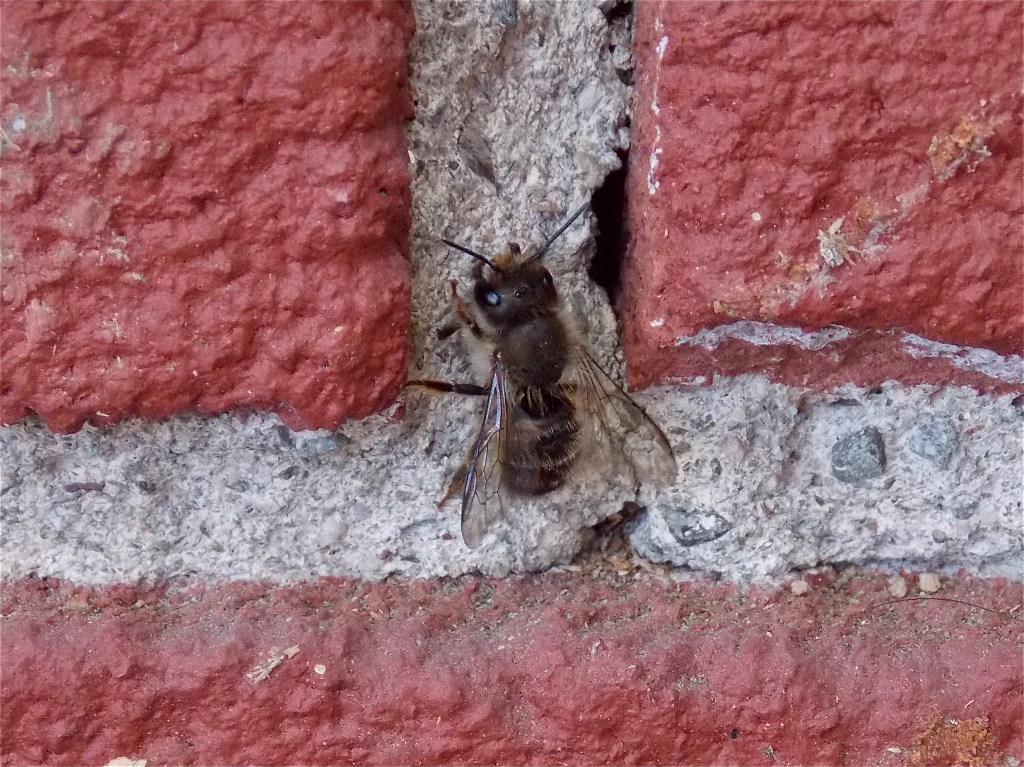
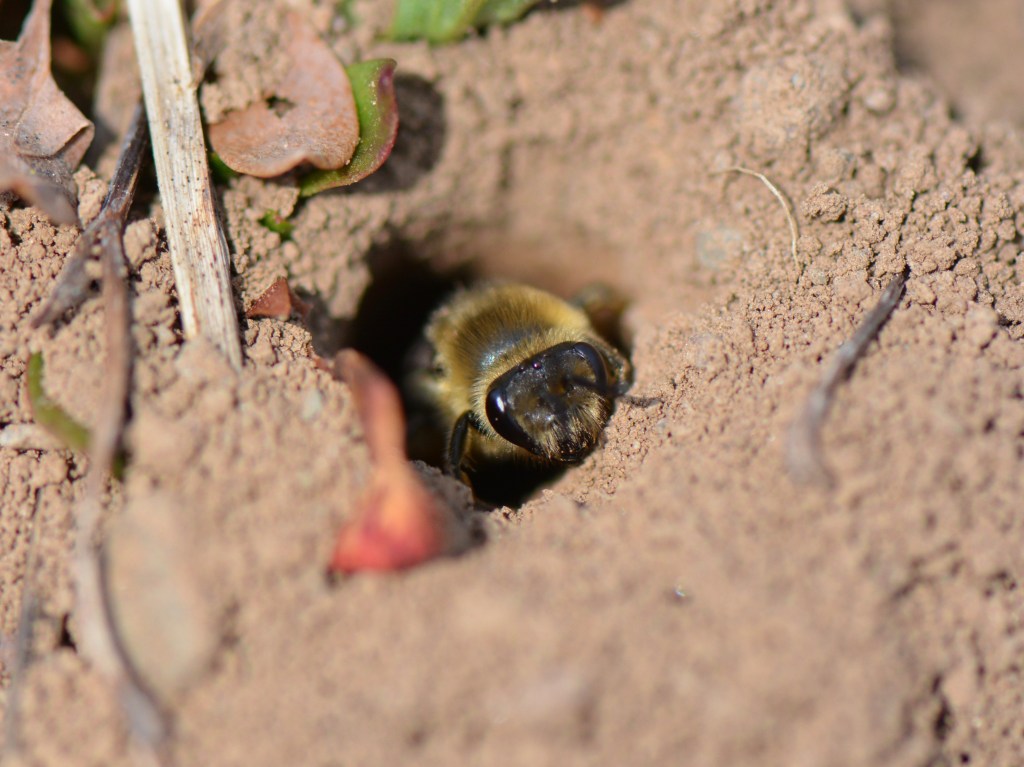
There she was, a tiny bee buzzing in and out of a hole in the mortar between the bricks on my house. At first glance, I assumed she was a honeybee scout, maybe searching for a new home for a swarming colony. But something seemed different.
So I took a closer look.

Not a Honeybee After All
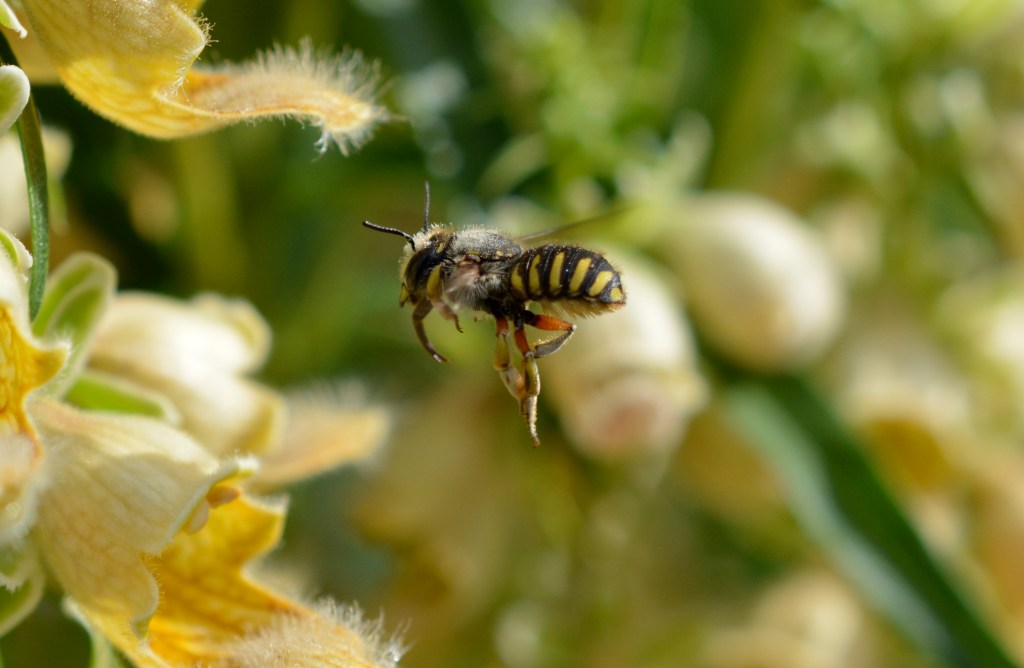
This little visitor was about the same size as a honeybee, but she turned out to be something else entirely: a hornfaced bee, a type of mason bee.
She wasn’t just exploring—she was building a nest. Inside that small hole, she would lay about ten eggs, each tucked into its own mud-walled cell. The larvae inside feast on a rich mix of pollen and nectar (known as bee bread), then defecate, spin a cocoon, and prepare for a long rest. By fall, they transform into pupae, and eventually adults—who stay tucked away through winter until the warmth of spring calls them out once again.
This is the rhythm of mason bees—and most solitary bees, for that matter. There’s no queen. No hive. Every female builds her own nest and raises the next generation herself.
A Bee from Far Away
You’d think, since they look a bit like honeybees, hornfaced bees might be native too. But they’re not. Like honeybees, hornfaced bees are an introduced species.
Originally from Japan, they were brought to the U.S. in the 1960s to pollinate fruit trees in Utah—though that first introduction didn’t stick. In 1976, they were imported again, this time to Maryland, where the climate proved a better match. From there, they spread—and now they’re thriving in places like the Hudson Valley. My brick house? It’s prime real estate as far as they’re concerned.
Meet Their Native Cousin
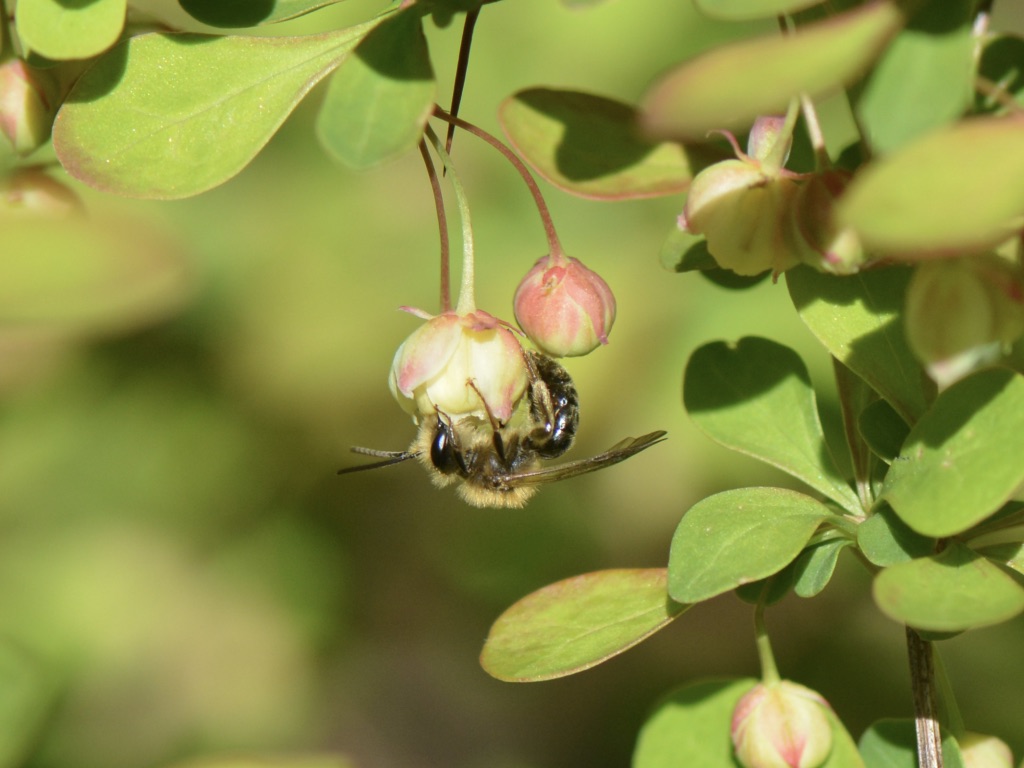
Hornfaced bees aren’t the only solitary orchard bees around. Keep an eye out for the blue orchard bee—our native pollination superhero. With its striking blue-green shimmer, it’s easy to tell apart from the fuzzy, yellow-haired hornfaced bee with its striped abdomen.
These bees are small, but mighty.

Pollination Powerhouses
Want to pollinate an acre of apple trees? You’d need:
- 600 hornfaced bees
- 250 blue orchard bees
- Or 20,000 honeybees—that’s one to two full hives!
That means a single hornfaced bee is up to 80 times more efficient than a honeybee when it comes to pollinating apples. And unlike honeybees, which stay busy throughout the growing season, orchard bees hit their stride early—right when apple and other fruit trees bloom in April and May.
A Whole New World of Bees
That one little bee at my brick wall opened my eyes to a world beyond honey. Solitary bees like the hornfaced and blue orchard bees are vital pollinators with fascinating lives—and they’re right here, quietly making spring possible.
Next time you spot a small bee ducking into a hole in a wall or a bee house, stop and take a closer look. You just might be witnessing the work of one of nature’s most efficient pollinators.

 Native Beeology