
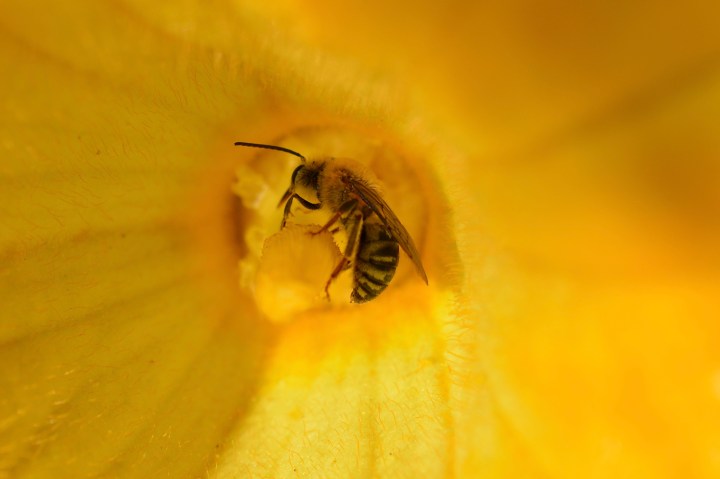
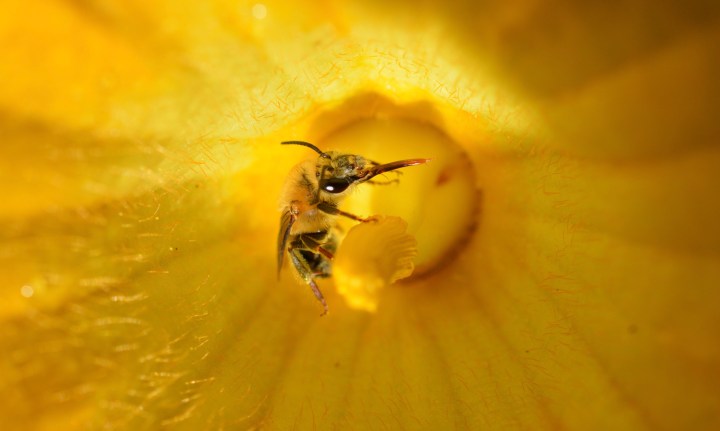
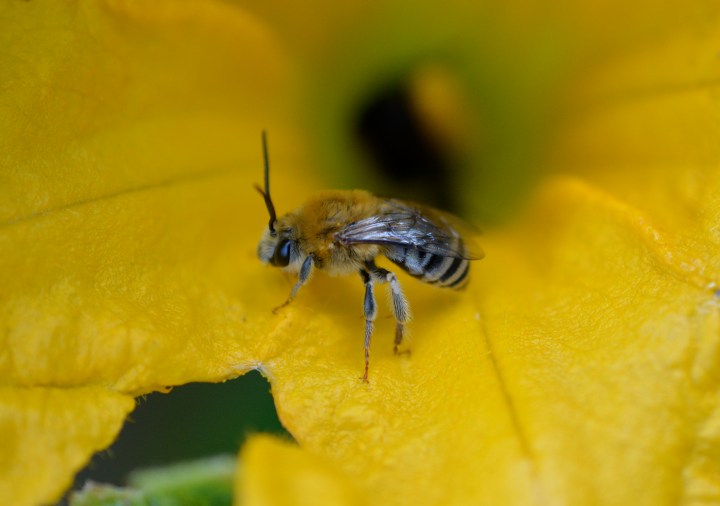
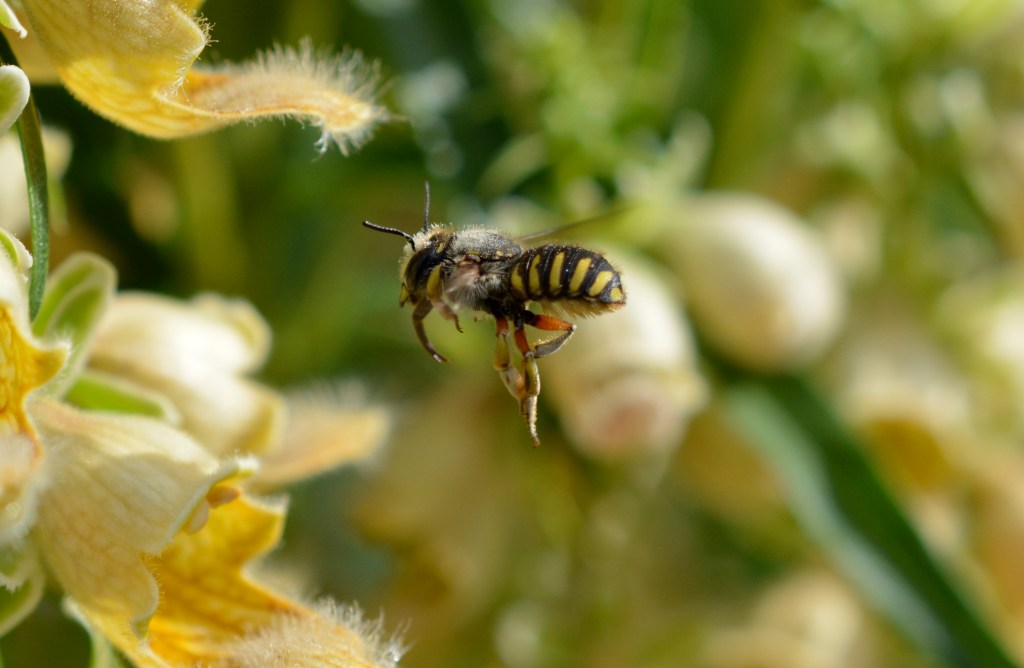
Take a closer look at the golden blooms of a squash plant early in the morning, and you may spot a telltale sign of a unique pollinator—striped abdomens pointing skyward, heads buried deep in the flower. These are squash bees(Peponapis pruinosa), native pollinators whose entire lives revolve around one plant family: Cucurbita, or squash.
Unlike honey bees or bumble bees, which may visit squash flowers opportunistically, squash bees are floral specialists, perfectly evolved to pollinate squash, gourds, and pumpkins. Of the 13 known species, Peponapis pruinosa is most common in the eastern United States.
Nature’s Ancient Alliance: Squash Bees and Mastodons
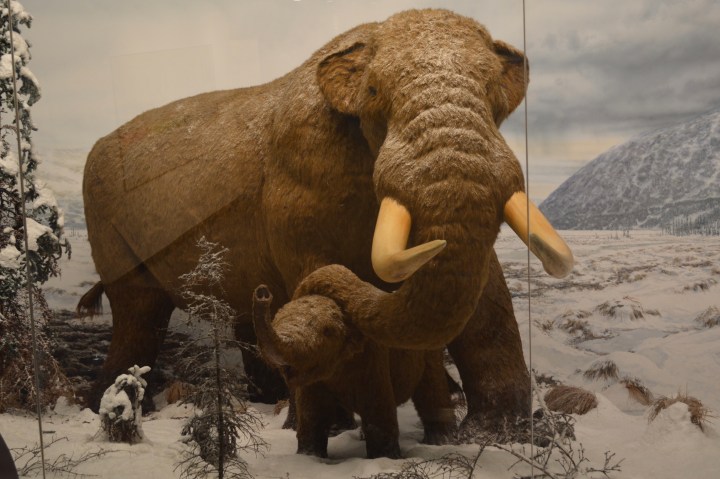
The squash bee’s story isn’t just about flowers—it begins tens of thousands of years ago, when mastodons, the now-extinct, elephant-like megafauna, roamed North America. Recent research found Cucurbita seeds in mastodon dung, revealing these massive mammals played a surprising ecological role.
As mastodons trampled through forests, they created disturbed, open habitats ideal for native squash to grow. In these wild “mastodon gardens,” squash bees were already present, transferring the large, sticky pollen between flowers.
When mastodons went extinct around 12,000 years ago, many native squash species also disappeared—except in Mexico, where humans adopted the plant. There, squash was first cultivated not for food, but for containers made from bitter gourds. This ancient act of domestication helped preserve the squash plant—and allowed squash bees to continue their evolutionary relationship.
The Three Sisters and the Pollinator That Tied Them Together
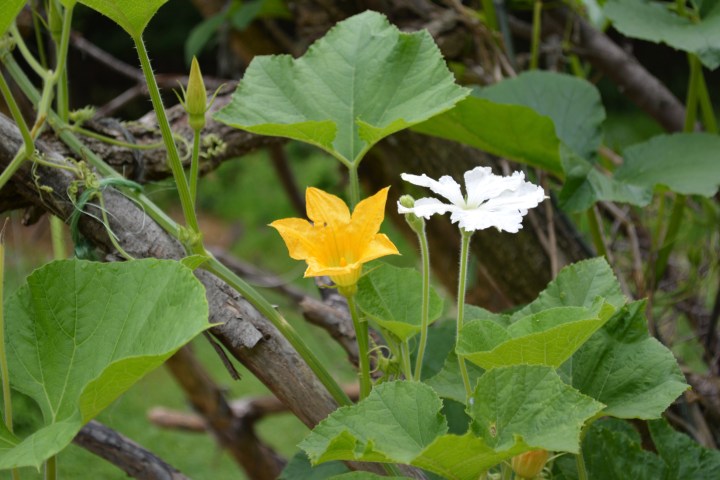
Squash wasn’t alone. Alongside corn (Zea mays) and beans (Phaseolus vulgaris), it formed a sustainable agricultural trio known as the Three Sisters—an Indigenous planting system that nourished both land and people. But squash was the first to make its way back north.
- Squash: ~6000 BC in New York
- Corn: ~270 BC
- Beans: ~1300 AD
As each crop traveled north, it’s likely that Peponapis pruinosa tagged along—faithfully pollinating squash as it followed the gardens of migrating peoples.
A Specialist That Gets the Job Done
Floral specialists are often thought to be poor pollinators—too good at harvesting pollen, not good enough at leaving it behind. But squash bees break the rule. Their bodies are so well adapted that they can single-handedly pollinate entire squash crops without the help of honey bees or bumble bees.
- Females emerge early, drink nectar, then build nests and lay eggs.
- Males sleep in the flowers and chew their way out each morning—pollinating as they go.
These bees are up and working before dawn, pollinating while other bees are still in their nests. Their early activity and exclusive relationship with squash make them unmatched pollinators for Cucurbita plants.
Life Underground: A Delicate Existence
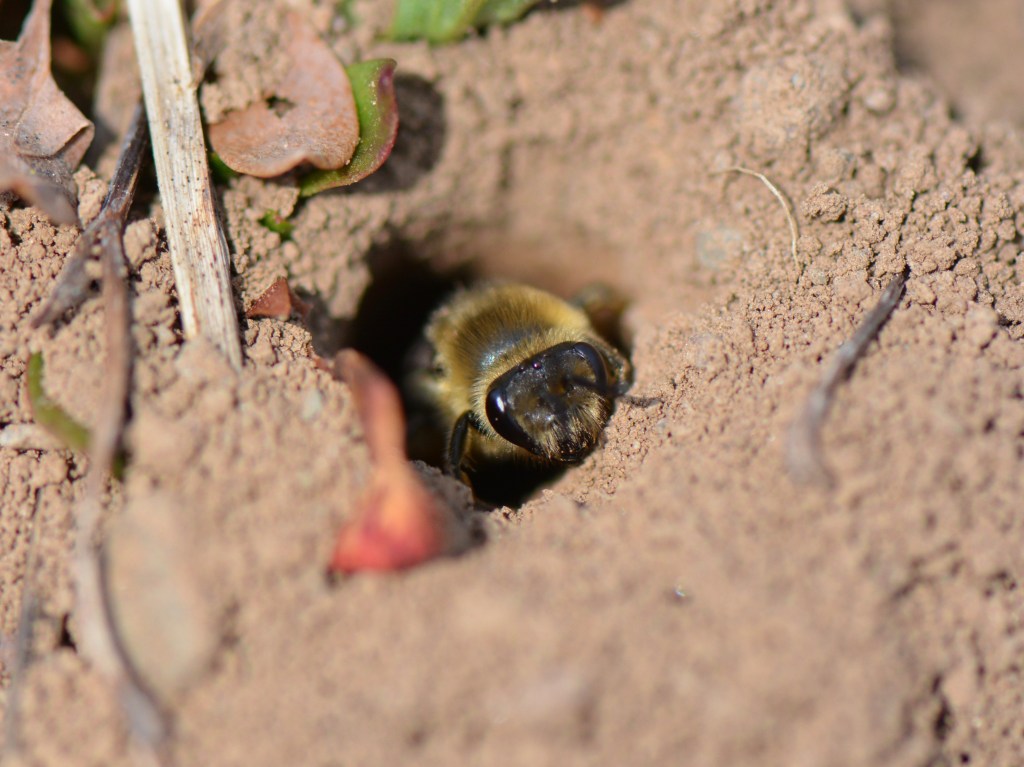
Squash bees are solitary ground-nesters, digging deep burrows—sometimes over a foot underground—beneath the sprawling leaves of squash plants. They nest close to their food source, but their underground homes face serious threats.
- Tillage disrupts nests, reducing populations dramatically.
- Pesticides and herbicides further threaten their survival.
Studies show no-till farms support three times more squash bees than tilled ones. For growers, that means more bees, better pollination, and a lower need for rented honeybee hives.
A Risk Worth Taking
By specializing so narrowly on one plant genus, squash bees took an evolutionary gamble. But it’s paid off. When mastodons disappeared, squash nearly vanished. But humans became the new stewards—and squash adapted.
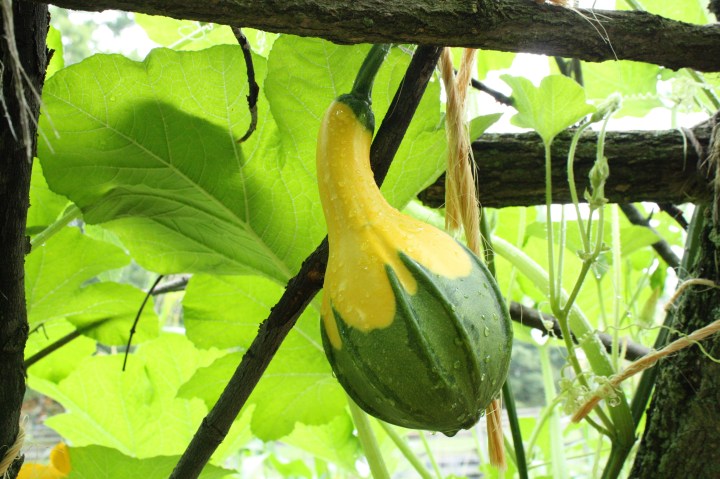
Today, thanks to this relationship, we enjoy summer squash like zucchini and yellow crookneck, and winter varietieslike acorn, butternut, and pumpkin. And through it all, the squash bee has been there—pollinating in the shadows of giants, long before sunrise.
Takeaway: Ancient Partnerships, Modern Lessons
Squash bees teach us that pollinator conservation isn’t just about planting flowers—it’s about preserving relationships. The story of squash and its pollinator spans thousands of years, crossing species, extinctions, and civilizations. It’s a reminder that behind every fruit we eat, there’s often a story rooted in wildness, timing, and delicate ecological balance.
References:
(1) Logan Kistler, Lee A. Newsom, Timothy M. Ryan, Andrew C. Clark, Bruce D. Smith and George H. Perry. (2015) Gourds and squashes (Cucurbita spp.) adapted to megafaunal extinction and ecological anachronism through domestication. Proceedings of the National Academy of Sciences. Vol. 112. no. 49. 15107-15112. http://www.pnas.org/content/112/49/15107
(2) Pritchard, Evan. Indigenous Thoughts on the History of Agricutlure in the Hudson Valley. A paper submitted June 13th 2014. Farm Hub Retreat, Mohonk Center. pp. 1-10.
(3) Wilson, Joseph, Carril M. Olivia. The Bees in Your Backyard. Princeton University Press. 2016. pp. 224-225.
Paul D. Hurd, Jr., E. Gorton Linsley and Thomas W. Whitaker. Squash and Gourd Bees (Peponapis, Xenoglossa) and the Origin of the Cultivated Cucurbita. Evolution. Vol. 25, No. 1 (Mar., 1971), pp. 218-234.

 Native Beeology