The common milkweed (Asclepias syriaca), often found reclaiming forgotten farm fields and roadside margins, is too frequently cast aside as a “weed.” But to call milkweed unwanted is to overlook one of the most vital native plants in our Northeastern landscapes—a botanical cornerstone that hums with life, feeds the wild, and reminds us that beauty often blooms in the margins.
This herbaceous perennial, one of over 100 native Asclepias species across North America, is easy to spot. Its sturdy stem bleeds milky sap when broken, and its broad, opposite leaves cradle clusters of sweet-scented, dusky-pink blooms. These blossoms aren’t just pretty—they’re purpose-built to serve the pollinators.
A Ballroom for Bees
From late June into July, milkweed’s spherical flower clusters burst open—each one a ball of 40 to 50 tiny, nectar-rich florets. Their scent is soft, their symmetry hypnotic. To a bee or butterfly, these blooms are irresistible. But they come with a twist.
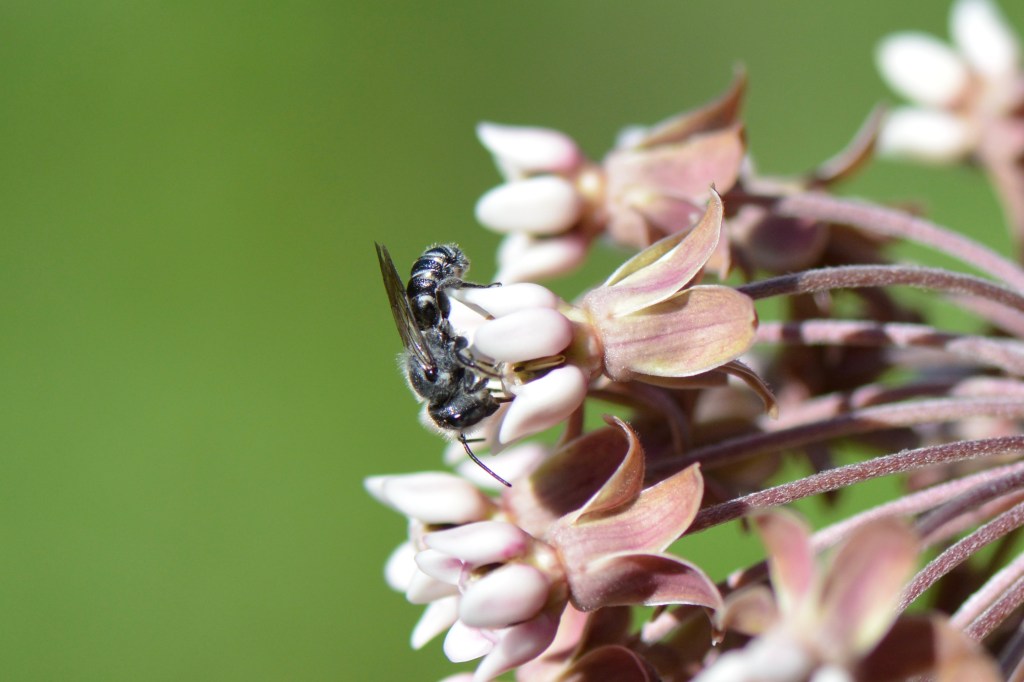
Milkweed flowers are famously slippery. Insects attempting to sip the nectar often slip their legs into the plant’s specialized structures—anther pouches. If they’re strong enough to pull free, they carry with them paired sacs of pollen, called pollinia. With each visit, pollinia are transferred from plant to plant, making milkweed’s awkward pollination process oddly elegant.
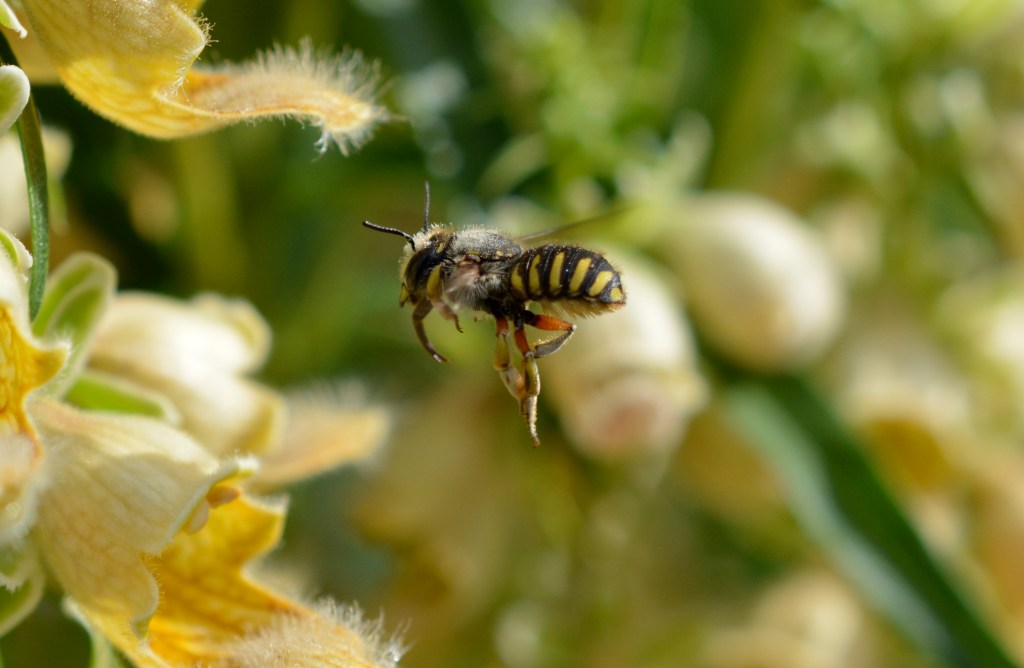
Not every insect makes it out. Small bees and honey bees can become fatally trapped, their lifeless bodies left hanging beneath the flowers. It’s a harsh truth of wild ecology. But for the bumble bees—those muscular, buzzing dynamos—milkweed is a perfect match.
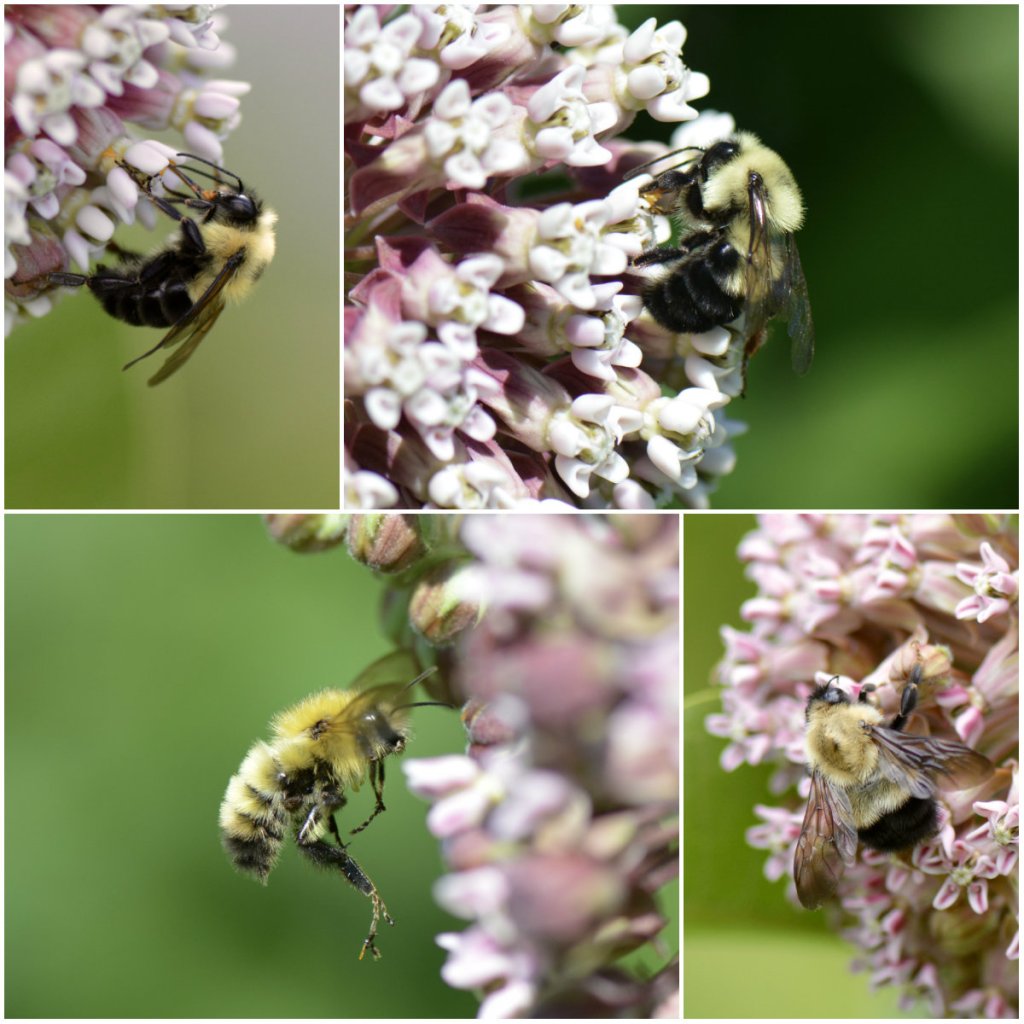
On a warm summer day, it’s easy to spot several species of bumble bees visiting the blooms. The common eastern bumble bee (Bombus impatiens), the confusing bumble bee (Bombus perplexus), the brown-belted (Bombus griseocollis), the half-black (Bombus vagans), and the two-spotted bumble bee (Bombus bimaculatus) all show up to feast. Milkweed nectar is their summer fuel—and a great opportunity for sharp-eyed observers to hone their bumble bee ID skills.
Monarch Highways
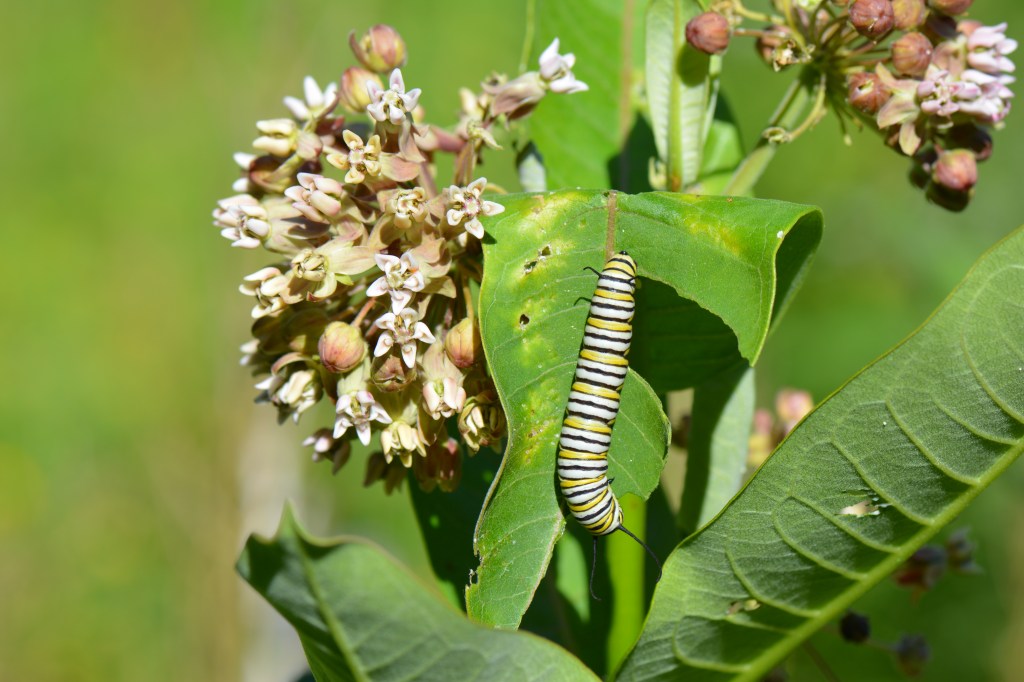
Of all the creatures that depend on milkweed, none are as iconic as the monarch butterfly (Danaus plexippus). With their fiery orange wings bordered in black, monarchs are more than pollinators—they are migratory legends.
Each fall, monarchs born in the Northeast begin an epic southbound journey of up to 3,000 miles, arriving in Mexico’s oyamel fir forests around the Day of the Dead. To many, they are the souls of loved ones returning home.
In spring, the northward journey begins anew—but not all at once. Monarchs migrate in waves, generation by generation, each one laying eggs exclusively on milkweed. The plant becomes a living ladder, rung by rung, carrying monarchs back north. In this way, milkweed doesn’t just nourish a caterpillar—it guides a species across a continent.
Every leaf is precious. Monarch caterpillars feed on the tender new growth, absorbing cardiac glycosides from the leaves. These toxins make the caterpillars—and the adults they become—distasteful to birds. Their brilliant colors aren’t just beautiful; they’re a warning: I am not your lunch.

Milkweed’s Motley Crew
The monarch isn’t milkweed’s only tenant. The milkweed tussock moth (Euchaetes egle) lays her eggs here too. Her caterpillars, clad in flamboyant tufts of black, white, and orange, devour the older leaves in social clusters. Their wild appearance and chemical defenses make them equally unpalatable to predators.
At night, the adult tussock moth takes to the air, broadcasting ultrasonic clicks—a bat’s version of a “do not eat” sign. One bad meal teaches a bat what to avoid. Nature has its own warning labels.

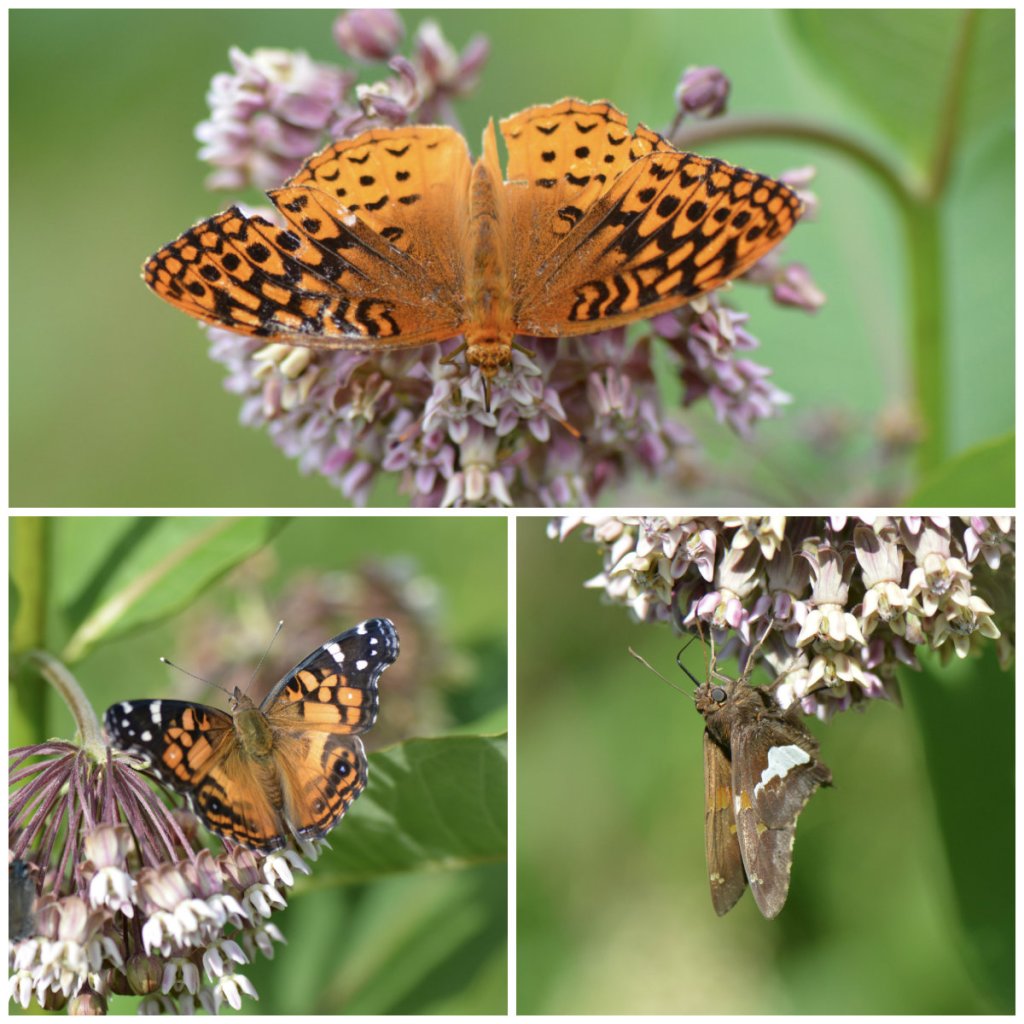
Butterflies of all kinds flock to milkweed for nectar, even if their young feed elsewhere. The great spangled fritillary (Speyeria cybele), whose caterpillars rely on violets, often flutters among milkweed flowers. Painted ladies (Vanessa virginiensis), whose host plants range from thistles to nettles, pause to sip its sweet reserves. The silver-spotted skipper (Epargyreus clarus), tied to beans and trefoil, is another regular visitor.
Each butterfly, whether pollinator or passenger, is part of the milkweed’s sprawling web of life.
Milkweed is not a weed—it’s a cornerstone of wild habitat. With its fragrant blooms, nourishing leaves, and intricate relationships, it supports creatures whose survival depends on its presence. In a world of shrinking wild spaces, allowing milkweed to grow—whether in a forgotten field, a roadside ditch, or your own garden—is an act of restoration. It is a quiet way to say: you belong here. When we make space for milkweed, we make space for wonder.


 Native Beeology
3 responses to “The Amazing Milkweed”
Reblogged this on David Lewis' Christian Story-telling.
The Painted Ladies caterpillars in my yard seem to prefer milkweed. I have milkweed all over but since I made my yard a wildlife habitat, I grow all kinds of native flowering plants, so it’s not because they don’t have other choices. I have giant goldenrod, aster, blazing stars, thistle among other. The butterflies are mostly on my sedum Autumn Joy. I’ve never had such a large number of Painted Ladies in my yard, as this year.
Wonderful photography. Keep it up!