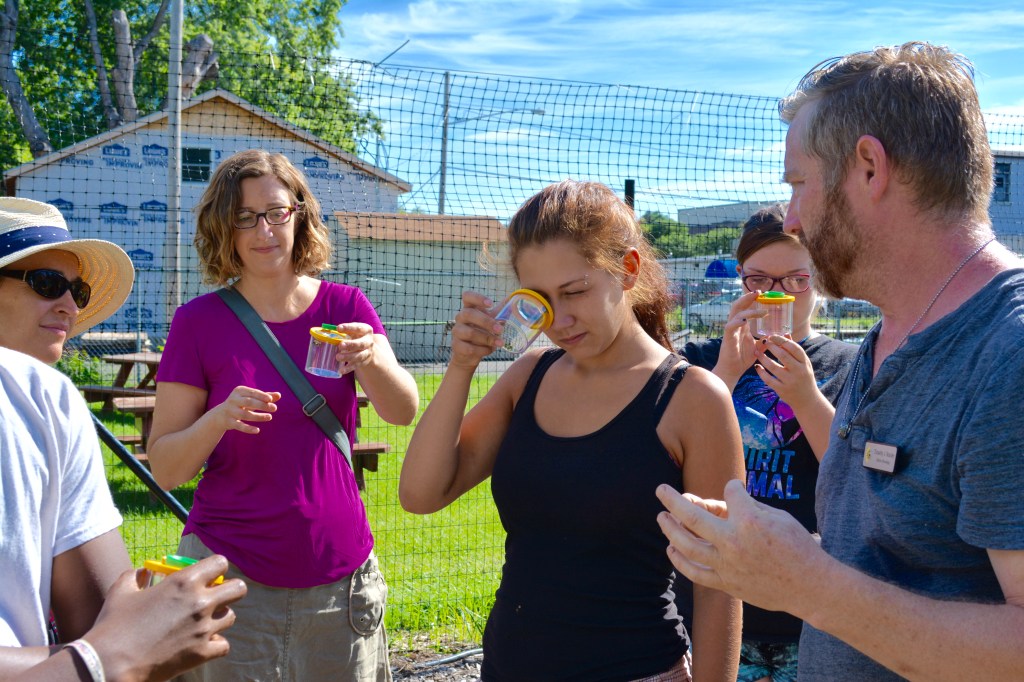
On a warm August morning, Native Beeology’s Tim Stanley joined the crew from the Kingston YMCA Farm Project—staff and interns alike—for a walk through their thriving urban garden. The mission of this urban farm is as alive as the buzzing around its blossoms: to empower youth and families in the City of Kingston through hands-on food production, while increasing access to fresh, local food. The garden is a living tapestry—woven not just by human hands, but by the wings and work of wild pollinators, each playing a part in the harvest to come.
Specialists at Work
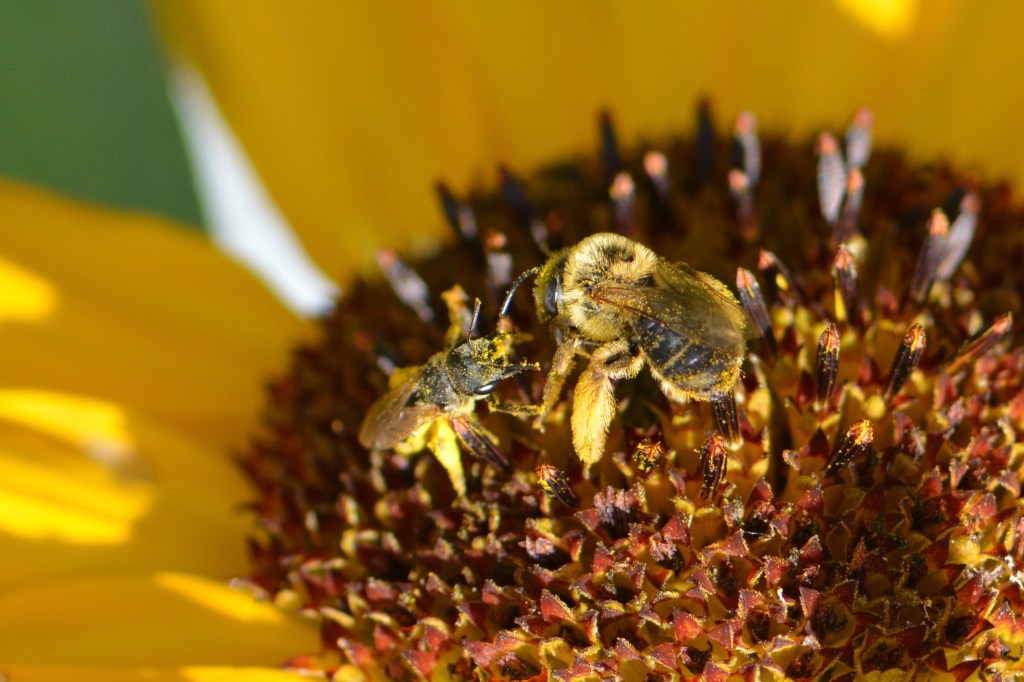
Our first encounter among the blooms? The unmistakable long-horned bees (Melissodes spp.), busy among the golden faces of the sunflowers. From a distance, a sunflower looks like a single flower—but take a closer look and you’ll find hundreds of tiny flowers packed together: disc florets in the center, ringed by ray florets that most of us mistake for petals. Sunflowers belong to the vast Asteraceae family, which also includes echinacea, dandelions, and asters—favorites of many pollinators.
Long-horned bees are specialists of these composite flowers, particularly sunflowers. The males, with their impossibly long antennae, perch at the edges of blooms come evening, bedding down in the very flowers they’ve spent the day sipping from. Females, meanwhile, collect pollen using dense scopa hairs on their hind legs, provisioning their underground nests with food for the next generation. Like most native bees, they’re solitary—each female a self-sufficient queen in her own right.
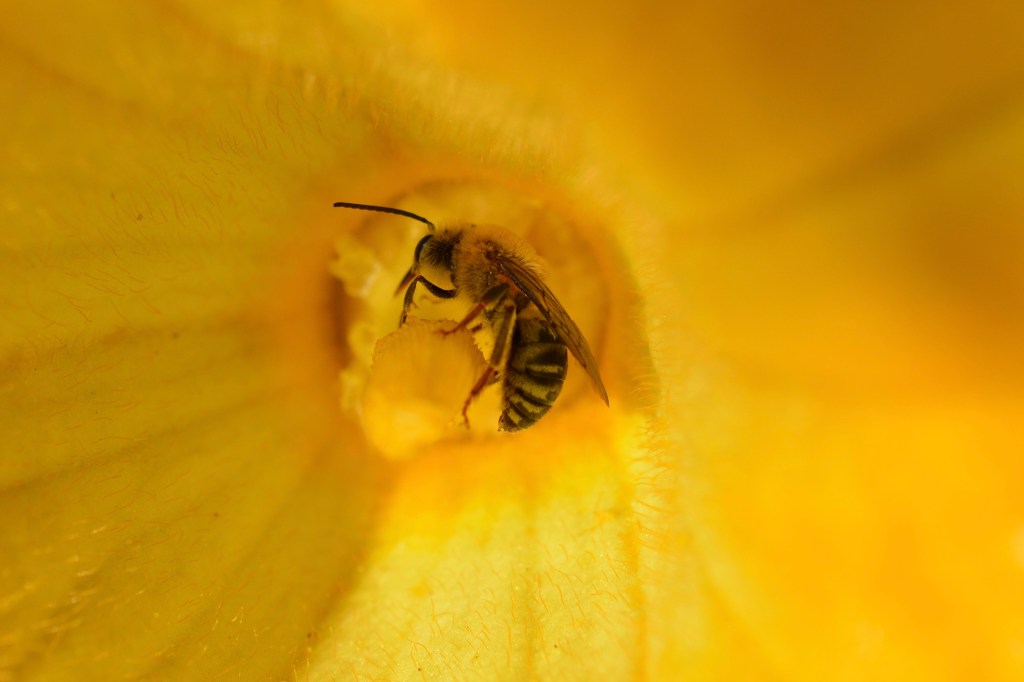
Nearby, in the wide-open blossoms of zucchini, pumpkins, and other squashes, another specialist is hard at work: the squash bee (Peponapis pruinosa). About the size and color of a honey bee, but faster and more focused, this bee has a relationship with squash that predates agriculture itself. These bees rise before the sun and start foraging while other bees are still in their nests. By noon, the male squash bees take shelter inside closed, withering blossoms, hidden from predators and waiting for tomorrow.
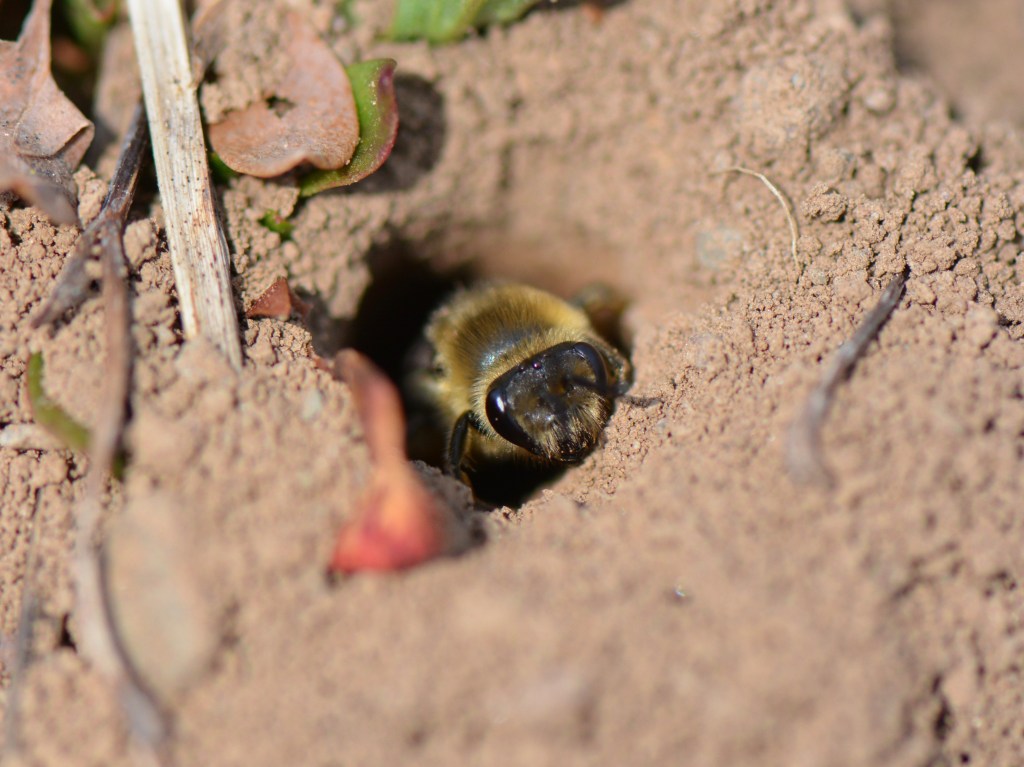
Females dig deep nests in the soil—so deep they often escape tilling. Each egg is laid in a chamber stocked with pollen and nectar. The young remain underground through the winter, emerging the next summer just in time for squash blossoms once again.
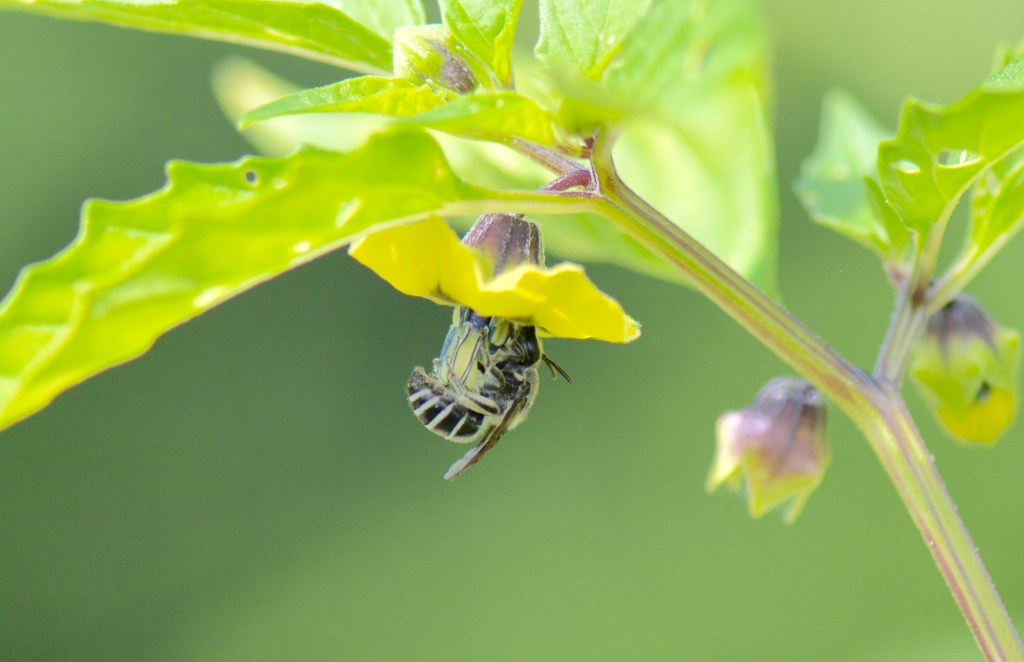
Among the tomatillos and ground cherries—wrapped in their signature papery husks—a quieter specialist moves through the shade: the broad-footed cellophane bee (Colletes latitarsis). These bees, active only in midsummer, time their brief lives to coincide with the bloom of nightshade-family plants. They’re solitary and ground-nesting, like many native bees, but have an unusual talent: their nests are lined with a waterproof, cellophane-like secretion that allows them to thrive in wetter soils. It’s a humble adaptation—but one that keeps their larvae dry and safe until the next generation emerges.
The Generalists
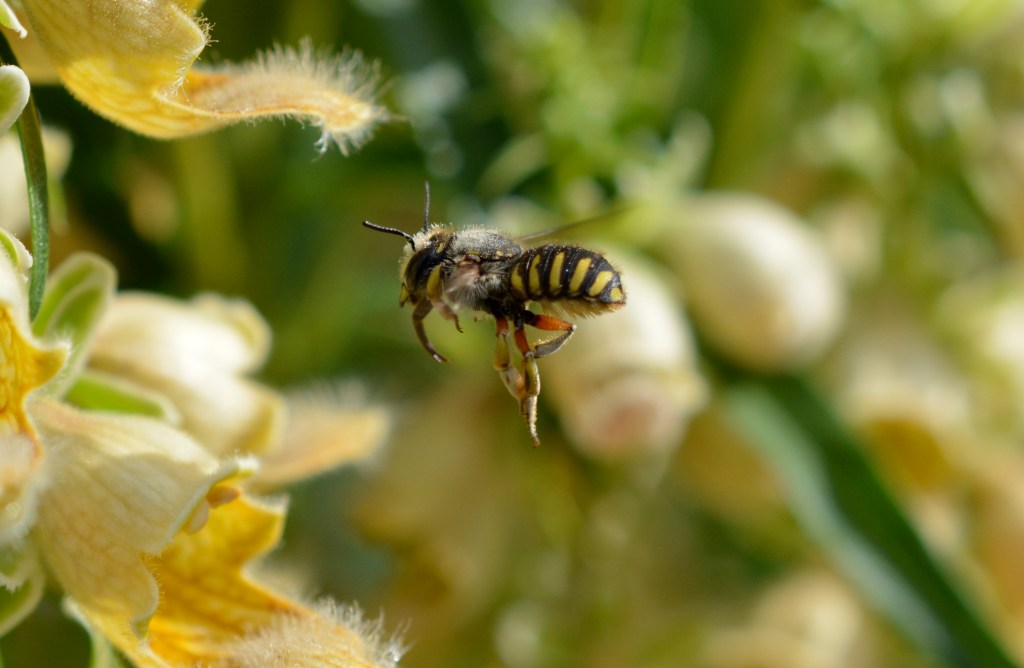
Of course, not every bee is a specialist. Leafcutter bees (Megachile spp.) are generalists, flitting from flower to flower throughout the garden. With strong mandibles for cutting leaf pieces and scopa hairs under their abdomens for carrying pollen, they’re easy to spot—if you know what to look for. These dark, stocky bees often fly with wings outstretched, wasp-like, and construct their nests with neatly trimmed bits of leaf.
The unmistakable buzz of the common eastern bumble bee (Bombus impatiens) is a signature sound of the summer garden. As our region’s only truly social native bee, bumble bees live in colonies with queens, workers, and drones. By late summer, the nest shifts into a new phase: producing next year’s queens. They’re also powerful pollinators of tomatoes and other nightshades, using a technique called buzz pollination. Watch as the bee grabs the flower and vibrates her wing muscles without flying, shaking loose a cloud of pollen hidden deep within.

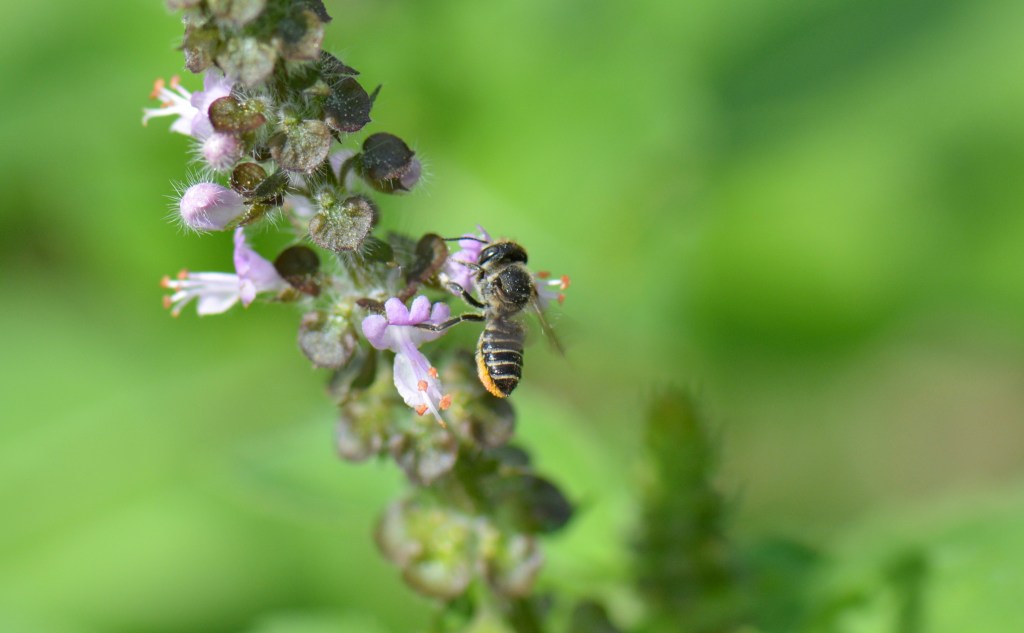
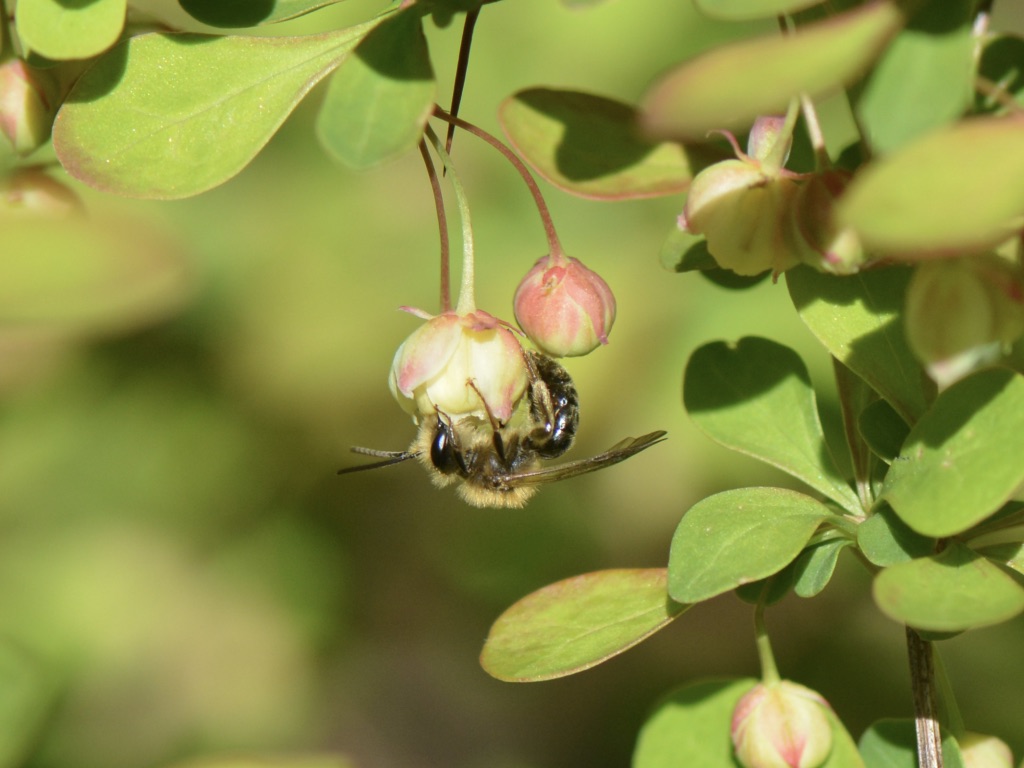
And then, there are the tiniest workers of all. Look closely at the holy basil and you might spot a sweat bee from the Lasioglossum genus, her body barely longer than a grain of rice, dusted in bright red pollen. These miniature bees are masters of tiny blooms and have a foraging range as small as a tenth of a mile. That means your backyard garden—or even a balcony planter—could be essential habitat for these elusive pollinators.

In Partnership
In every thriving farm and garden, a quiet partnership unfolds. The bees do not pollinate for our sake—they’re foraging for the survival of their own kind, stocking their nests for the next generation. But in doing so, they pollinate the plants we depend on, filling baskets with cucumbers, squash, herbs, and fruit. Each blossom visited is a step toward both harvest and renewal.
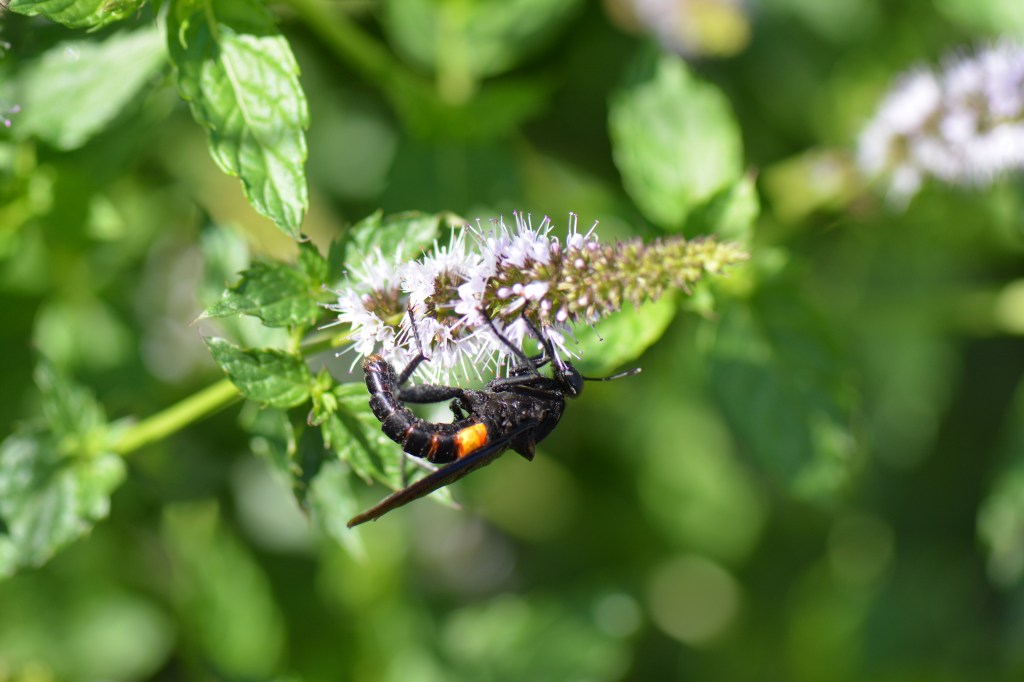
And bees aren’t alone. Flies, beetles, butterflies, and wasps all join in the work. But among them, native bees are the quiet heroes of the garden—each one a specialist, a generalist, or simply a survivor in a changing world, doing exactly what evolution designed them to do.

 Native Beeology