
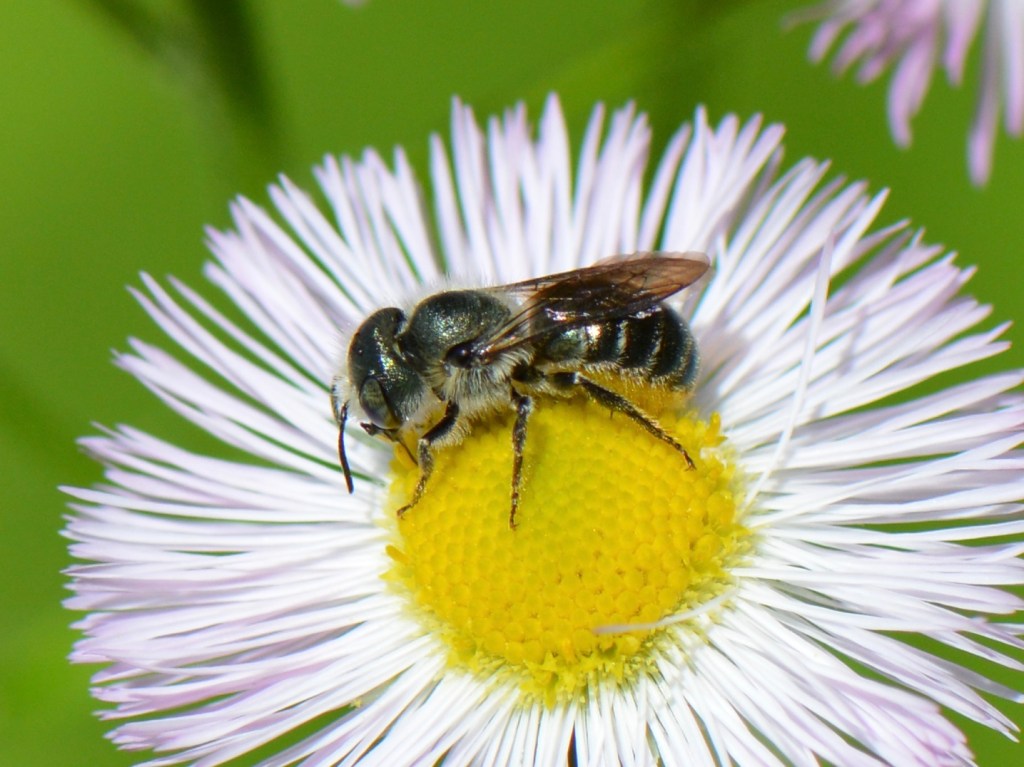
When the early spring sun warms the orchard, the blue orchard bee (Osmia lignaria) gets to work—fast. These native bees are astonishingly efficient pollinators, capable of outperforming their more famous cousins. Just 250 to 300 Osmiacan match the pollination power of two full honey bee hives—about 90,000 bees.
How do they do it? For starters, Osmia visit more flowers per minute and move pollen with precision. Some species even specialize in members of the rose family—think apples, cherries, almonds, plums, strawberries, raspberries, and blackberries. Others are generalists, darting between tubular blossoms like beardtongue and mint, or zigzagging through the pea family’s asymmetrical flowers. Spend a few minutes watching them work, and you’ll see: they really do run circles around the honey bee.

These industrious bees belong to the Megachilidae family, one of seven in the bee world. While it’s often easier to identify Osmia to the genus level, telling species apart can be tricky. Of the 150 Osmia species in North America, just 27 live east of the Mississippi. Their name—Osmia—comes from the Greek word for “odor,” a nod to the lemony scent females leave to mark and locate their nests.
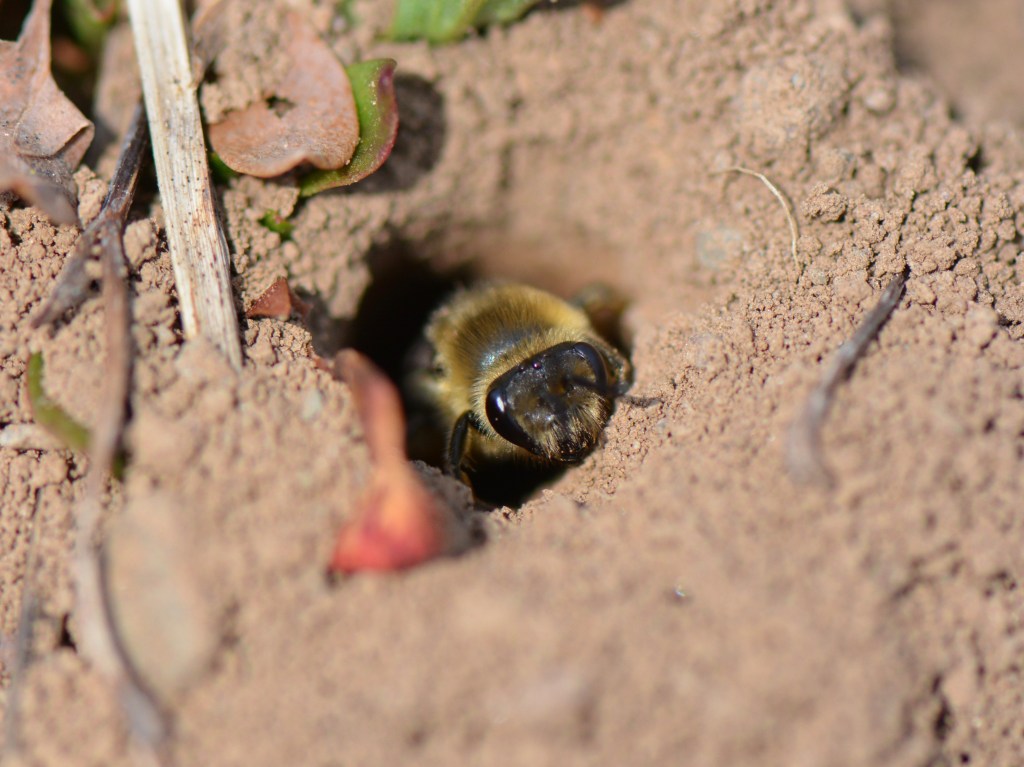
Unlike honey bees, Osmia are solitary. Each female is her own queen, crafting her nest in preexisting cavities—hollow stems, reed tubes, even cracks in walls.

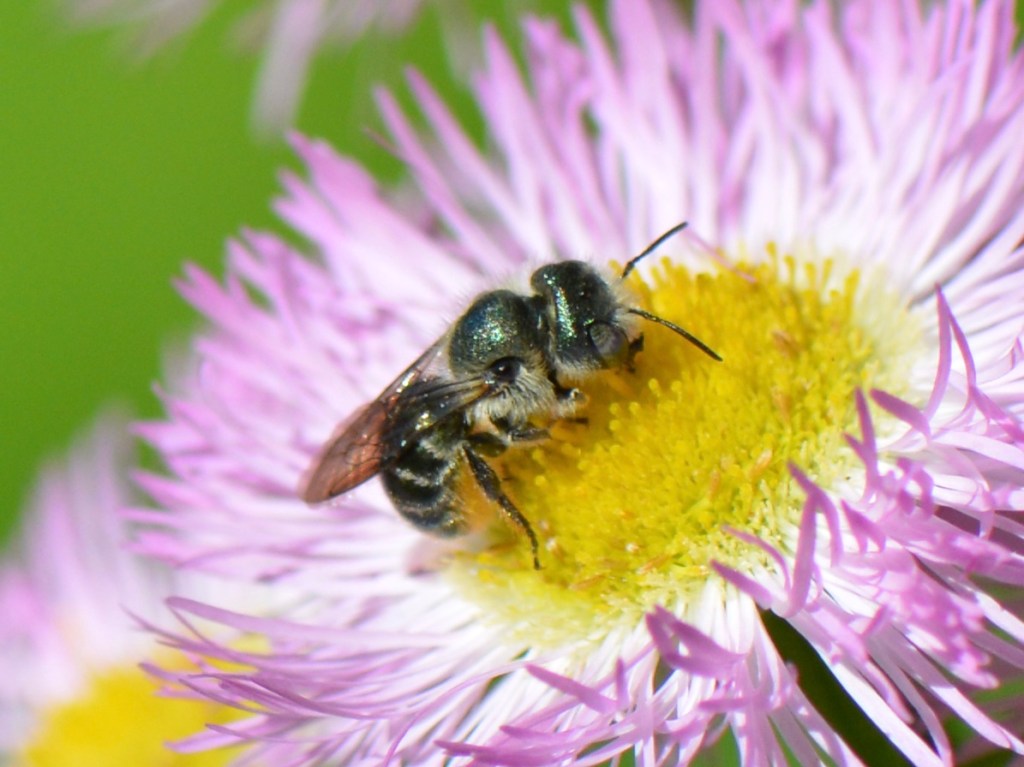
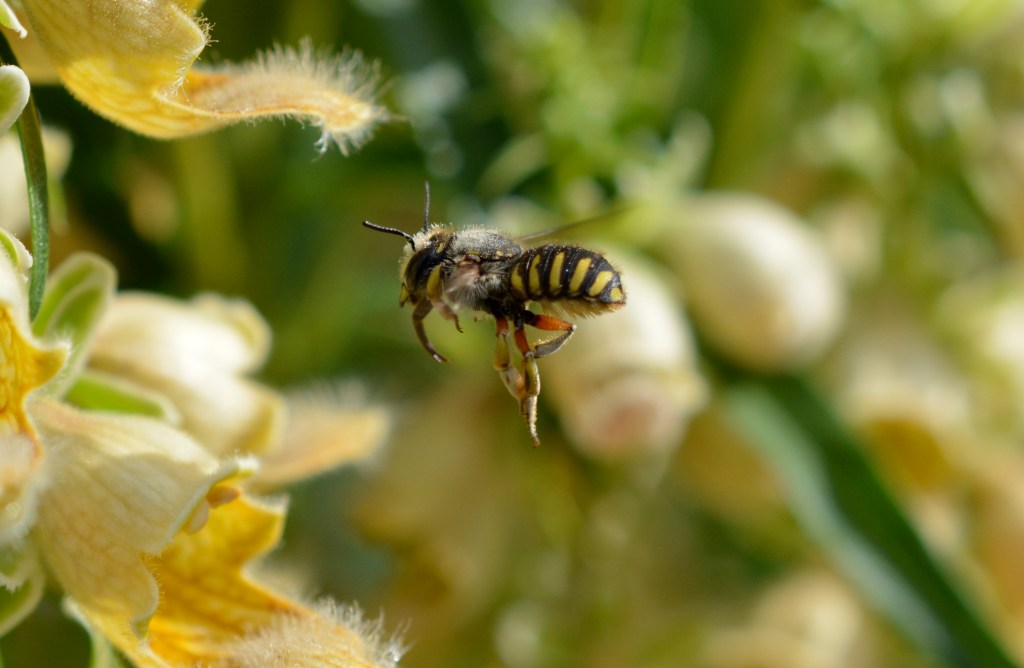
Like others in the Megachilidae family, Osmia carry pollen not on their legs, but on stiff, brushlike hairs (called scopae) on the underside of their abdomen. Their stout, compact bodies and metallic blue sheen—especially in the East—can lead observers to mistake them for flies at first glance. But a closer look reveals the rhythm of a true pollinator.

Mason bees earn their common name from their craft: they partition their nests with mud. Inside each tiny chamber, a single egg rests atop a loaf of “bee bread”—a mix of nectar and pollen. Gathering the provisions for just one egg takes 15 to 35 trips and about 1,875 flower visits. Female eggs are safely placed at the back of the tunnel, males up front—an evolutionary insurance policy that favors the survival of the next generation’s mothers.
Over the seasons, the egg hatches into a larva, spins a silken cocoon, and enters pupation. When the cycle completes the following spring, the adult bee emerges, ready to begin again.
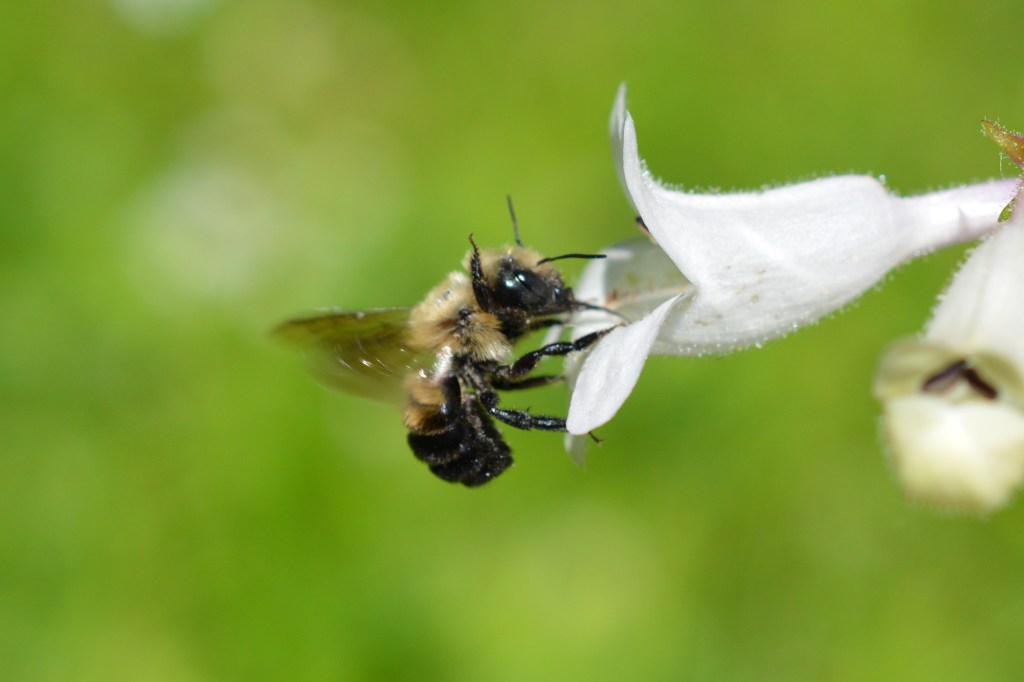
Mason bees are part of the 30% of native bees that nest above ground. They make excellent use of artificial bee houses filled with paper tubes, phragmites, bamboo, or other hollow stems. Holes drilled in wood can also attract them, though reused cavities may harbor disease. If your bee house is portable, store it in a sheltered place once nesting ends, keeping it at outdoor temperatures, then set it out again in late winter or early spring to welcome returning bees.
There’s no need to buy bees. If you build it, they will come—especially if you plant the flowers they love. Osmia are already out there, waiting for the right home and the right bloom.

 Native Beeology