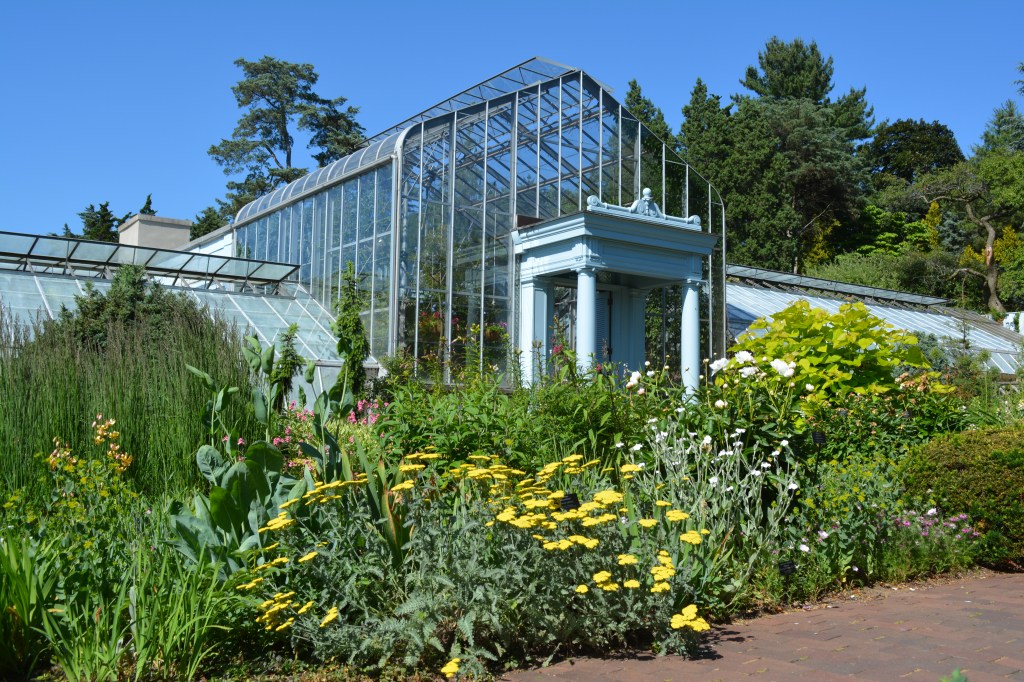
Wave Hill, a 28-acre public garden in the Bronx, stands as a living testament to what urban ecology can become when wildness and stewardship meet. From the Pergola Overlook, visitors are offered more than a view—they’re invited into a moment of awe. The Palisades rise across the Hudson like ancient sentinels, while below, gardens hum with the quiet labor of bees, butterflies, and blooms.
This is not just beauty for beauty’s sake. Wave Hill is a critical refuge for pollinators—especially native bees—who are under siege from habitat loss, pesticides, and climate change. Research continues to affirm what gardeners have long intuited: flowering urban oases like this one are not only healing to the human spirit, but lifelines to pollinators whose survival hinges on diverse forage and safe nesting grounds.
Pergola Overlook: A Skyline for Pollinators
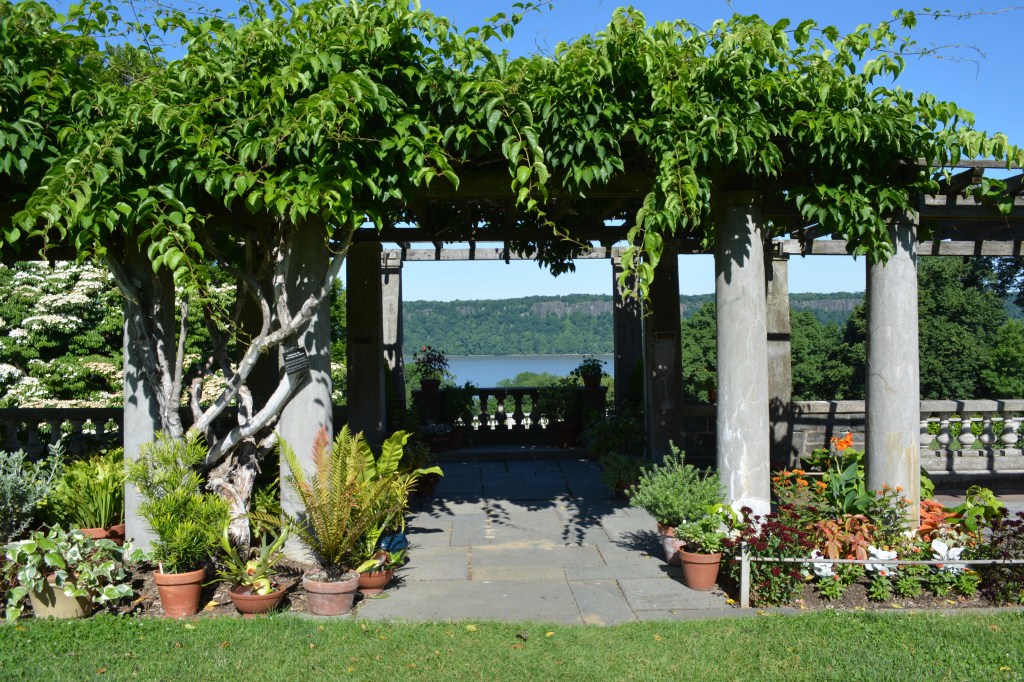
Framing a sweeping view of the Hudson River and the Palisades, the Pergola Overlook is more than a scenic rest stop—it’s a high perch in the city’s pollinator corridor. Beneath its beams and climbing vines, large carpenter bees (Xylocopa spp.) bore tunnels into soft wood, their gentle buzzing echoing the hum of summer life drifting on the breeze.
Carpenter bees are among the earliest to emerge in spring, seeking untreated wood to raise their young. Though large and bold in flight, they are rarely aggressive and play a key role in pollinating early-blooming flowers.
This lofty corner of the garden blends structure with function—an architectural perch that doubles as nesting habitat, observation post, and seasonal beacon for pollinator diversity.
Ground Nesters in the Flower Garden
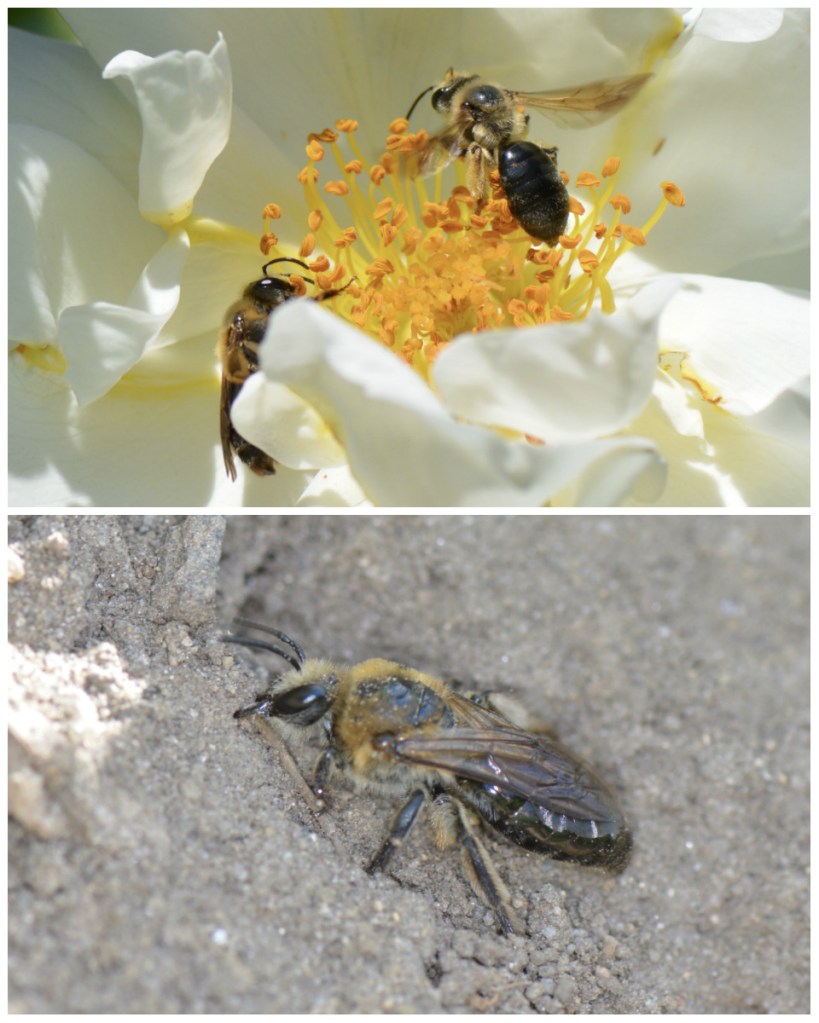
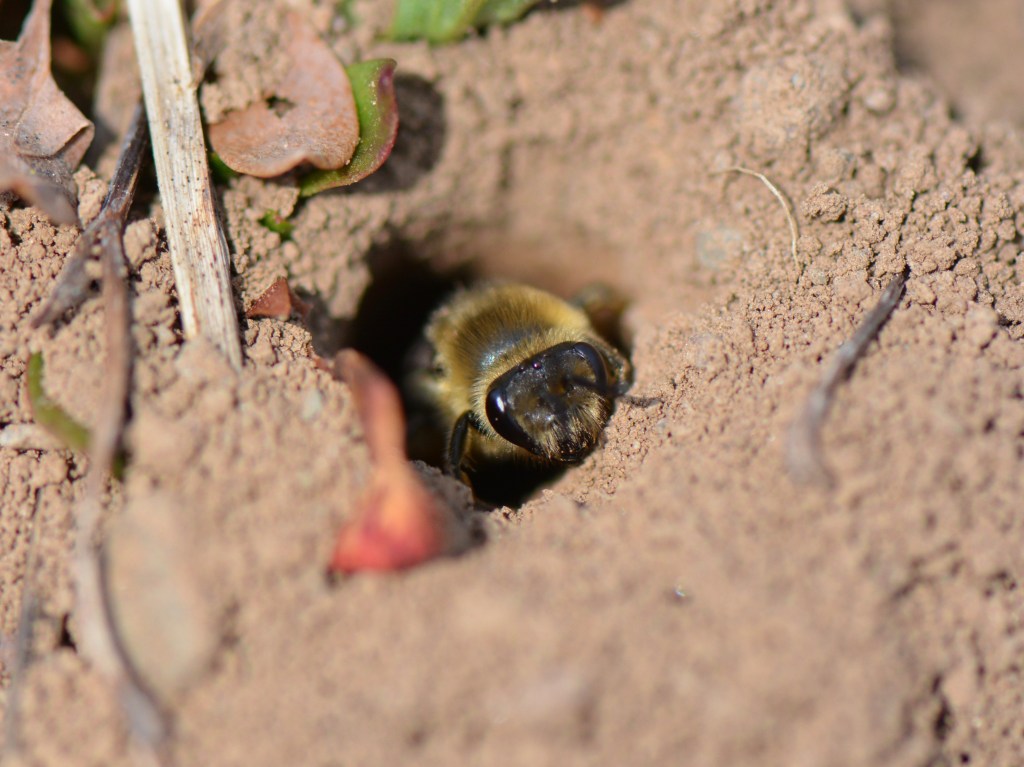
A 2008 survey of community gardens in the Bronx and East Harlem recorded 54 bee species—13% of the total found in New York State. Wave Hill reflects that richness. In its Flower Garden, native cellophane bees (Colletes spp.) quietly excavate underground tunnels among the roots of perennials, often going unnoticed by visitors.
Unlike yellow jackets, which are wasps, solitary bees like these are non-aggressive and live independently. Each female builds her own nest, laying the foundation for the next generation without the need for a queen or hive.
Urban landscapes rarely offer the undisturbed soil these bees need, but gardens like Wave Hill challenge that norm. With 70% of native bees nesting underground, providing loose, healthy soil is just as essential as planting flowers. In doing so, gardens don’t just bloom—they restore what the city has paved over.
Carder Bees and the Complex Web of the Urban Pollinator Community
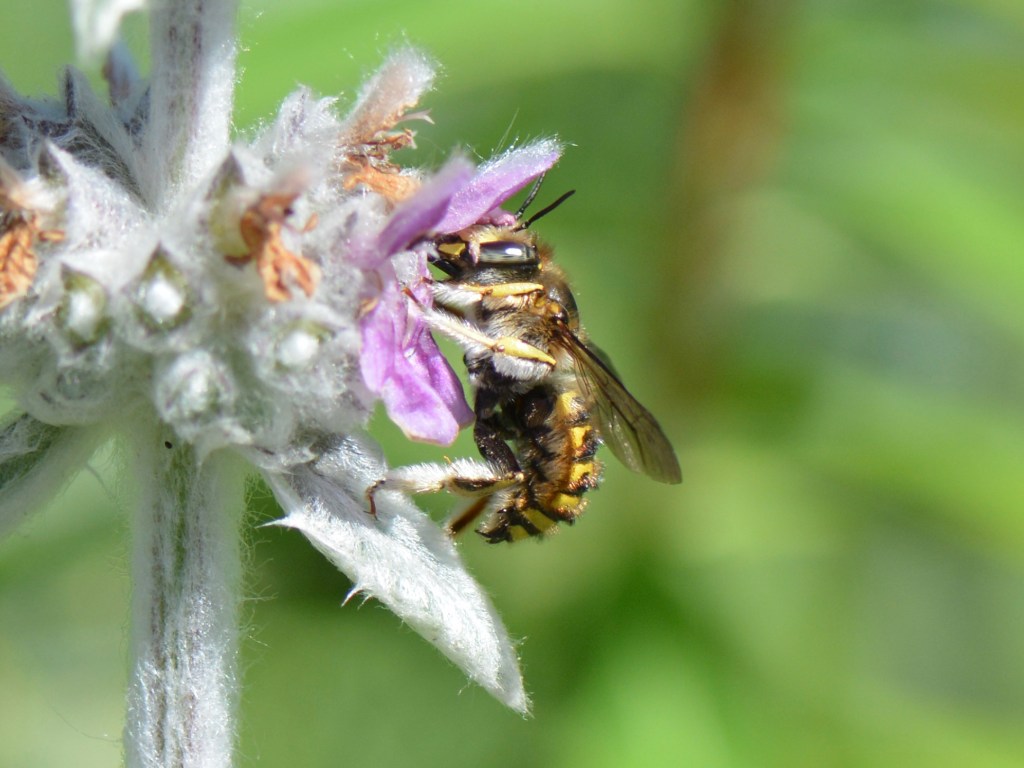
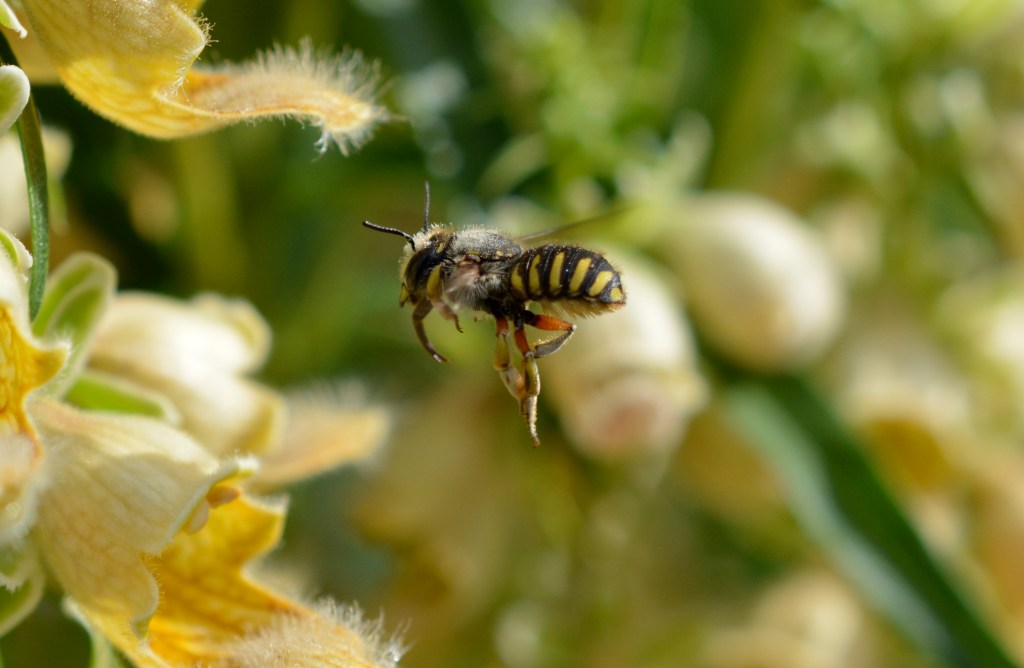
Not all pollinators here are native. Exotic species, such as European wool carder bees, thrive in the Bronx as well. Their presence is a double-edged sword. Territorial and tough, male carder bees establish zones around plants like lamb’s ear, chasing off rivals with sharp abdominal spikes. They don’t sting, but they’re effective enforcers. Unlike our native bumble bees, who tend to one flower species at a time—a practice known as floral constancy—carder bees flit indiscriminately, lessening pollination success.
Their abundance, nearly 20% of all species recorded in that 2008 study, underscores a tension in urban ecology: how to support a thriving pollinator population without letting non-native generalists overshadow specialist natives.
Specialists Need Special Plants
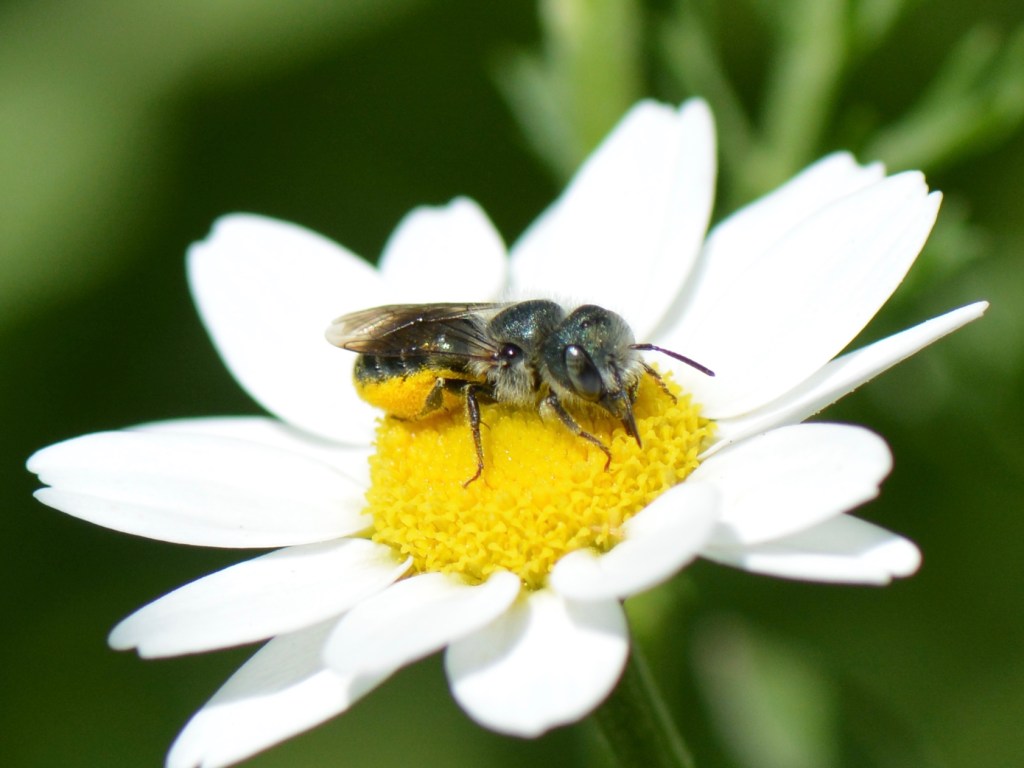
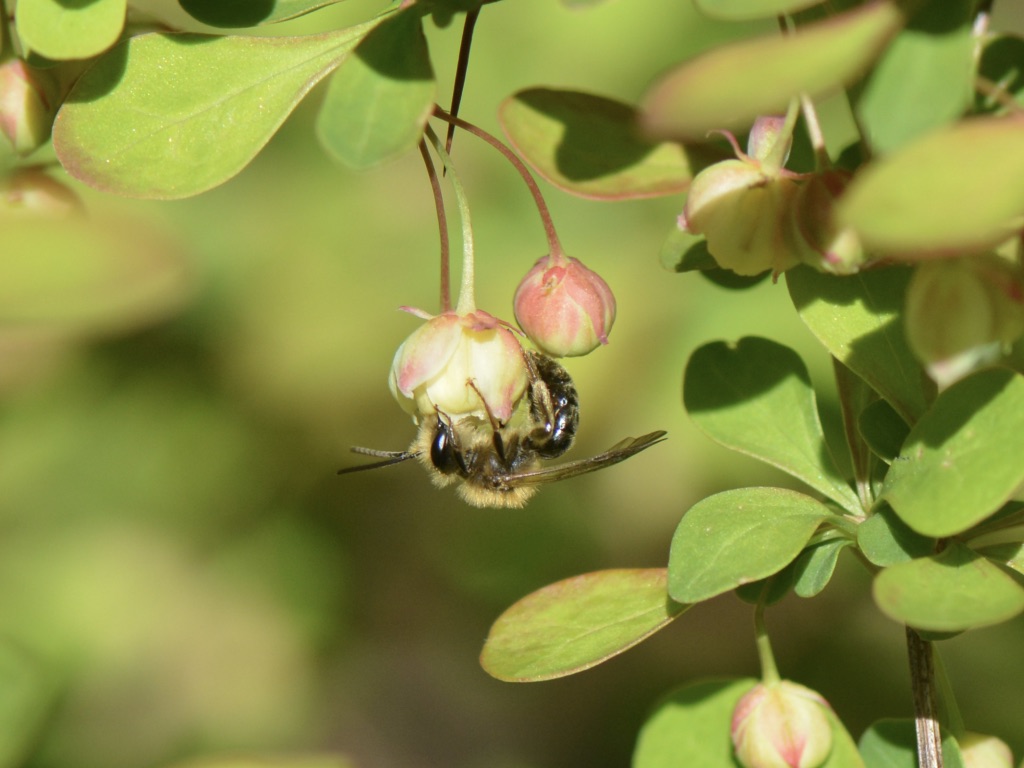
Thirty percent of native bees are floral specialists, bonded through evolution to a narrow range of plants. In Kingston, NY, at the YMCA Farm Project, the broad-footed cellophane bee (Colletes latitarsis) emerges only where ground cherries and tomatillos grow. These delicate relationships don’t survive without intentional planting. That’s why the Elliptical Garden and Wild Garden at Wave Hill are critical. Their emphasis on native flora—like plants in the rose family—supports bees such as the striking blue mason bees (Osmia spp.), who gather pollen on the underside of their bellies and nest in hollow reeds.
These bees are not just pollinators. They are storytellers, reminding us of ancestral plant-bee relationships etched into local ecologies.
A Linden in June: The Season’s Crescendo
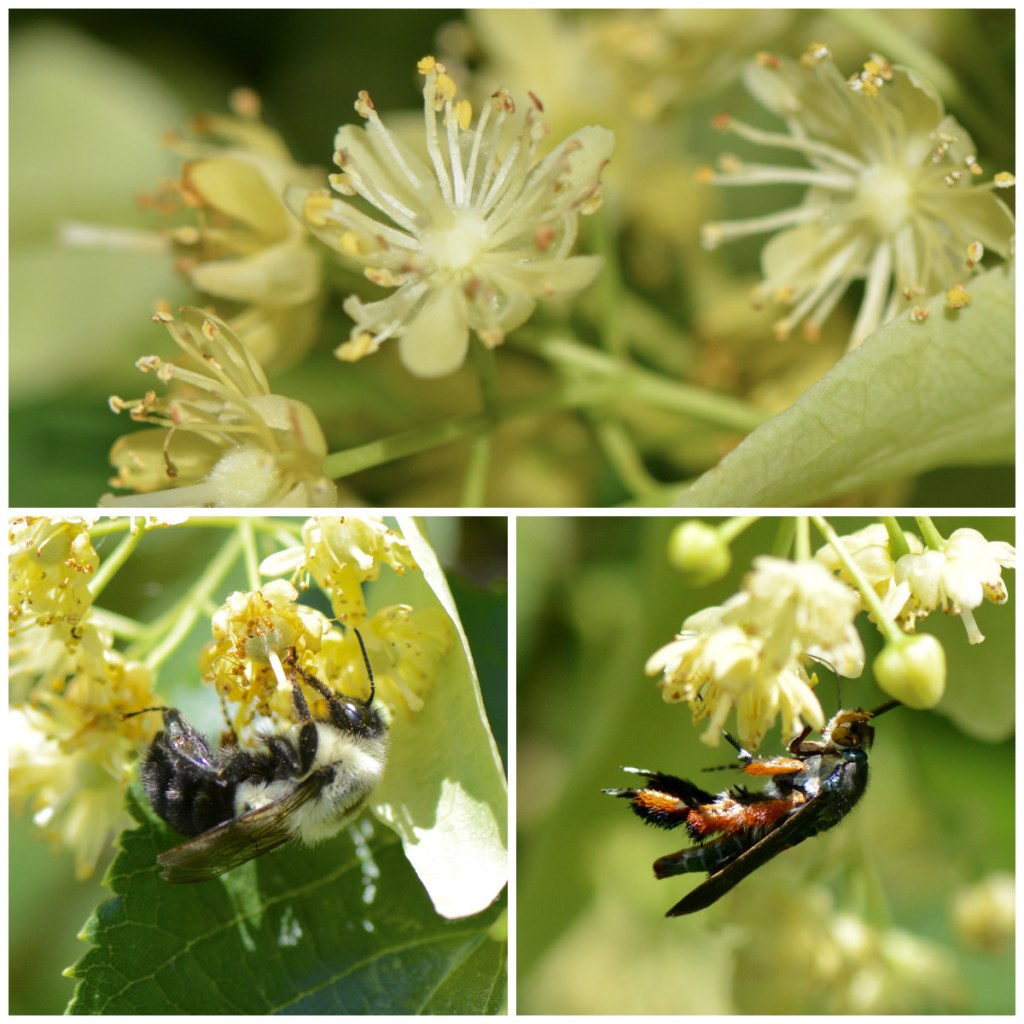
By mid-June, the little leaf linden (Tilia cordata) outside Wave Hill House becomes a scene of joyful chaos. Bumble bees, carpenter bees, honey bees, and mining bees gorge on its nectar, forming a harmonious buzz among its drooping branches. Its American cousin, basswood (Tilia americana), offers nectar so rich—up to 33% sugar content—that bees return en masse, year after year.
These brief floral fireworks hint at a deeper truth: abundance in bloom doesn’t need to last long to matter. What’s important is that it arrives—and returns.
The Urban Wild
Resting beneath Wave Hill’s shade, the dream of a pollinator-rich city no longer feels distant. With intention, we can turn pavement into promise. The 50-acre Riverdale Park, just beyond the garden’s edge, threads south into Inwood Hill Park, then to Fort Tryon—a corridor of wildness across borough lines. These green spaces, connected by flight and floral need, are a quilt of hope for pollinators seeking refuge.
It may seem incredible that a creature so small can inspire such care, but bees do what few others can: they move us to plant, to observe, to restore. In a time when the future feels uncertain, they remind us that even the smallest efforts—like planting native wildflowers or sparing a patch of bare soil—can ripple into real change.
Plant it, and they will come. And when they do, they’ll bring a city back to life.
References:
Bee Richness and Abundance in New York City Urban Gardens
Kevin C. Matteson, John S. Ascher, and Gail A. Langellotto
Annals of the Entomological Society of America Jan 2008 : Vol. 101, Issue 1, pg(s) 140- 150
The City as a Refuge for Insect Pollinators
Damon M. Hall Gerardo R. Camilo Rebecca K. Tonietto Jeff Ollerton Karin Ahrné Mike Arduser John S. Ascher Katherine C. R. Baldock Robert Fowler Gordon Frankie Dave Goulson Bengt Gunnarsson Mick E. Hanley Janet I. Jackson Gail Langellotto David Lowenstein Emily S. Minor Stacy M. Philpott Simon G. Potts Muzafar H. Sirohi Edward M. Spevak Graham N. Stone Caragh G. Threlfall
Conservation Biology February 2017 : Vol 31, Issue 1, pg(s) 24-29

 Native Beeology