Written in the wetlands, inspired by the buzz.
If you’re wandering the soggy edges of a Hudson Highlands wetland in mid-July, you might stumble upon one of the most fascinating native shrubs in bloom: buttonbush (Cephalanthus occidentalis). Its spiky white orbs rise from a tangle of interlocking branches rooted deep in sphagnum moss, nestled among tussock sedges, highbush blueberry, and sweet azalea.
This wetland plant thrives in full to partial sun and makes its home right at the edge—where things begin to dry and the forest shifts toward oak. These edge zones are bird magnets: food-rich, dense with cover, and ideal for nesting.
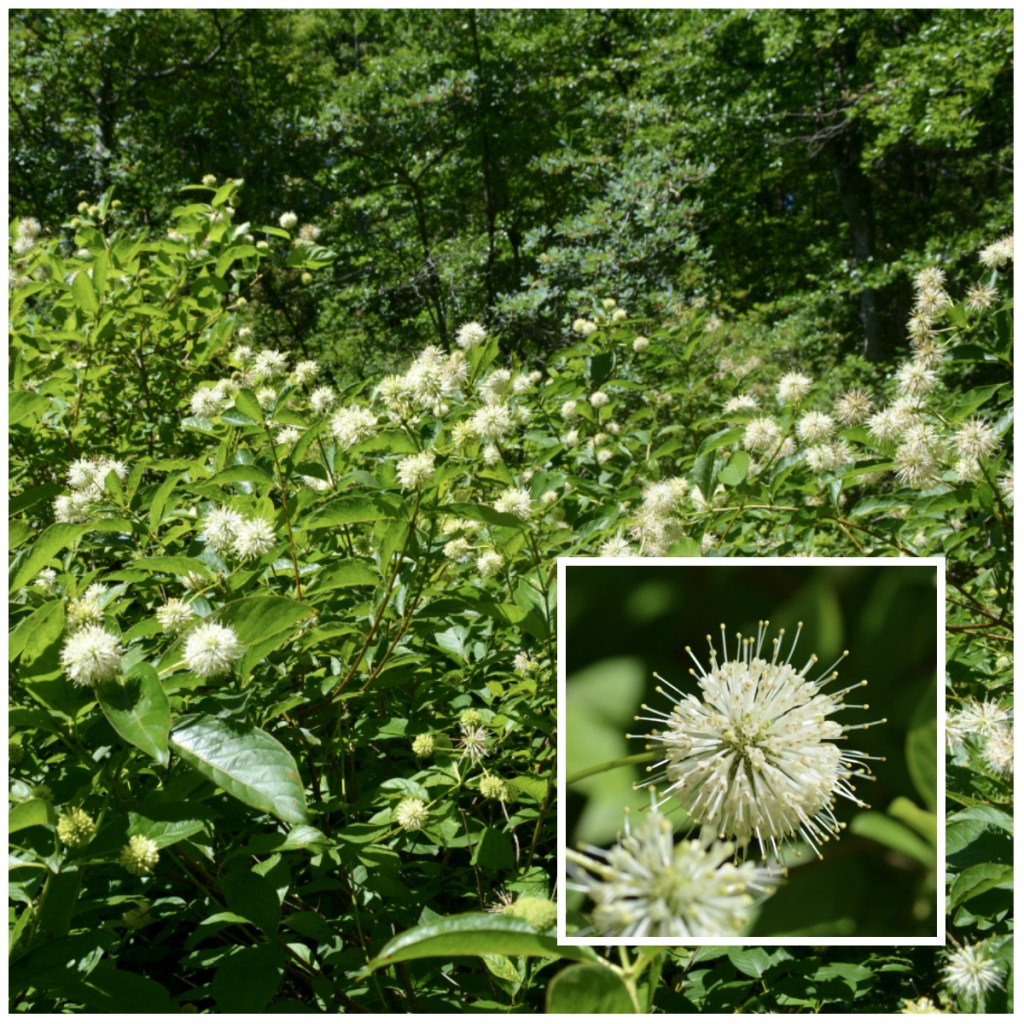
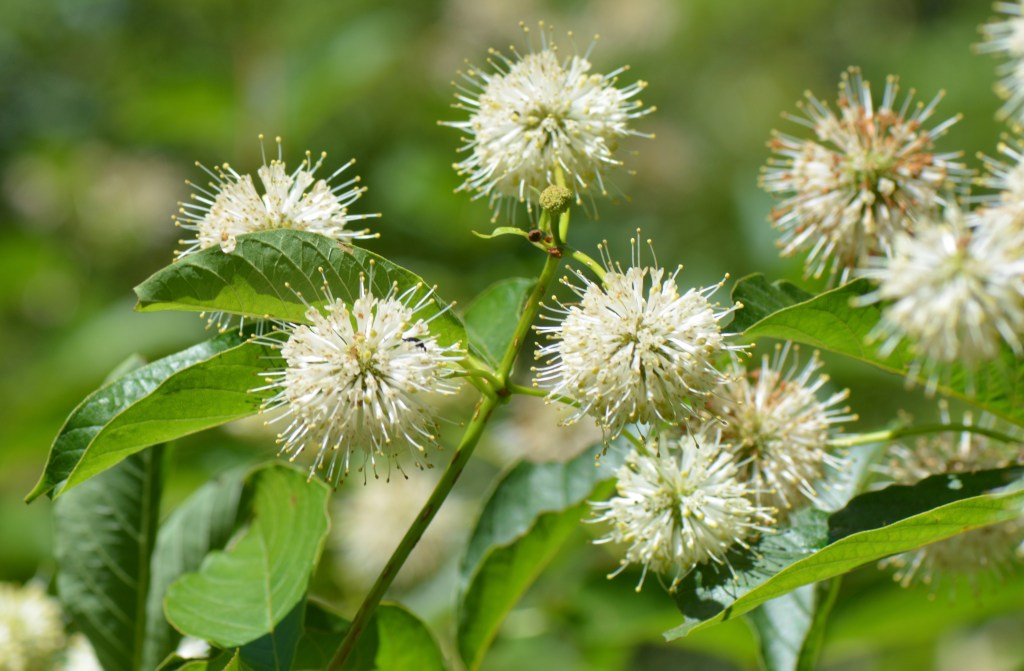
In its natural habitat, buttonbush grows anywhere from 3 to 8 feet tall. But good luck picking out one individual shrub—its sprawling stems weave together, forming dense thickets that blur the lines. When midsummer hits, the shrub bursts into bloom with bright, spherical flower clusters about the size of a golf ball. Take a closer look and you’ll see dozens of long tubular florets arranged in a perfect orb, each with a delicate pistil poking out like a pin in a cushion.
The Buzz of Summer
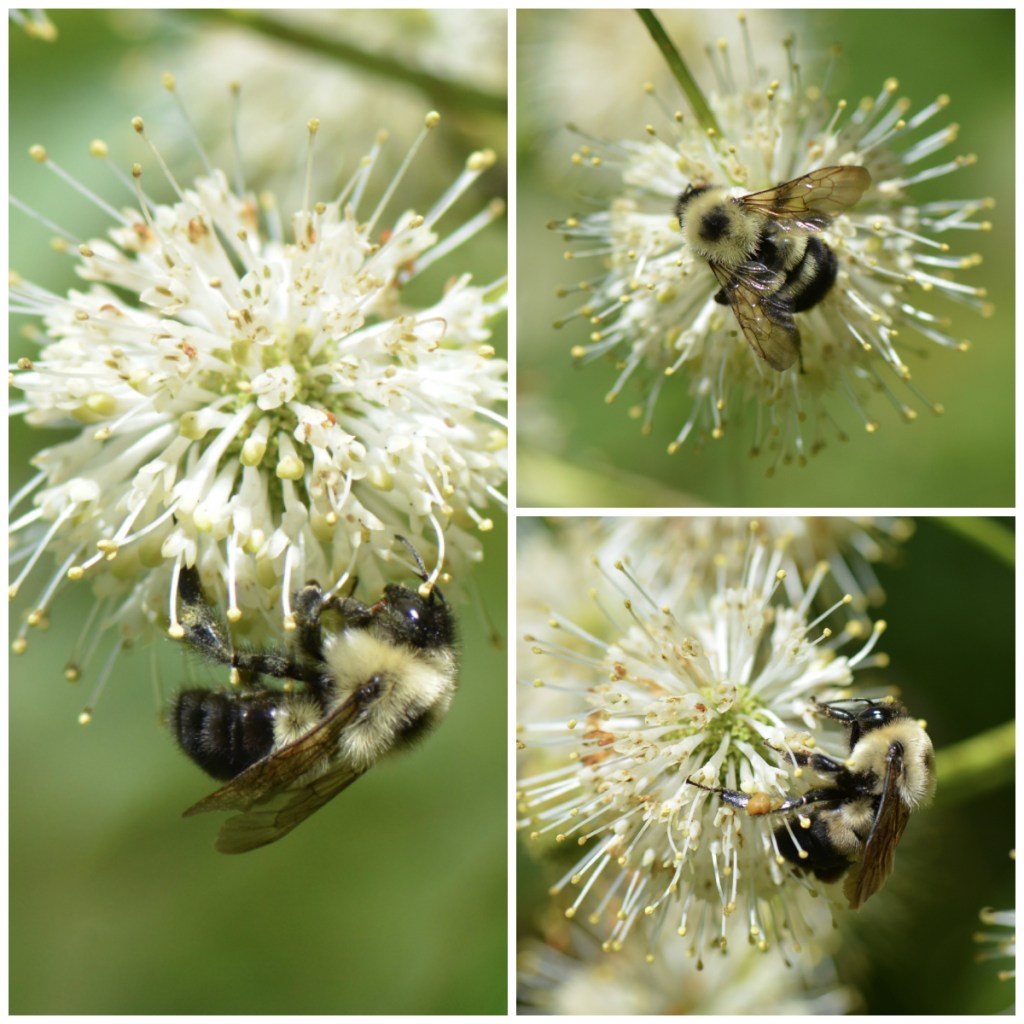
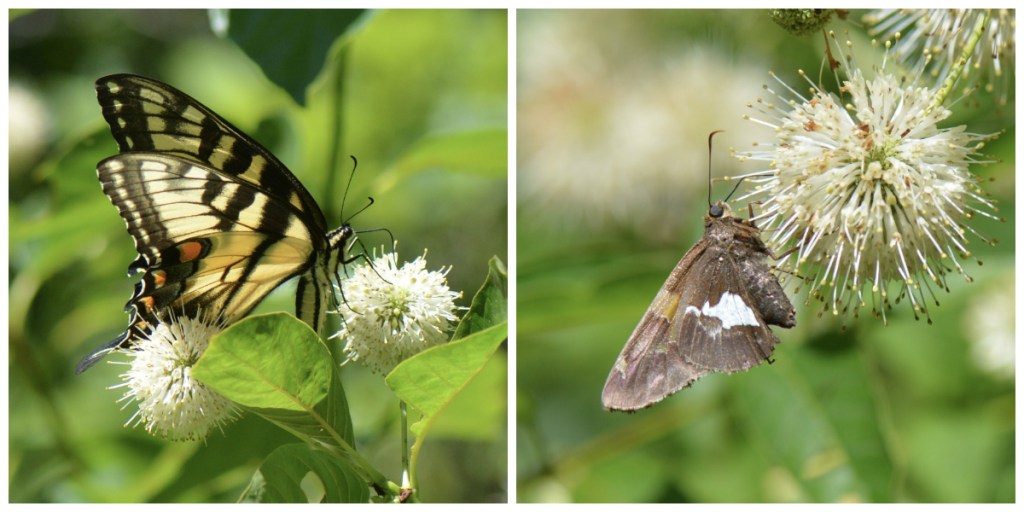
Step into a swamp full of buttonbush and you’ll enter another world. The air hums with energy. Giant yellow swallowtails (Papilio spp.) float dreamily from flower to flower. Silver-spotted skippers (Epargyreus clarus) dart about, pausing to uncurl their long proboscises to sip nectar. And then come the bumblebees—so many bumblebees—the whole scene pulsing with their collective hum.
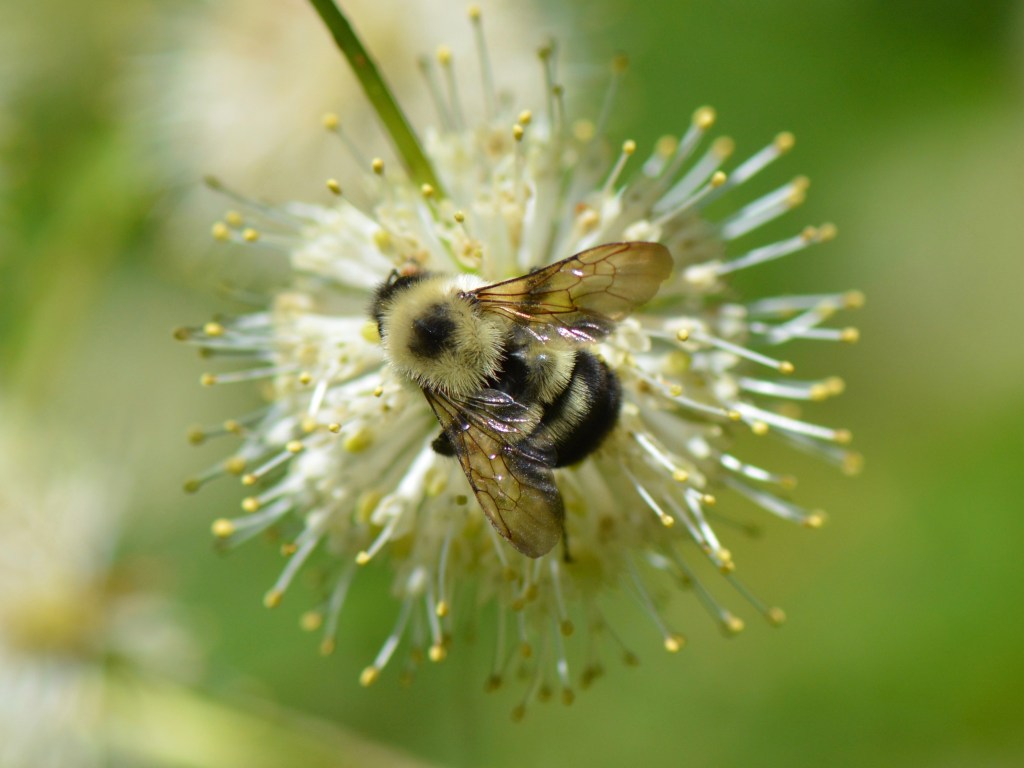
The buttonbush bloom is a major nectar event for native bumblebees (Bombus spp.). From burly queens to nimble workers, the shrubs draw in a wide cast: half-black bumblebees (B. vagans), two-spotted (B. bimaculatus), the familiar common eastern (B. impatiens), and the aptly named confusing bumblebee (B. perplexus). All working hard to gather food to raise the next generation.
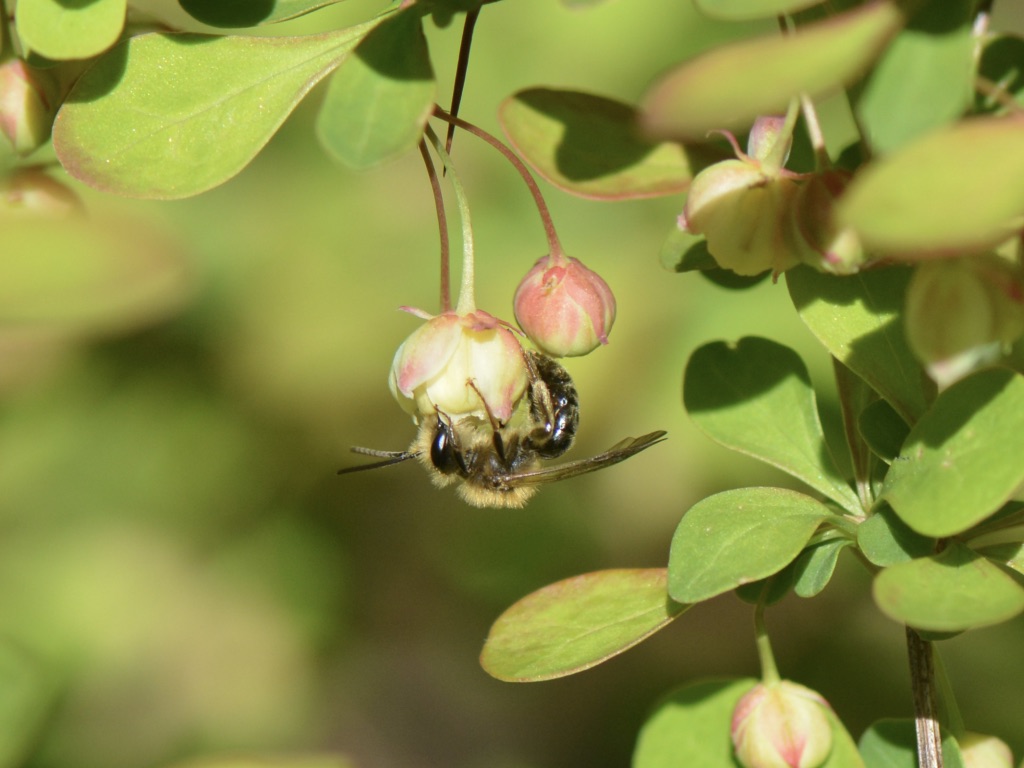
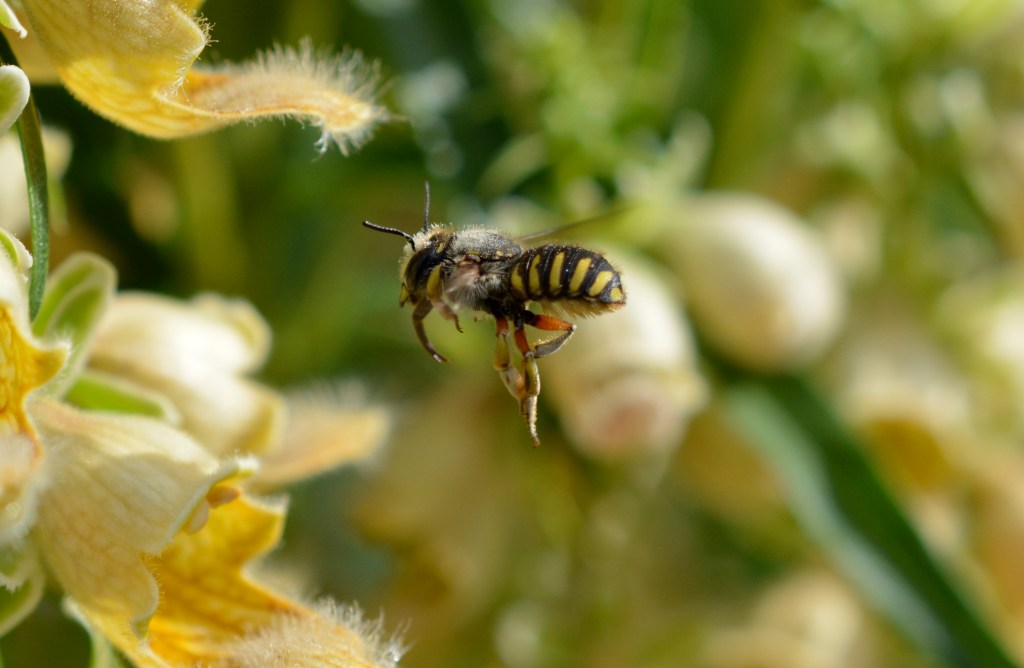
And while it’s a party for big bees, keep an eye out for the little guys. Green sweat bees (Halictus spp.) and small carpenter bees (Ceratina spp.) zip in quietly, working the flower orbs around the edges. These smaller species often prefer shallower flowers—like goldenrods, asters, or members of the carrot family—but buttonbush’s nectar-rich blooms are sometimes too good to pass up.

A Plant for the Pollinator Dearth
In the world of native bee foraging, midsummer can be a tough time. If it’s dry and hot, nectar flows slow down. Spring bloomers are long gone, and the goldenrods and asters of late summer haven’t yet arrived. This gap, often called the summer dearth, can leave pollinators scrambling for food.
That’s where buttonbush comes in.
Blooming in the thick of July, buttonbush offers a lifeline during this nectar lull. Its dense clusters provide a steady supply of both nectar and pollen, supporting a whole range of insects when little else is available. For pollinator gardens, especially those focused on supporting native bees, it’s a powerhouse plant.
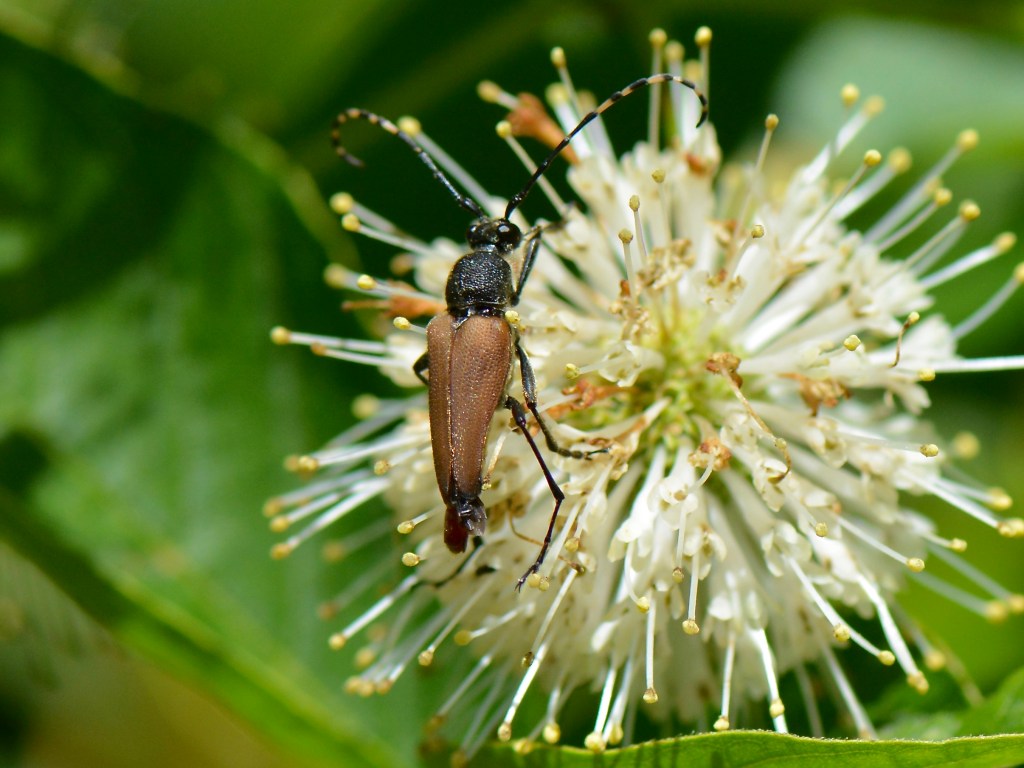
And it’s not just bees and butterflies that show up. Even pollinating beetles get in on the action.
More Than Just a Pretty Bloom
Buttonbush isn’t only a fantastic pollinator plant—it’s also beautiful. In fall, its leaves turn vibrant shades of red and yellow, and the seed heads—those little “buttons”—persist into winter, drying into deep crimson reminders of summer’s bloom.
It’s also a host plant for several moths, including the titan sphinx (Aellopos titan), hydrangea sphinx (Darapsa versicolor), and the royal walnut moth (Citheronia regalis).
And let’s not forget: it’s a native alternative to butterfly bush (Buddleia spp.), which may attract butterflies but doesn’t offer the same ecological benefits. Buttonbush supports a diverse range of native pollinators—and fits beautifully into wild or cultivated spaces alike.
Bee-Friendly Tip:
Want to support native bees through the summer dearth? Add buttonbush to your pollinator garden. Plant it near a pond edge or in a rain garden—anywhere moist with a bit of sun. The bees (and butterflies, and beetles…) will thank you.

 Native Beeology