What you plant matters more than you think.
Before placing a plant in the ground, pause. Ask: Is this helping or harming the local ecosystem? Many common garden choices can unintentionally wreak havoc on native habitats and the bees, butterflies, and wildlife that depend on them.
New York State maintains a list of prohibited and regulated invasive species—plants that are illegal to sell, import, transport, or propagate (see the list here). These invasives are aggressive competitors that displace native flora, reduce biodiversity, and disrupt ecological relationships forged over millennia.
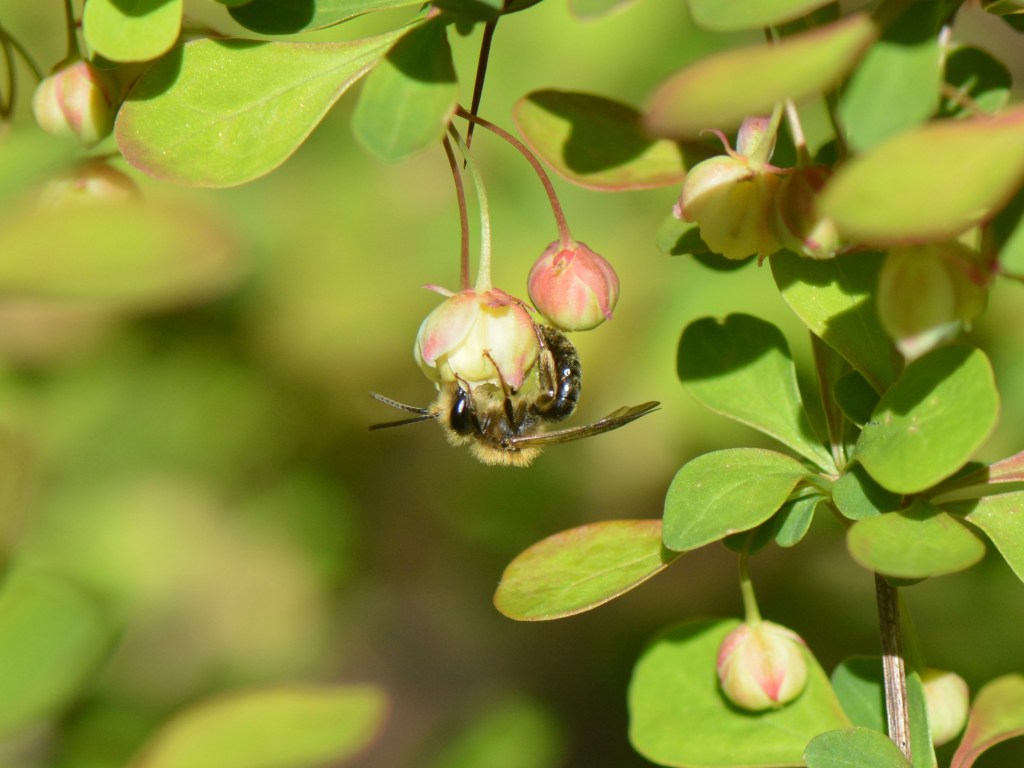
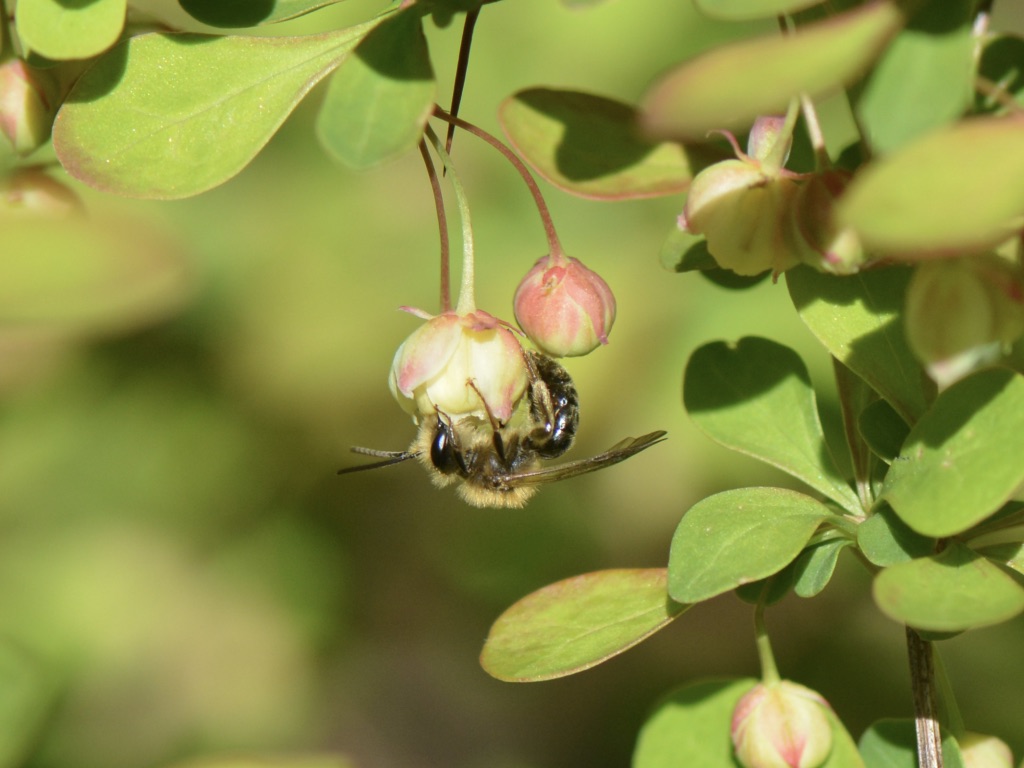
Some native bees will forage on invasive plants like Japanese barberry—but this doesn’t mean the plant supports healthy ecosystems or long-term pollinator survival.
Invasive Plants: Silent Ecosystem Disruptors
Take black and pale swallow-wort (Cynanchum spp.), for instance. A member of the milkweed family, swallow-wort confuses monarch butterflies into laying eggs on it. The result? Larvae hatch but can’t survive. Deer and livestock avoid it, giving it a free pass to dominate meadows, where it chokes out true milkweeds and other wildflowers that pollinators rely on.
Or consider Japanese knotweed (Reynoutria japonica). Though it attracts pollinators late in the season, it rapidly creates monotypic stands—single-species thickets that leave no room for other plants. In places like the UK, knotweed is so destructive it lowers property values and complicates land sales. In the U.S., its unchecked growth displaces diverse plant communities, leading to less food and fewer habitat options for insects.
A diverse pollinator population depends on a diverse bloom cycle—from early spring to late fall.
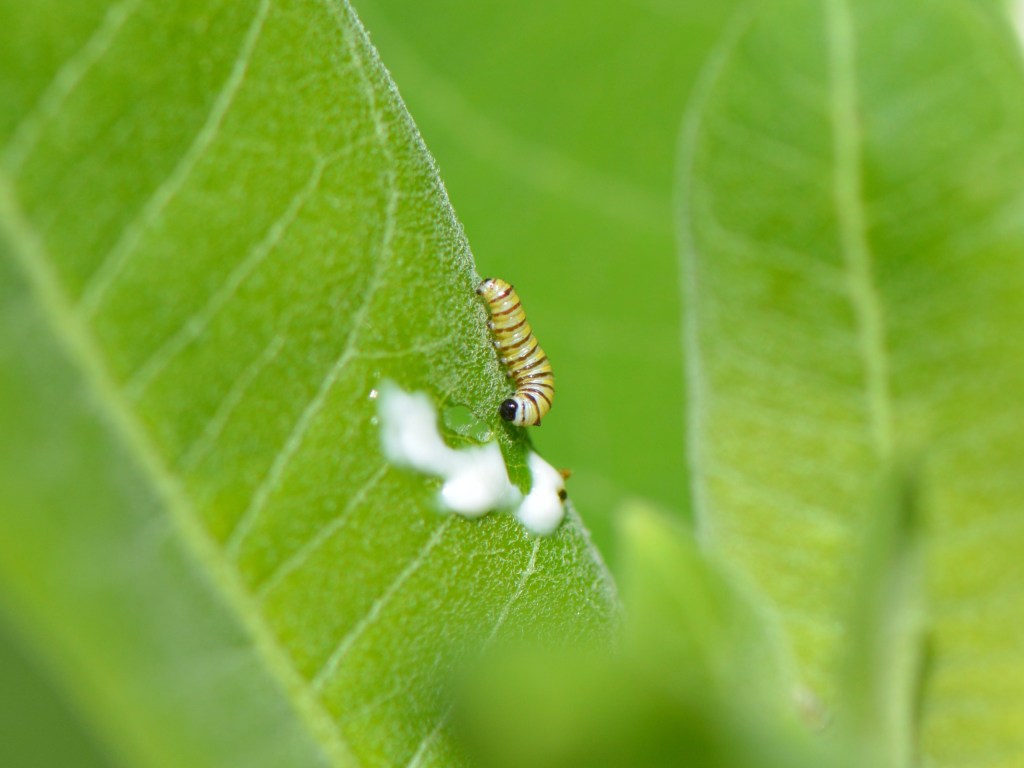
Monarchs rely on true milkweeds to complete their life cycle. Invasive swallow-worts mimic milkweed but are deadly to monarch larvae.
Why Native Plants Matter for Native Bees
Invasive species aren’t just botanical nuisances—they actively harm the native bees we work so hard to protect. Non-native plants often do not support the lifecycle of local insects. And while some, like butterfly bush (Buddleja), draw in generalist pollinators (like honeybees and eastern bumblebees), they often fail to support specialist bees—species that rely on a single plant or plant family to gather pollen.
Roughly 30% of the 450 native bee species in the Mid-Atlantic and Northeast are pollen specialists. These bees are evolution’s fine-tuned instruments, synced with native plants in families like Asteraceae, Rosaceae, and Fabaceae. Remove the plant—and the bee disappears with it.
Native plants and native pollinators are partners in a story written over thousands of years.
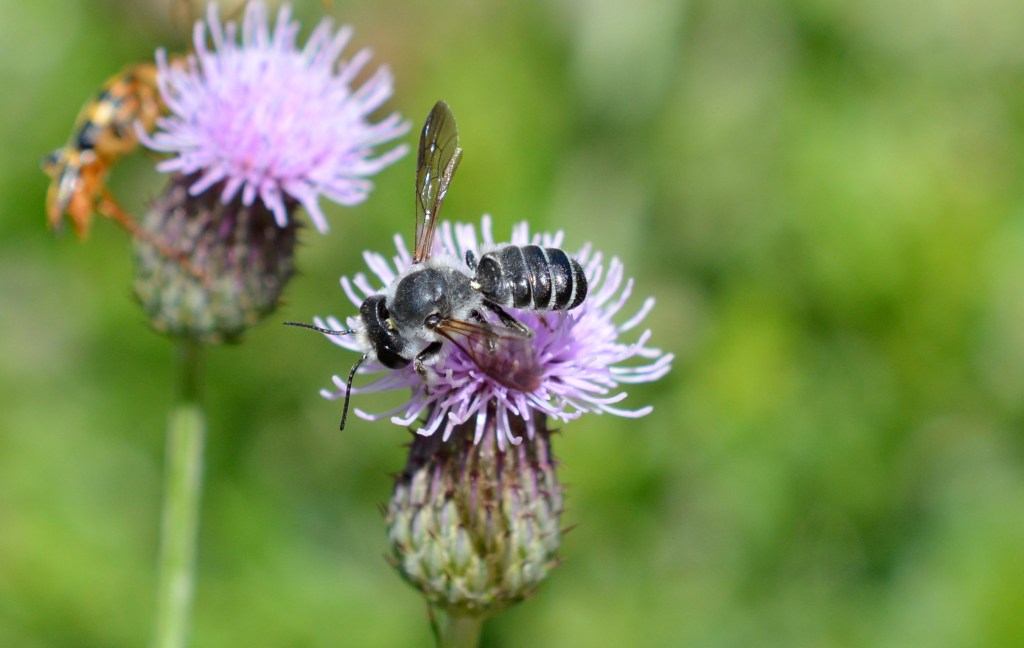
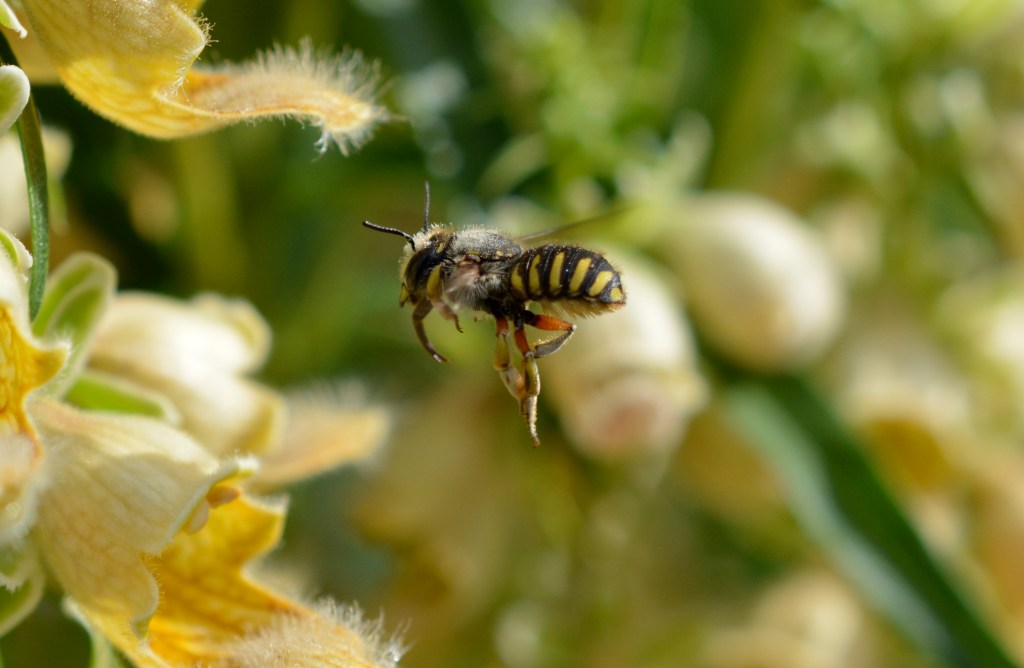
Leafcutter bees, like many generalists, can adapt to various flowers—but invasive thistles often dominate open spaces, crowding out essential native species.
Do Invasives Help… or Hurt?
A study at Acadia National Park explored this question. Researchers compared three invasive plants with three native analogs—like Japanese barberry with lowbush blueberry—and found that invasive plants attracted more bees. However, while bee abundance was higher, fruit set (pollination success) of the native plants wasn’t improved. And the long-term impact? Still unknown.
Invasives may offer quick nectar—but at what cost? Over time, they can replace native flora altogether, leaving a floral desert for specialists and reducing the quality and diversity of food for all pollinators.
Short-term gain for a few species. Long-term loss for the entire ecosystem.

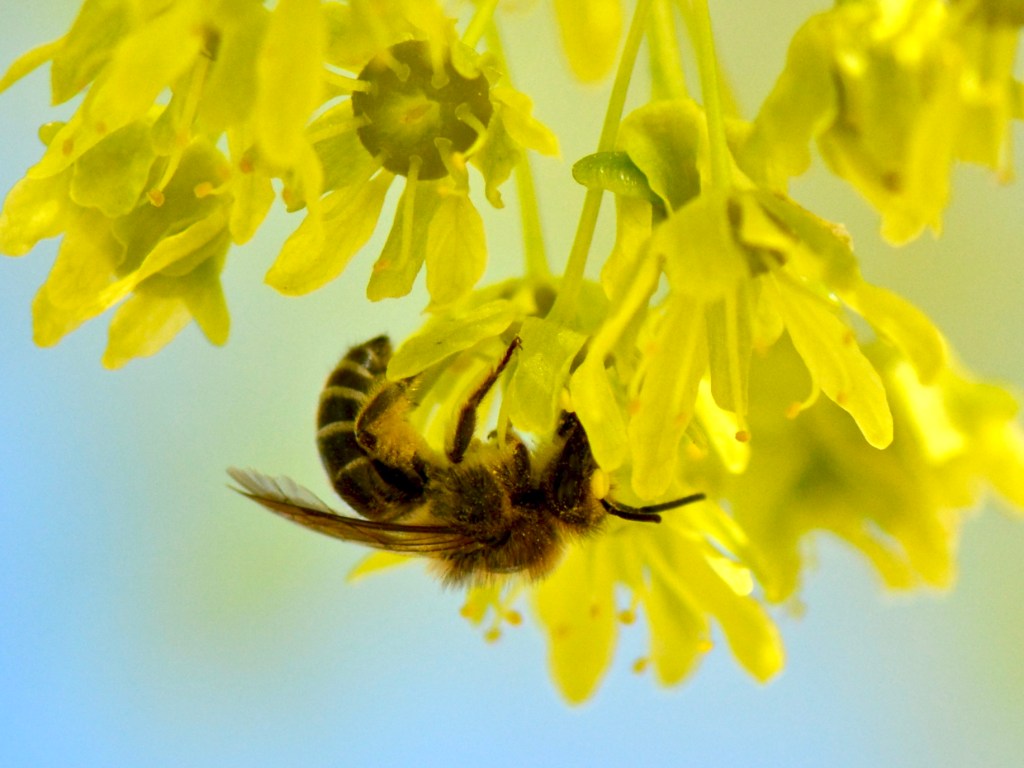
Norway maple blooms early and attracts pollinators, but it aggressively displaces native maples, reducing long-term habitat value.
The True Cost of Invasives
Why are invasive plants so hard to stop? Because they’ve left their natural predators behind. In North America, only five species feed on common reed (Phragmites), while in its native range, over 170 species do. Deer avoid non-natives. Gardeners prize them for being pest-free and low-maintenance. But this “advantage” comes at the cost of ecological collapse.
Kudzu (Pueraria montana var. lobata) is a perfect example—“the vine that ate the South.” It blankets and suffocates forests, displacing plants that once supported pollinators, birds, and mammals. By contrast, a single native oak tree can support over 500 species of butterflies and moths. Kudzu supports only one.
Invasive plants don’t just outcompete—they outlast, outspread, and ultimately, outbalance.

Restoring riparian zones with native plants strengthens root systems, improves water quality, and builds natural resistance to invasive encroachment.
How Do They Get In?
Many invasive plants entered the landscape through the horticulture industry, chosen for their ornamental value and deer resistance. Species like Japanese barberry, burning bush, and Norway maple were marketed for their hardiness—yet that very trait made them unmanageable outside the garden bed.
Disturbed habitats—construction sites, roadsides, forest edges—become hotspots for invasion. Once inside, invasive plants exploit gaps in the canopy, especially when native trees die due to pests like hemlock woolly adelgid or emerald ash borer. These plants wait for the moment the forest lets its guard down.
Fragmented ecosystems give invasives an edge. Restoring balance means restoring continuity.

Spurge thrives in disturbed meadows, drawing in generalist pollinators like honeybees—while edging out native plants that specialist bees depend on.
Restoring the Balance
Controlling invasive species is the most effective thing you can do to support native pollinators. Planting natives is important—but if invasives take over, they nullify those efforts.
Every gardener, landscaper, homeowner, and land steward can help. Choose native plants. Remove invasives early. Maintain habitat edges. Educate others. And advocate for responsible land management and policy.
Nature thrives in diversity. And when we protect it, so do we.
Sources:
NYS Prohibited Plant List – https://www.dec.ny.gov/docs/lands_forests_pdf/isprohibitedplants2.pdf
Vanbergen, Adam, Espíndola, Anahí, and Aizen,Marcelo A.. January 2018. Risks to Pollinators and Pollination from Invasive Alien Species. Nature Ecology & Evolution. Vol 2. 16–25.
Jarrod Fowler and Sam Droege. Specialist Bees of the Mid-Atlantic and Northeastern United States. https://jarrodfowler.com/specialist_bees.html
Stubbs, C. S., F. Drummond, and H. Ginsberg. October 2007. Effects of invasive plant species on pollinator service and reproduction in native plants at Acadia National Park. Technical Report NPS/NER/NRTR–2007/096. National Park Service. Boston, MA.

 Native Beeology