As a beekeeper, one of my greatest joys is hearing the winter hum of a thriving hive. On a cold day, that steady buzz from inside the wooden box is a sign of life, resilience, and survival. And when I see honeybees hauling in their first heavy loads of pollen in early spring, I breathe a deep sigh of relief. John Burroughs once compared this moment to the dove returning to Noah with an olive branch—a quiet promise that winter has passed.
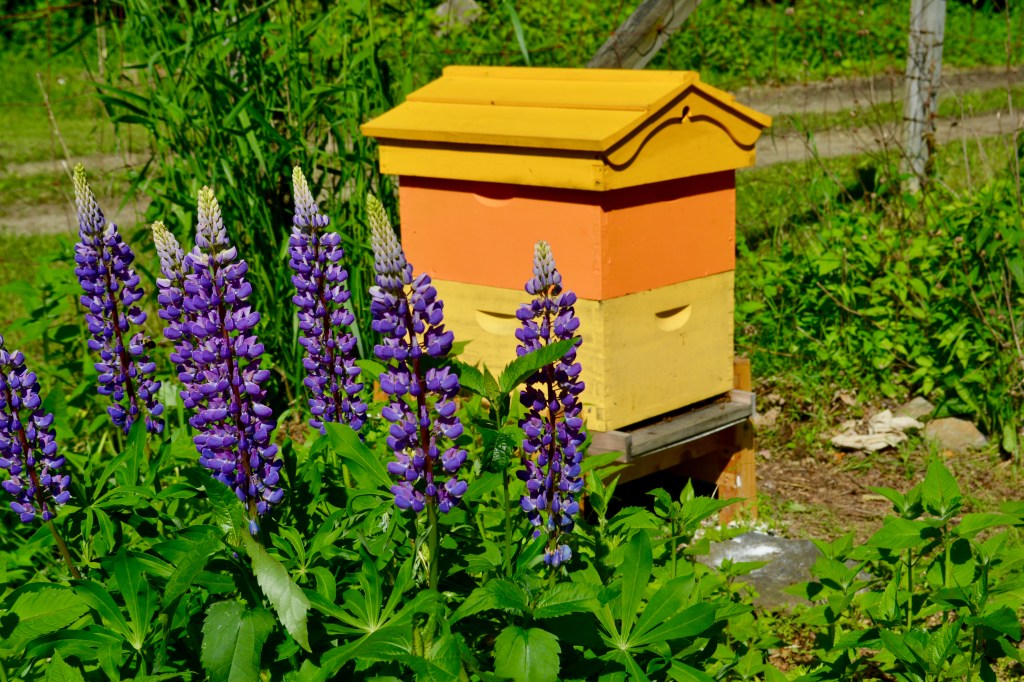
I keep my hives close to the garden, not far from the cows and sheep. Just like the other animals on the farm, I manage my honeybees as livestock. And by definition, that’s exactly what they are.
“Livestock: animals kept or raised for use or pleasure, especially farm animals kept for use and profit.” — Merriam-Webster Dictionary
The American Veterinary Medical Association adds that honeybees are classified as livestock and food-producing animals because their products—honey, pollen, wax, royal jelly—enter the human food chain.
It’s important to remember that, like most of our farm animals, honeybees are not native to North America. They were brought here by European settlers. While their population decline has made headlines, the core issue is agricultural, not environmental. Our food system, dependent on monocultures, requires migratory beekeeping: hives are trucked across the country—from California almonds to Maine blueberries. It’s a taxing, unsustainable system that leaves honeybees vulnerable to pests, pesticides, and stress.
The Unseen Pollinators in Honeybee’s Shadow
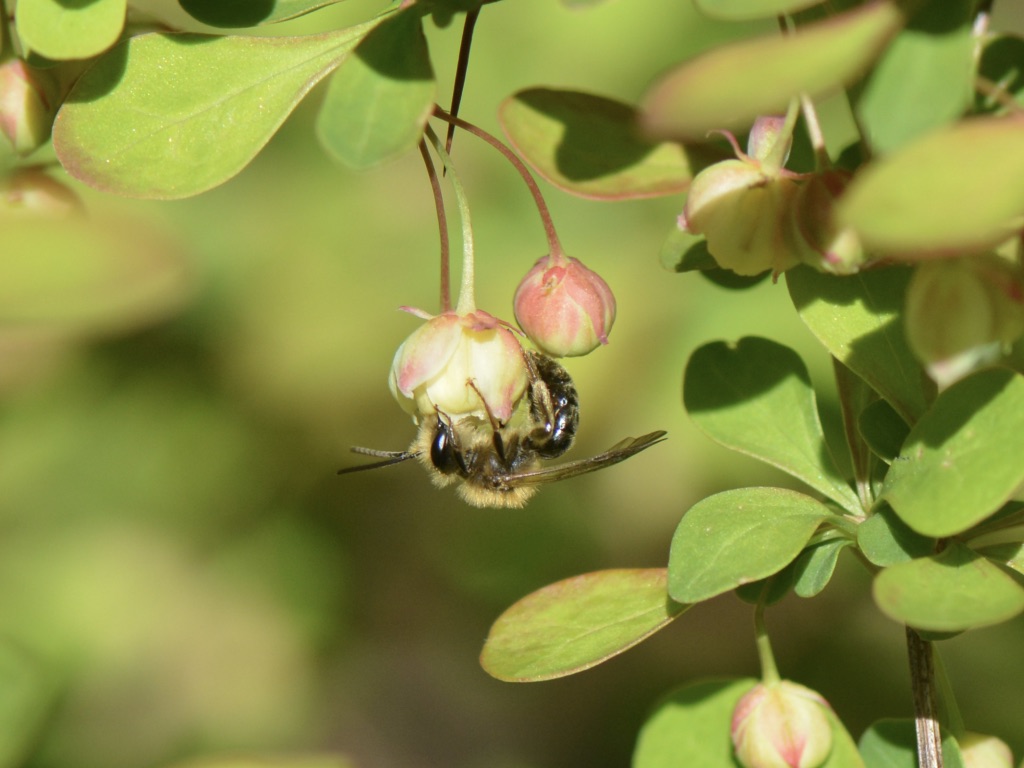
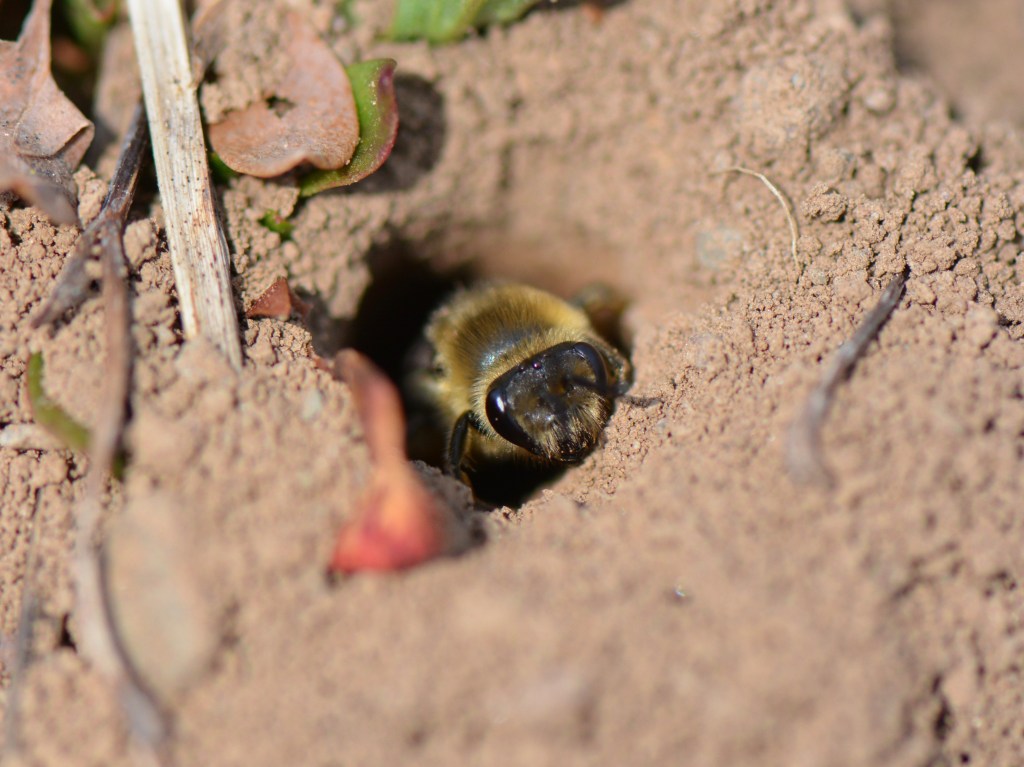
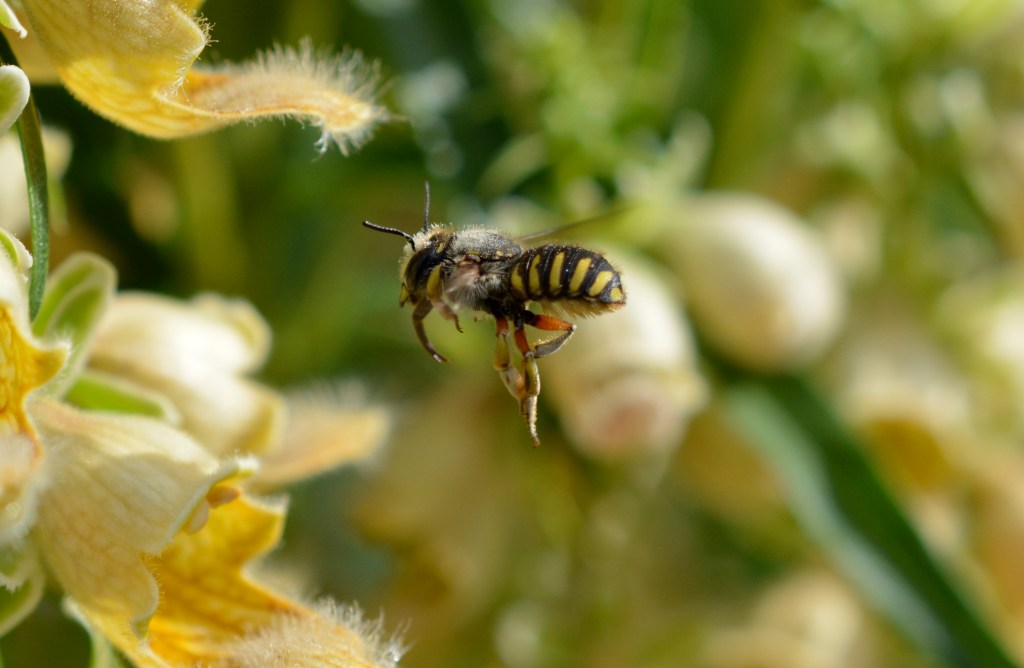
Despite the attention honeybees receive, North America’s ecosystems evolved without them. In their shadow, mostly overlooked, are thousands of native bee species—faster, more efficient, and more specialized pollinators. These bees co-evolved with our native plants, developing intricate, species-specific relationships. They’re everywhere, but we haven’t looked closely enough to see them.
In the Northeastern U.S. alone, there are nearly 450 native bee species, and across North America, nearly 4,000. These wild pollinators are vital to healthy ecosystems and increasingly essential to agriculture. Unlike honeybees, they don’t offer honey or wax—but what they do provide is a powerful, often underutilized pollination service.
And there’s growing concern that honeybees, far from helping, may actually hinder native bee populations by competing for floral resources and spreading disease.

Honeybees bringing in early spring pollen: “Honeybee flying with pollen baskets full on early spring day.”
The Agricultural Power of Native Bees
Supporting native bees doesn’t just benefit the environment—it helps farms, too. The Xerces Society‘s Farming for Beesprovides guidance on creating bee-friendly habitats that can reduce or even eliminate the need for rented honeybee hives.
Take apples, for instance. New York is the second-largest apple-producing state in the U.S., with a harvest worth $261 million annually. Research from Cornell University documented 120 native bee species across 24 orchards in central New York, with native bees often outnumbering honeybees. Orchard diversity and proximity to natural habitat significantly boosted bee diversity—and crop yields. More species meant more pollination. Honeybee abundance alone didn’t correlate with seed set or fruit quality.
Specialist Bees, Specialist Roles
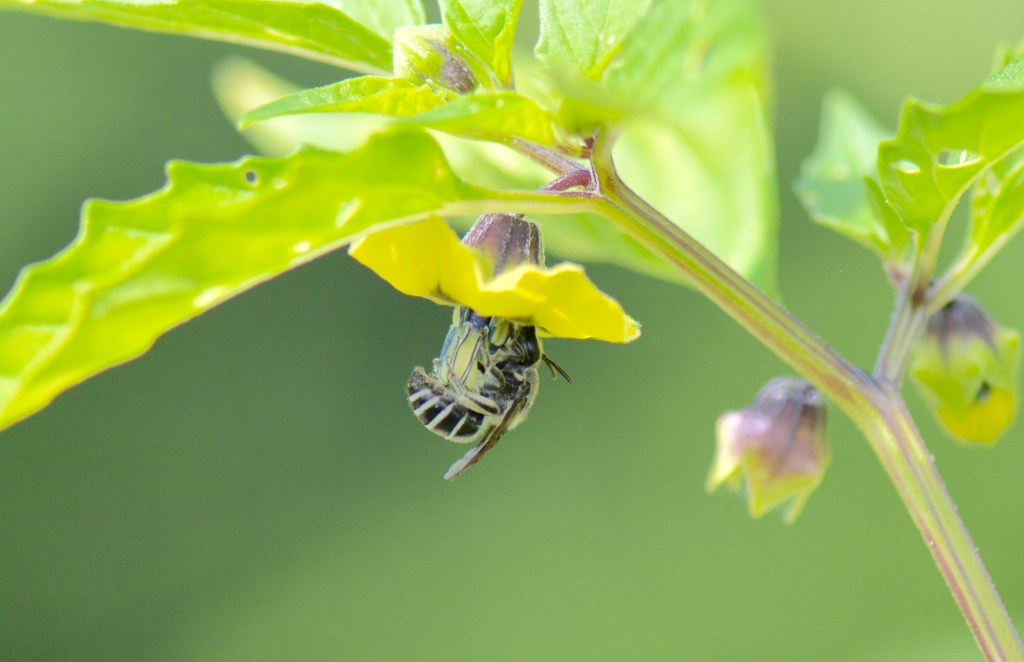
Some native bees are specialists, evolved to pollinate a specific group of plants. The squash bee is one such pollinator, emerging precisely when squash and pumpkin flowers open. These solitary ground-nesters lay their eggs beneath the vines, and their presence can mean the difference between a good harvest and a great one. In New York, pumpkin and squash production is worth $74 million annually—and studies show fruit set is unaffected by honeybee presence, but significantly improved when squash bees and bumblebees work together.
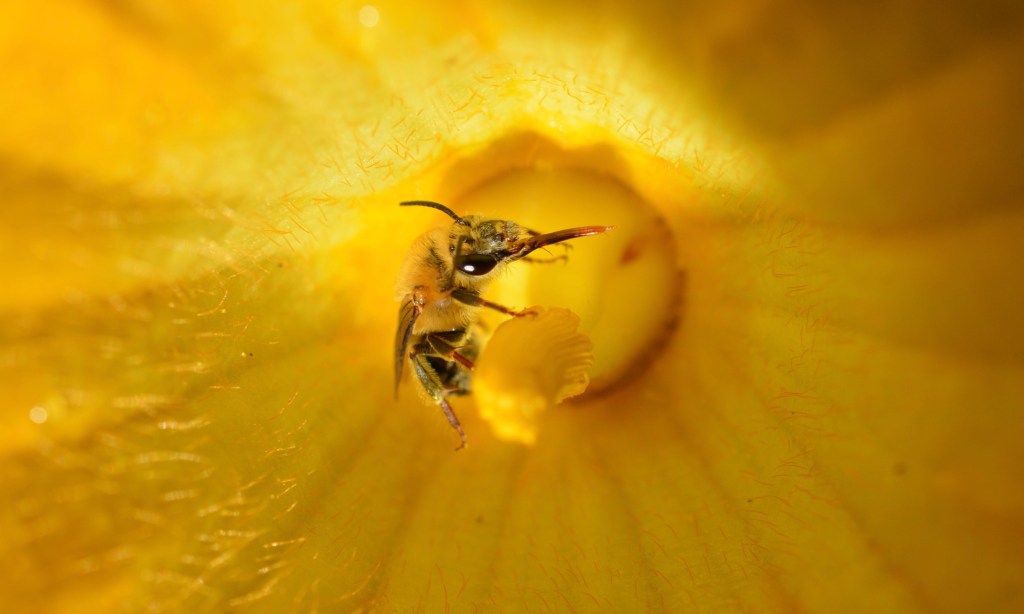
Bumblebees, too, shine as tomato pollinators. They perform “buzz pollination,” a unique behavior where they vibrate flowers to shake loose pollen. It’s something honeybees can’t do. Tomatoes, peppers, and potatoes—members of the nightshade family—are native to the Americas and have deep evolutionary ties to native pollinators. In New York, tomatoes alone account for $47 million in annual production.

The Sunflower Example
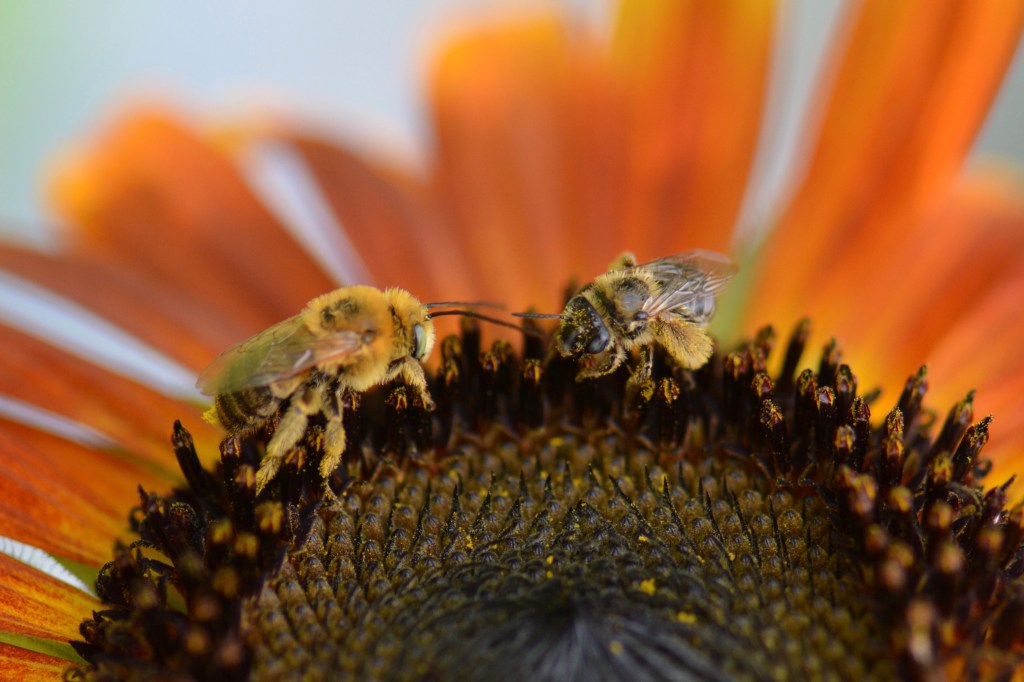
Sunflowers, another native plant, attract a wealth of native bees, especially long-horned bees (Melissodes spp.). These specialists, along with bumblebees, sweat bees, carpenter bees, and others, play a critical role in pollinating both wild and cultivated sunflowers. A single sunflower head is actually composed of hundreds of tiny florets, requiring complex pollination dynamics.
In hybrid sunflower crops, which produce either pollen or nectar—but not both—honeybees’ selective foraging can reduce pollination success. However, when native bees are present, their interactions with honeybees alter honeybee behavior in ways that dramatically increase pollination efficiency—up to five times more effective in some studies.

Rethinking the Buzz: Native Bees at the Forefront
The examples are clear: native bees are not just passive contributors to biodiversity. They’re key players in food production. Yet they remain unsung heroes, hidden behind the honeybee narrative. The real reason honeybees dominate the spotlight isn’t their ecological role—it’s their products. Honey, wax, royal jelly: this $340 million industry drives the attention.
But ironically, the focus on honeybee health may become the catalyst for broader pollinator conservation. Efforts to protect honeybees—like reducing insecticide use, planting pollinator-friendly flowers, and supporting carbon-conscious practices—will benefit native bees as well.
In that way, the honeybee may become a symbol, a gateway, a mascot for change. And in its wake, we might finally start to see the bees that have always been here.
REFERENCES
- Geldmann, Jonas & González-Varo, Juan P.. (2018). Conserving honey bees does not help wildlife. Science. 359. 392-393. 10.1126/science.aar2269.
- Park, Mia & Orr, Michael & Danforth, Bryan. (2010). The Role of Native Bees in Apple Pollination. N.Y. Fruit Quart.. 18.
- Julier, H & Roulston, Tai. (2009). Wild Bee Abundance and Pollination Service in Cultivated Pumpkins: Farm Management, Nesting Behavior and Landscape Effects. Journal of economic entomology. 102. 563-73. 10.1603/029.102.0214.
- Silva-Neto, Carlos & Lima, Flaviana & Goncalves, Bruno & Bergamini, Leonardo & Bergamini, Barbara & Elias, Marcos & Franceschinelli, Edivani. (2013). Native Bees Pollinate Tomato Flowers and Increase Fruit Production. Journal of Pollination Ecology. 11. 41-45.
- Greenleaf, Sarah & Kremen, Claire. (2006). Wild bees enhance honey bees’ pollination of hybrid sunflower, Proc Natl Acad Sci (USA) 103, 13890-13895. Proceedings of the National Academy of Sciences of the United States of America. 103. 13890-5. 10.1073/pnas.0600929103.

 Native Beeology
One response to “Beyond the Hive: Why Native Bees Deserve the Spotlight”
Great work, Tim ! Thank you for your insightful, well-researched essay and your excellent perspectives on this. I learned a lot !