The spring forest wakes gently. Before the tree canopy thickens and blocks out the sun, a burst of woodland flowers takes the stage. These early bloomers, known as spring ephemerals, don’t just bring beauty—they offer vital food for emerging bees and flies.
Two common wildflowers you’ll find this time of year are Wood Anemone (Anemone quinquefolia) and Rue Anemone(Thalictrum thalictroides). They’re often confused for one another, and both carry the name “anemone”—a word of Greek origin that means “breathe” or “live.” Fitting, for flowers that mark the forest’s first breath of spring.

Wood Anemone (Anemone quinquefolia)
This native spring ephemeral is one of the first to bloom, usually just before the forest canopy fills in. Its white flowers perch on thin stalks that quiver in the breeze—hence the nickname “Wind Flower.”
The leaves are compound, with three deeply lobed, coarse-toothed leaflets that can look like four or five, depending on the angle. Despite old beliefs that wood anemones don’t produce nectar, a 2013 study on the European relative Anemone nemorosa found it does produce nectar that attracts bee flies. It’s likely our North American species does the same.
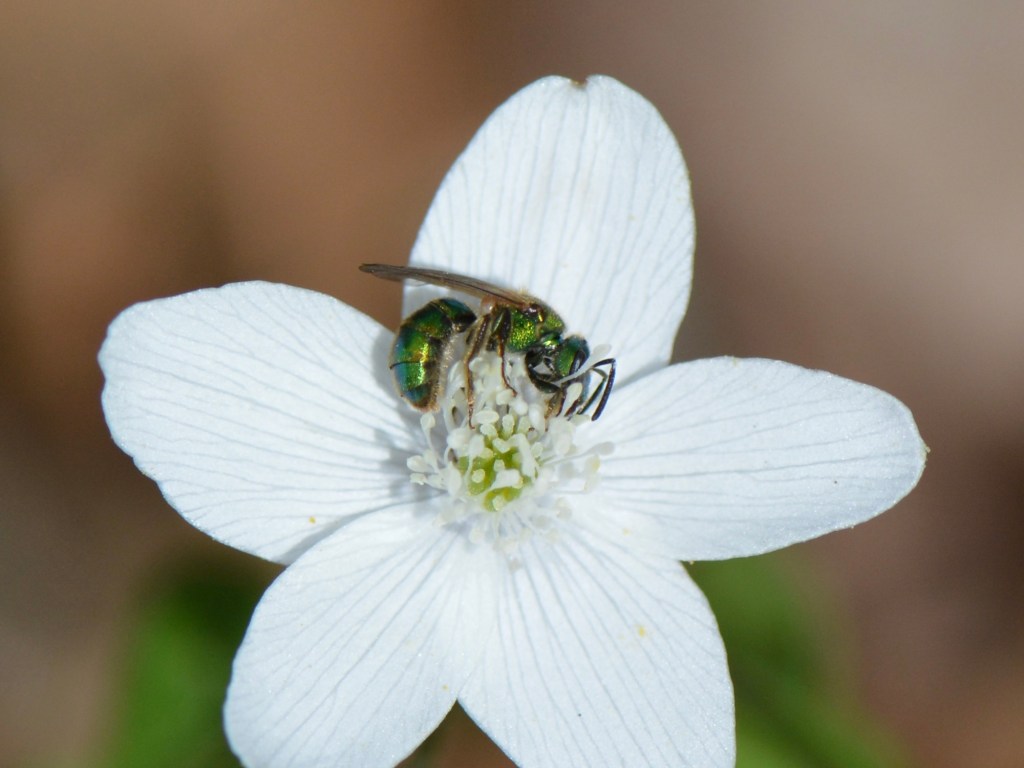
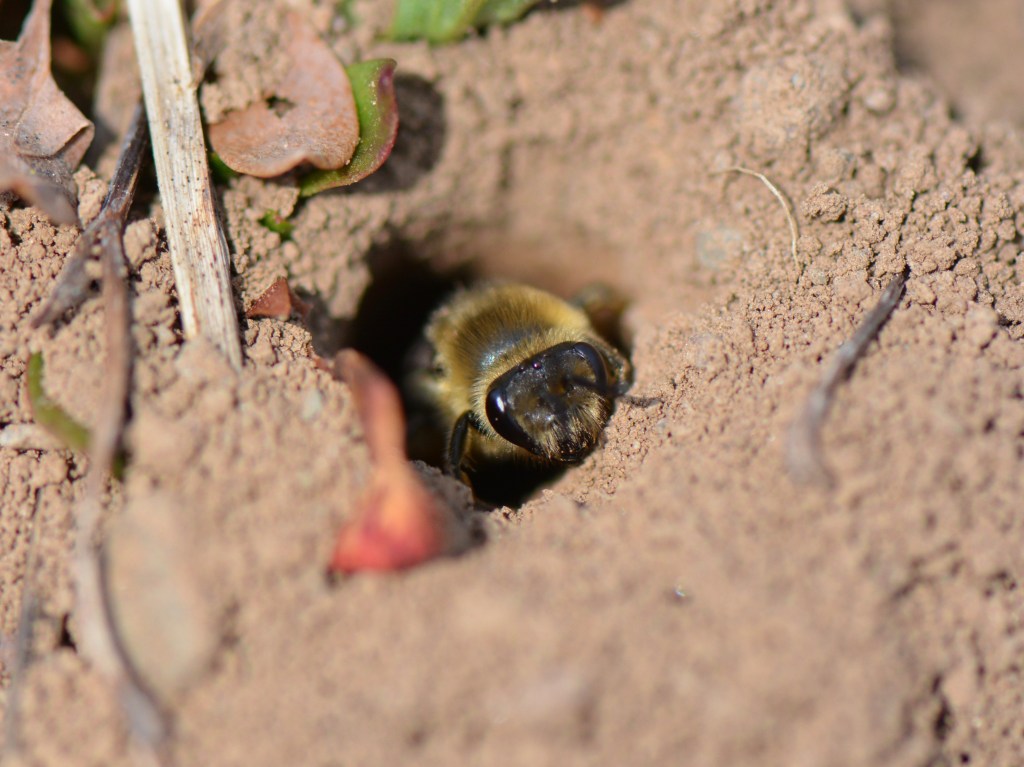
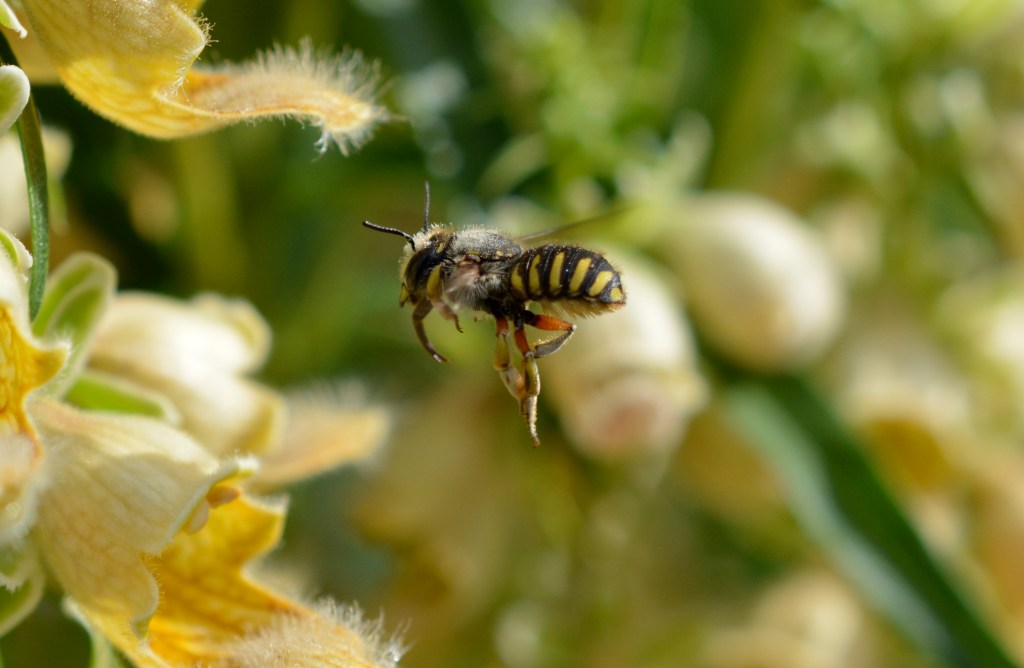
In Stewart State Forest near Newburgh, NY, we’ve observed wood anemone visited by native bees like mining bees(Andrena) and sweat bees (Halictidae). These early bees are out searching for both pollen and nectar to fuel their spring nests.
Rue Anemone (Thalictrum thalictroides)
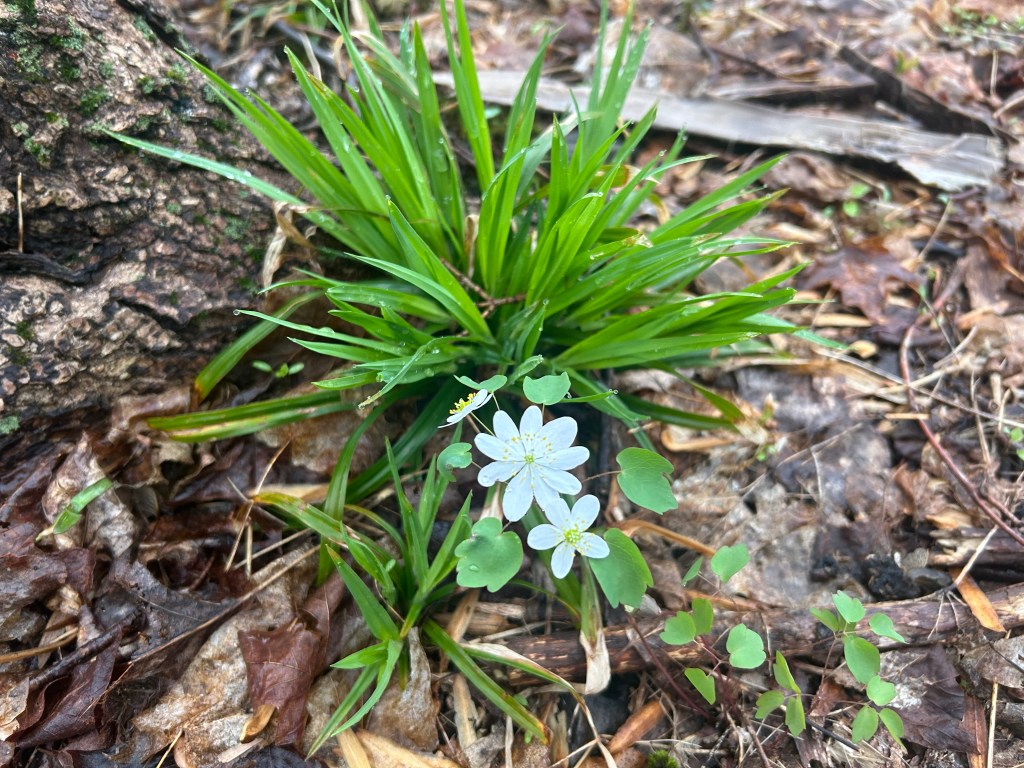
Rue anemone often blooms right alongside wood anemone, and its flowers can look almost identical at first glance. But the plants have clear differences. Rue anemone often has multiple flowers per stalk, and the leaves are more rounded—three leaflets with three blunt lobes, resembling its relative meadow rue.
Rue anemone doesn’t offer nectar, just pollen. Still, that’s enough to attract early pollen-collecting bees and flies. Like bloodroot (Sanguinaria canadensis), which also skips nectar production, rue anemone takes advantage of low competition in early spring. With fewer floral options available, even pollen-only plants can thrive.
In our observations at James Baird State Park in Lagrange, NY, rue anemone didn’t have any active pollinator visitors. Meanwhile, nearby flowers like trout lily (Erythronium americanum) were buzzing with bees and flies.
Anemone Seeds and Ant Helpers
Both anemones produce seeds with elaiosomes—fatty, nutrient-rich attachments that attract ants. The ants carry the seeds back to their nests, eat the elaiosomes, and discard the seeds in their underground homes. This process, called myrmecochory, helps spread the plants through the forest.
However, these plants also reproduce through underground rhizomes, especially since viable seeds are not always produced. Rue anemone’s thick, starchy roots even earned it the nickname “Wild Potato”—though we don’t recommend eating it!
A Note on Toxicity and Deer Resistance
Both wood and rue anemones belong to the buttercup family (Ranunculaceae), and like many members of this group, parts of the plants are mildly toxic. This makes them deer resistant, a valuable trait for gardeners trying to restore native plantings. They’re excellent candidates for woodland gardens where spring color and native bee support are priorities.
So next time you’re walking in a spring forest, take a moment to admire these delicate blooms. Whether they’re trembling in the wind or quietly feeding a native bee, wood and rue anemone are small, fleeting signs that spring is alive and buzzing.

References:
Erbar, Claudia & Leins, Peter. (2013). Nectar production in the pollen flower of Anemone nemorosa in comparison with other Ranunculaceae and Magnolia (Magnoliaceae). Organisms Diversity & Evolution. 13. 10.1007/s13127-013-0131-9.

 Native Beeology