
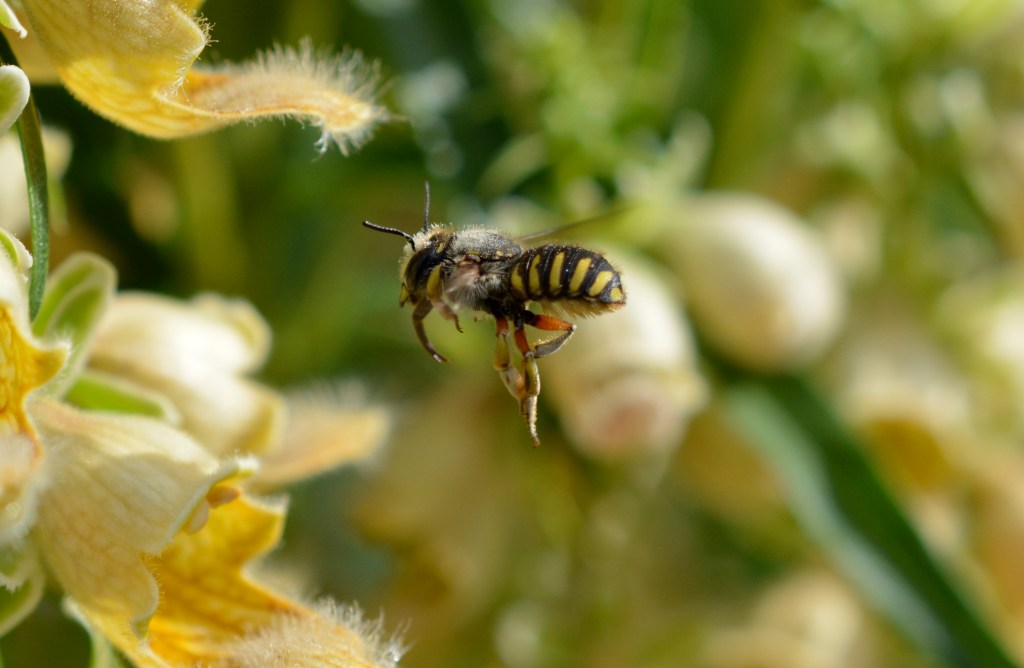
If you’re on a mission to spot the European wool carder bee (Anthidium manicatum), start by finding a patch of lamb’s ear (Stachys byzantina). These silvery, velvety plants are more than just a charming garden favorite—they’re ground zero for one of nature’s fiercest little dramas.
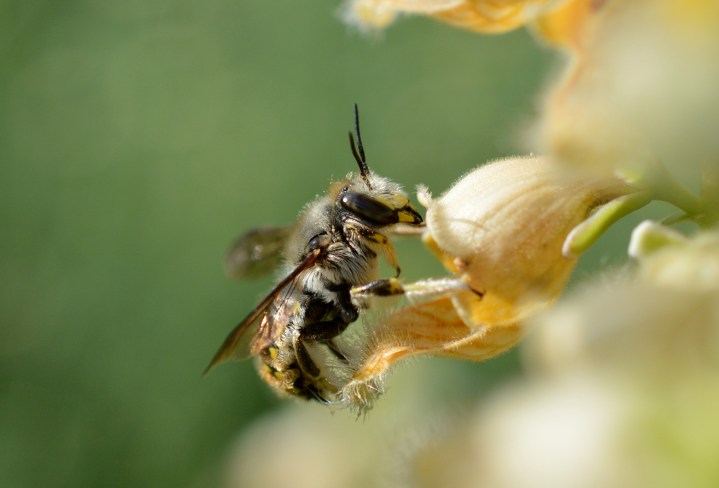
Male wool carder bees don’t just hang out around lamb’s ear—they patrol it like miniature bodyguards on a power trip. With bold yellow markings and a tendency to chase anything that moves, they’re often mistaken for yellow jackets. But a closer look reveals their true identity: they’re much hairier, and unlike most bees, the males are actually larger than the females—a quirky reversal of the usual bee dynamic.
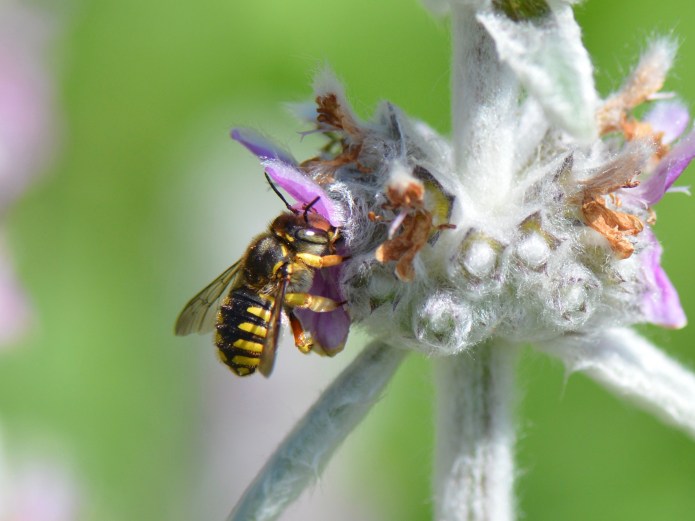
Though male bees typically lack stingers, male wool carders come equipped with five sharp abdominal spines. These aren’t just for show. They use them to drive off—or even fatally wound—other bees that dare enter their territory. Within this zone of protection, female carder bees are free to get to work. Using their toothed mandibles, they scrape the fuzzy fibers from lamb’s ear leaves, mimicking the traditional wool carding process once used to prepare sheep’s wool for spinning. It’s this behavior that gave them their name.
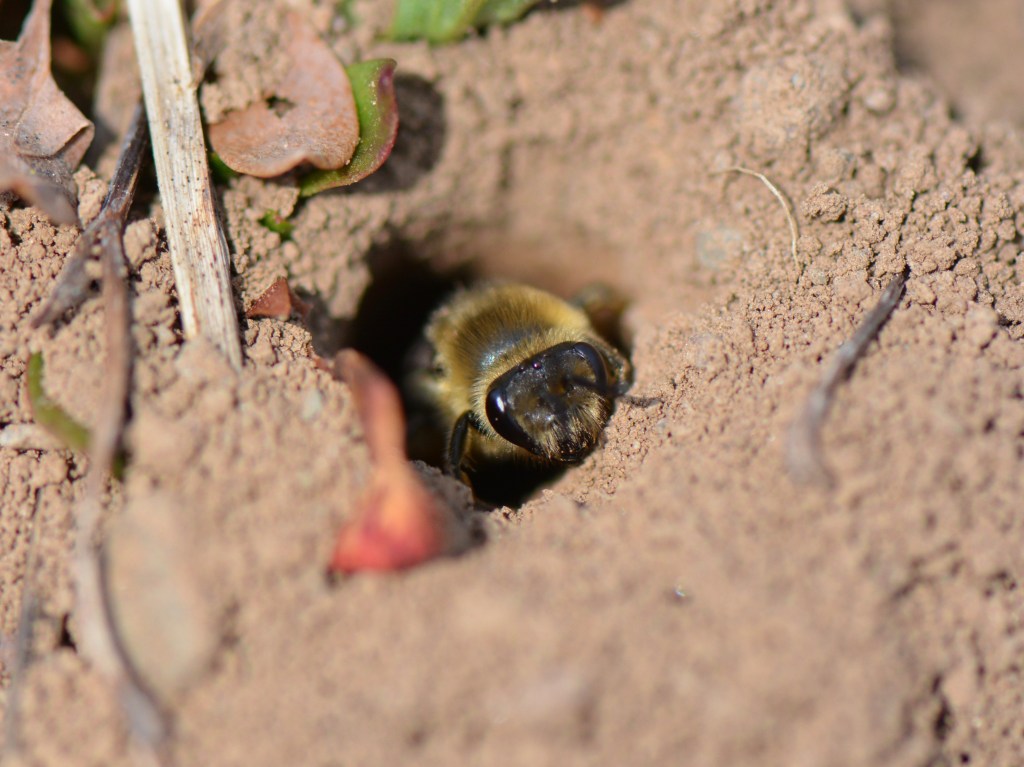
The females roll the plant fibers into soft, cottony balls, which they use to line their nests and separate brood cells. It’s a clever trick—other bees, like mason bees and leafcutter bees, use mud or cut leaves for the same purpose. Like most of their bee brethren, carder bees are solitary. Each female builds her own nest in a hollow stem or pre-existing tube, laying her eggs and provisioning them with “bee bread”—a nutritious mix of pollen and nectar.
One curious fact: carder bees collect pollen on the underside of their abdomens, a trait that sets them apart from the typical “pollen pants” we associate with bees. This feature places them in the Megachile family, alongside other quirky pollen-packers.
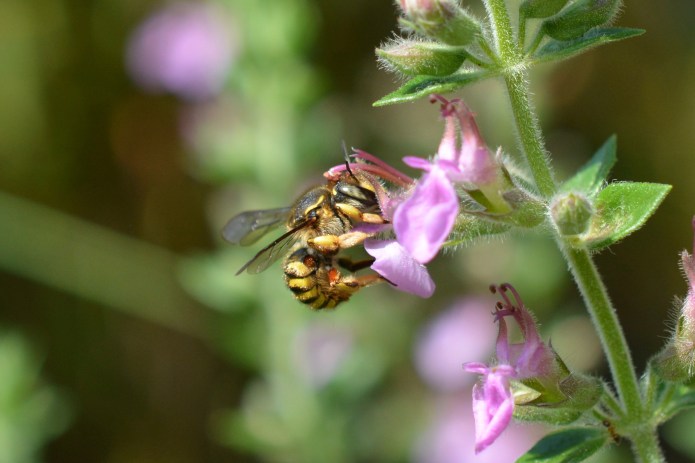
Lamb’s ear itself is a botanical gem—its long, oval, fuzzy leaves really do feel like a lamb’s ear. Native to Turkey and Iran, this plant shares an evolutionary history with the wool carder bee, whose original range overlaps those regions. Lamb’s ear made its way to North America centuries ago, finding a home in colonial medicine gardens like the King’s Garden at Fort Ticonderoga. Its antiseptic, anti-inflammatory, and absorbent properties made it a battlefield staple for treating wounds. Today, it’s valued more for its looks than its medicinal benefits.
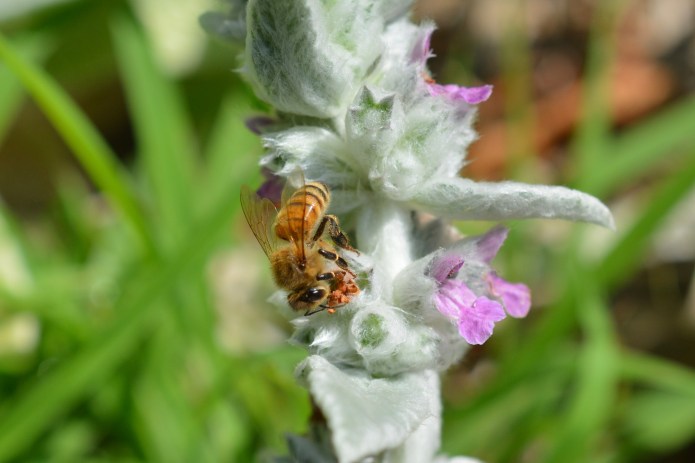
The wool carder bee followed in its fuzzy wake. First discovered in the U.S. in 1963 near Ithaca, NY, this little traveler has since expanded coast to coast—and beyond. It’s now one of the most widely distributed unmanaged bees on Earth, found even in South America, apparently trailing lamb’s ear as it spread.
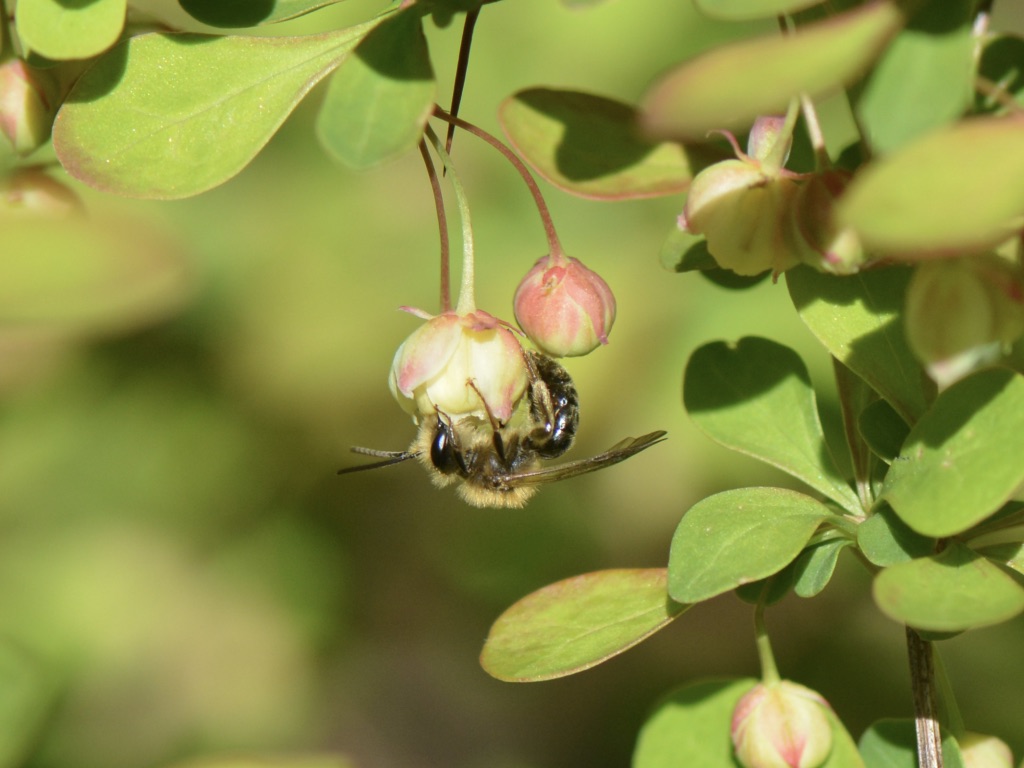
Though lamb’s ear is their favorite nesting material, carder bees aren’t picky. They’ll also harvest from mullein (Verbascum thapsus) and rose campion (Silene coronaria). And when it comes to foraging, they’re generalists, happily visiting a wide variety of flowers for pollen and nectar. They seem especially drawn to purple toadflax (Linaria purpurea) and hedge woundwort (Stachys sylvatica)—all plants native to Europe and western Asia.
It raises an intriguing question: do introduced bees like the carder prefer the familiar plants of their homelands? And if so, do native bees show the same preference for native flora? Or are invasive plants disrupting those age-old relationships between native pollinators and the flowers they evolved with? As invasive species outcompete native plants, it may force native bees to adapt—or disappear.

Carder bees have certainly proven adaptable. Their close relationship with lamb’s ear has allowed them to thrive in urban and suburban environments, though they rarely venture far beyond. In contrast to many aggressive mints, lamb’s ear is well-behaved in the garden—but its presence could be enabling an aggressive insect invader. While it’s tempting to wonder if controlling lamb’s ear might help manage carder bee populations, it’s probably not that simple.
Still, there’s something beautifully symmetrical about this pairing. The wool carder bee and lamb’s ear seem made for each other, a natural duo that crossed oceans and continents together—one fuzzy leaf and one fiercely protective bee at a time.

 Native Beeology