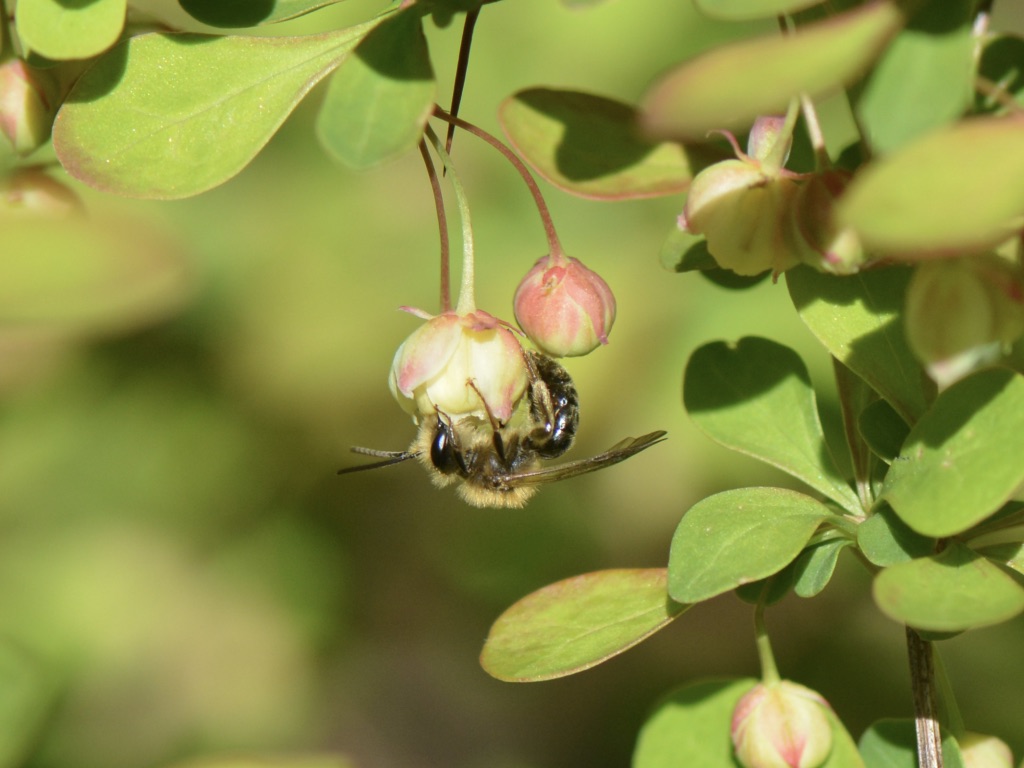
When we think of spring, what comes to mind? Baby lambs, daffodils, pussy willows, and the cheerful chirp of returning robins. But there’s another early spring arrival that often goes unnoticed—the unequal cellophane bee (Colletes inaequalis).
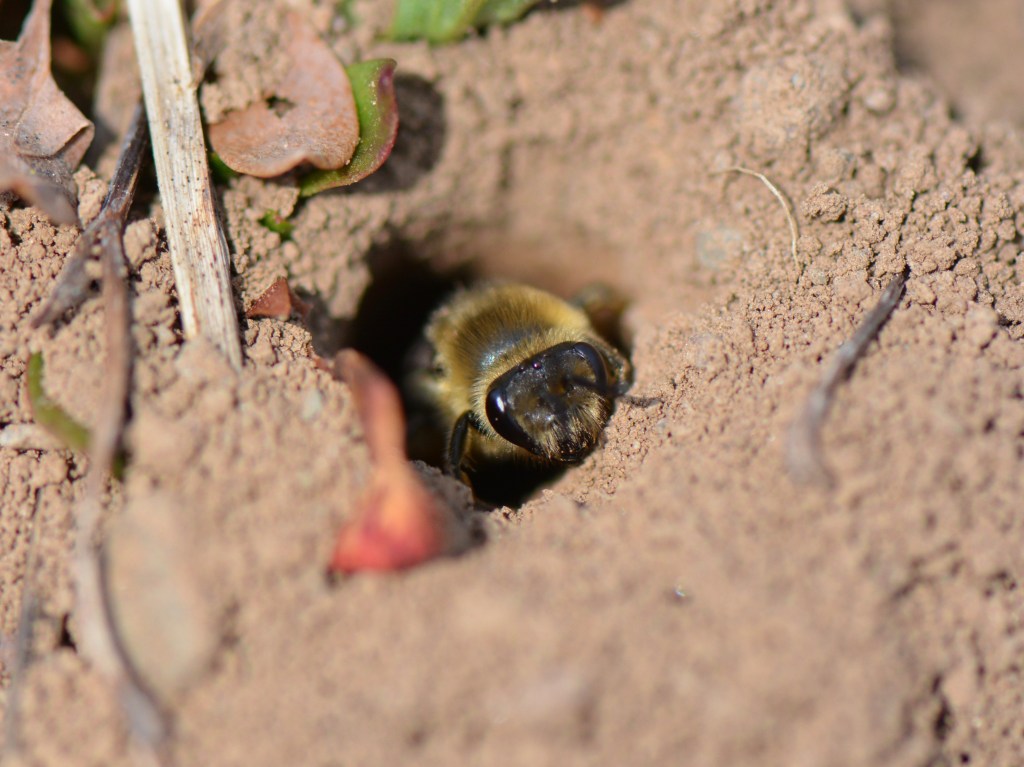
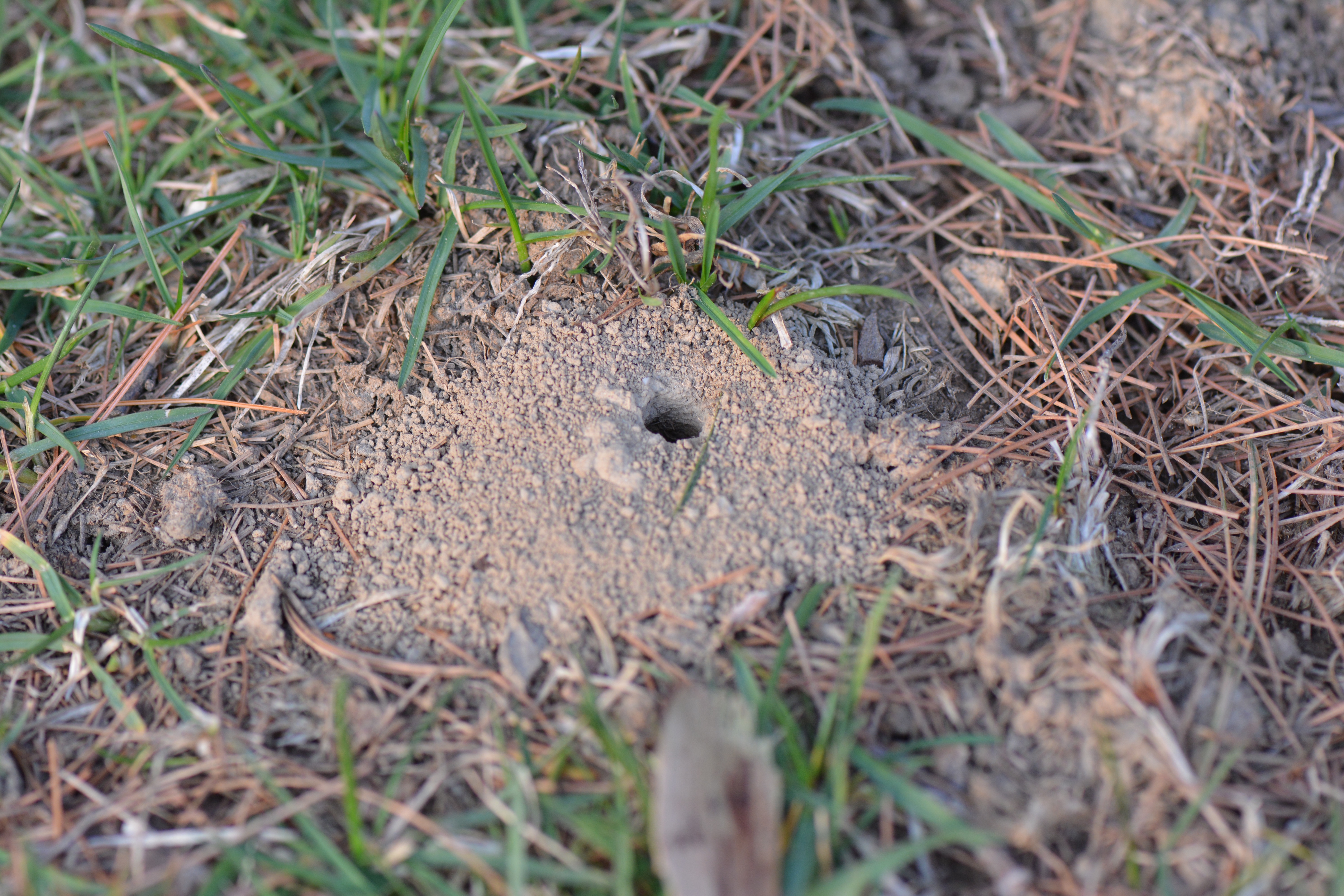
By late March or early April, these ground-nesting bees begin to emerge, leaving behind tiny, volcano-like holes in fields, lawns, meadows, pastures, and even golf courses—anywhere the ground is a bit bare. At first glance, these little mounds might look like ant hills. But take a closer look and you’ll notice a buzz of activity: the mating dance of cellophane bees.
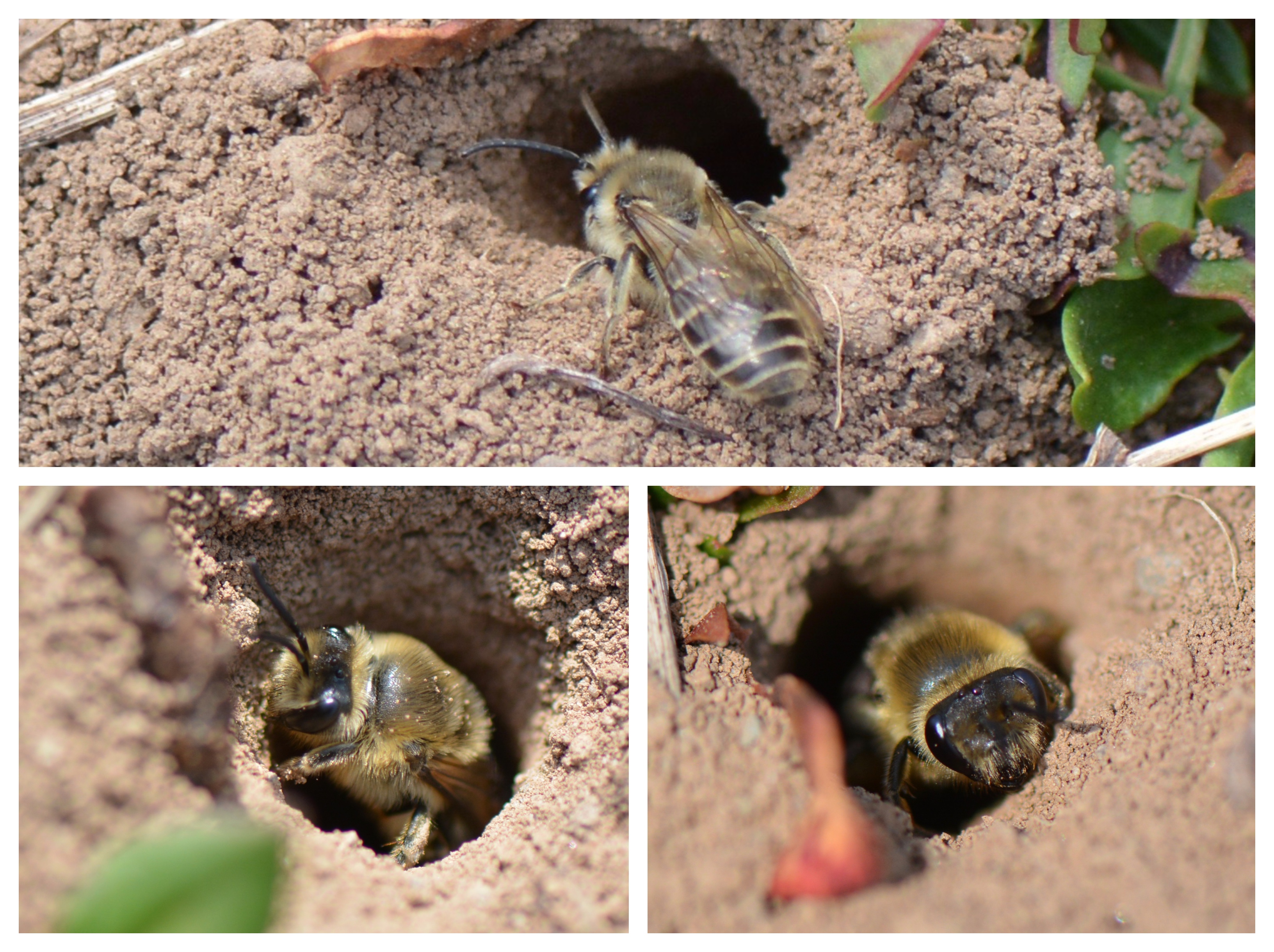
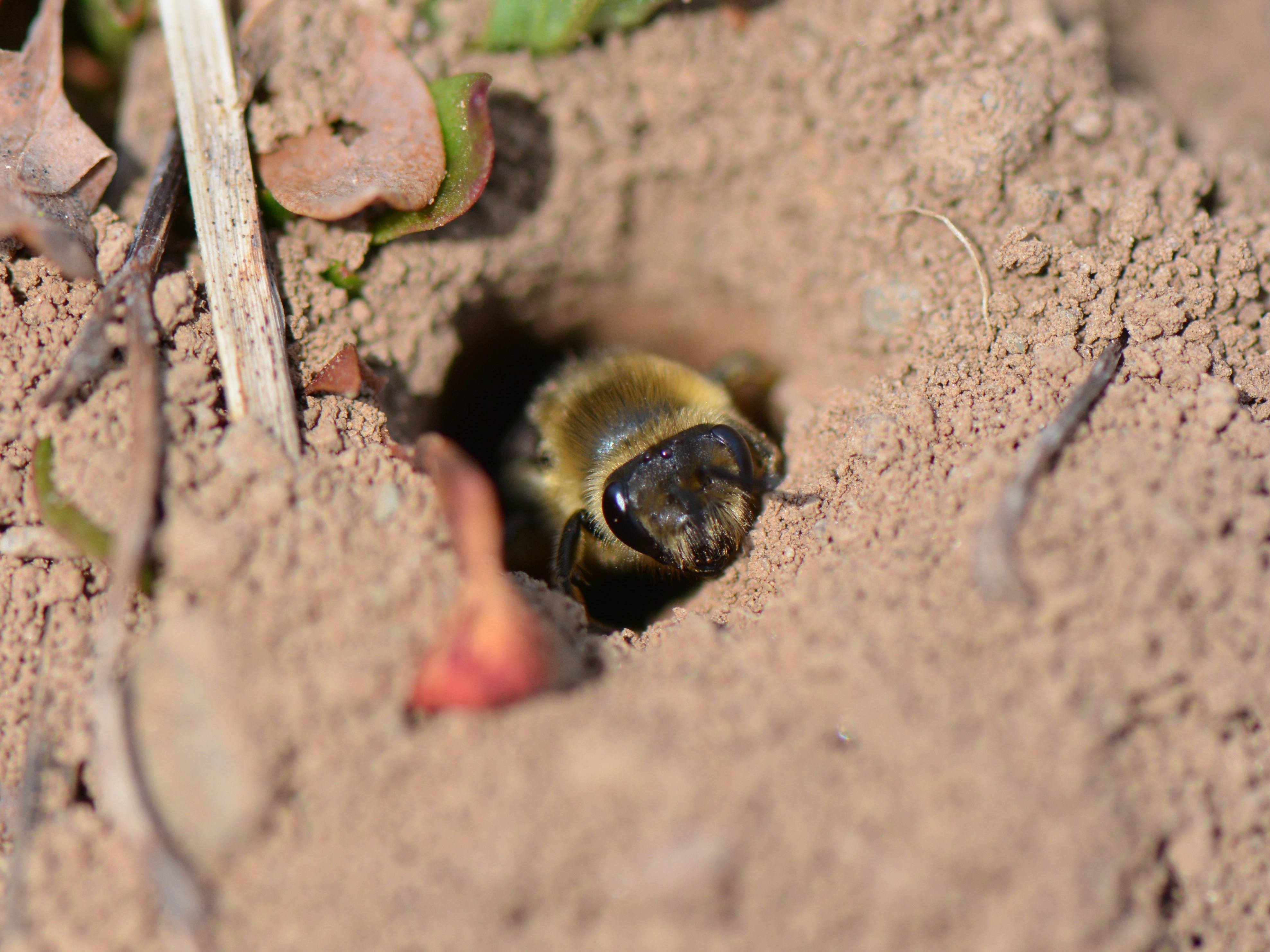
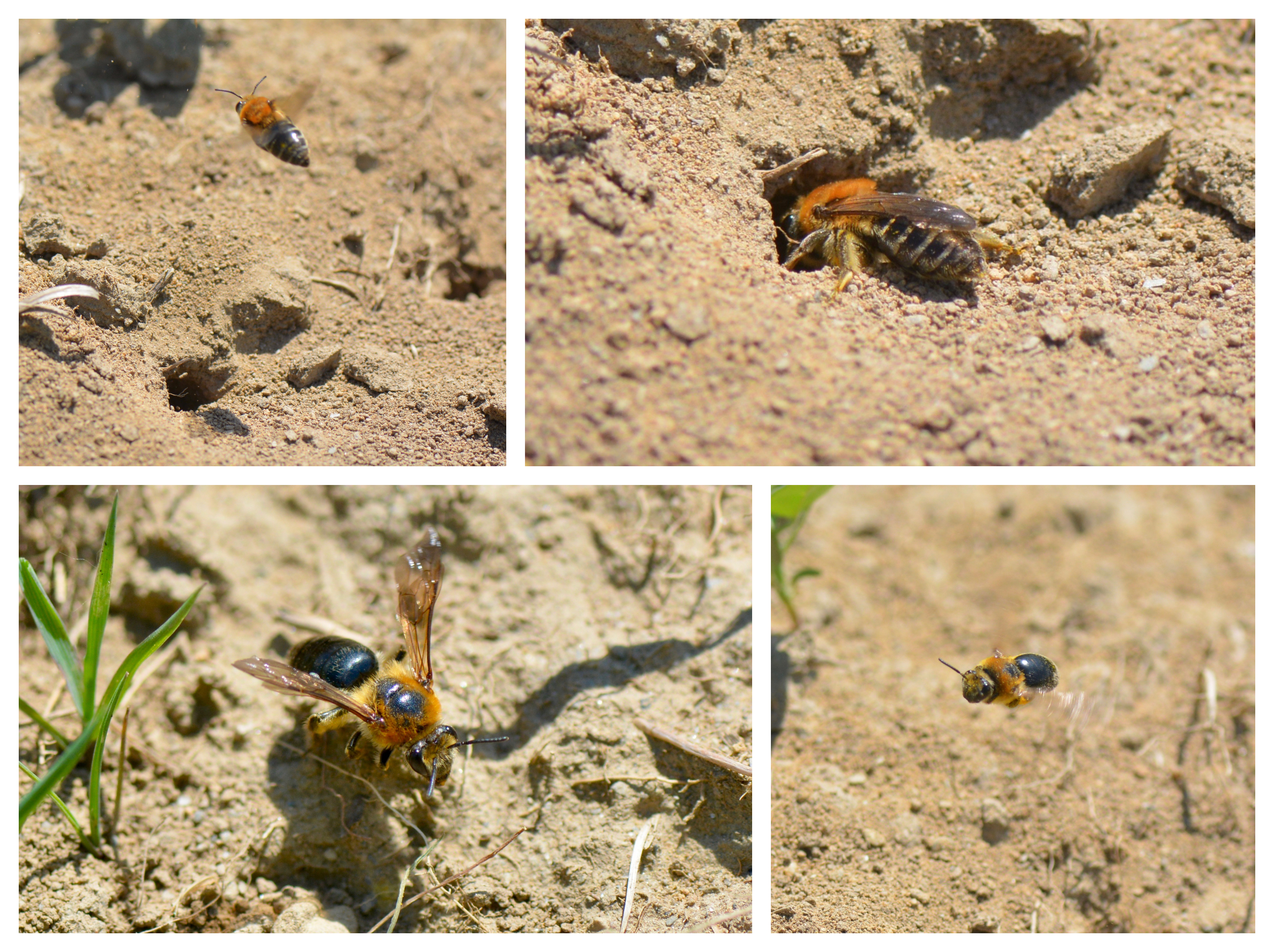
What’s especially fascinating is how these bees live. While they don’t form hives like honey bees, they do nest in large groups—think of it as a bee neighborhood of solitary homeowners. Each female digs and maintains her own tunnel, often right next to dozens or even hundreds of others. She can often be seen at the entrance, guarding her nest. Meanwhile, males—who emerge slightly earlier—cruise low over the ground in search of a mate, returning to their own small burrows at night.
Underground Architects
A remarkable 70% of native North American bees make their nests underground. The Colletidae family, which includes cellophane bees, is represented by nearly 100 species in North America. But they’re often overshadowed by the larger and more diverse Andrena family—commonly known as mining bees—which includes over 400 species.
Interestingly, scientists believe that the ancestors of modern-day Colletes may have originally nested in woody stems, not the ground. Most modern ground-nesting bees have a special structure at the tip of their abdomen called a pygidial plate, surrounded by a brush of hairs, used for sculpting soil. But Colletes bees lack this feature—likely because their ancestors didn’t need it. Even after transitioning to ground nesting, they never evolved it again.
Another genus in the same family, Hylaeus (also called yellow-faced bees), still nests in stems and shares a unique family trait with Colletes: they both line their nests with a transparent, cellophane-like substance.
Built to Last
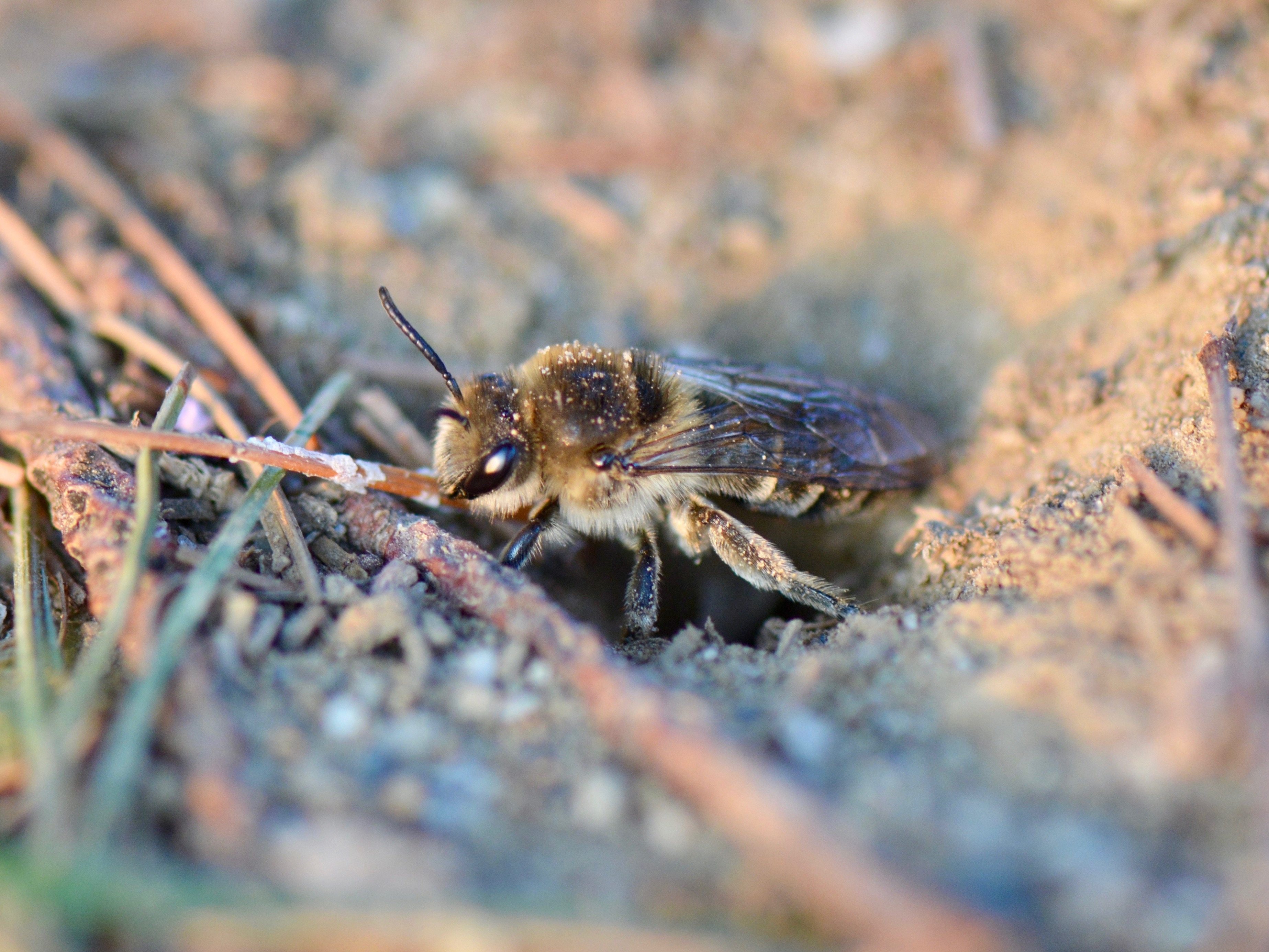
This is where Colletes truly stand out. Sometimes called polyester, cellophane, or plasterer bees, they get their names from the impressive natural material they use to waterproof their nests. Using their short, fork-like tongues, females “paint” the inside of their tunnels with a secretion from their Dufour’s gland, mixed with saliva. The result is a strong, mold-resistant, and waterproof lining that functions like a natural biodegradable plastic bag, keeping their developing young safe and dry.
This naturally produced material has even caught the attention of scientists who are studying it as a potential alternative to petroleum-based plastics. If we can unlock its secrets, bee biology might one day inspire eco-friendly solutions to today’s plastic pollution crisis.
Pollination Pros
In the Northeast, Colletes inaequalis is the first species in its genus to emerge in spring. As generalist pollinators, they visit a variety of early-blooming plants like pussy willows, red maple, and other spring flowers. The pollen they collect is mixed into a liquid “soup” that they leave in each nest chamber as food for their developing larvae. In the dark, cozy underground cells, the eggs hatch and the young bees begin to grow by consuming this nutritious mixture.
Shortly after the unequal cellophane bee appears, another species—the rufous-backed cellophane bee (Colletes thoracicus)—emerges. Their appearance often coincides with the flowering of the tulip poplar (Liriodendron tulipifera), whose towering blooms provide a rich source of nectar and pollen. Like their cousins, they are generalists and will also visit other flowering trees that bloom around the same time.
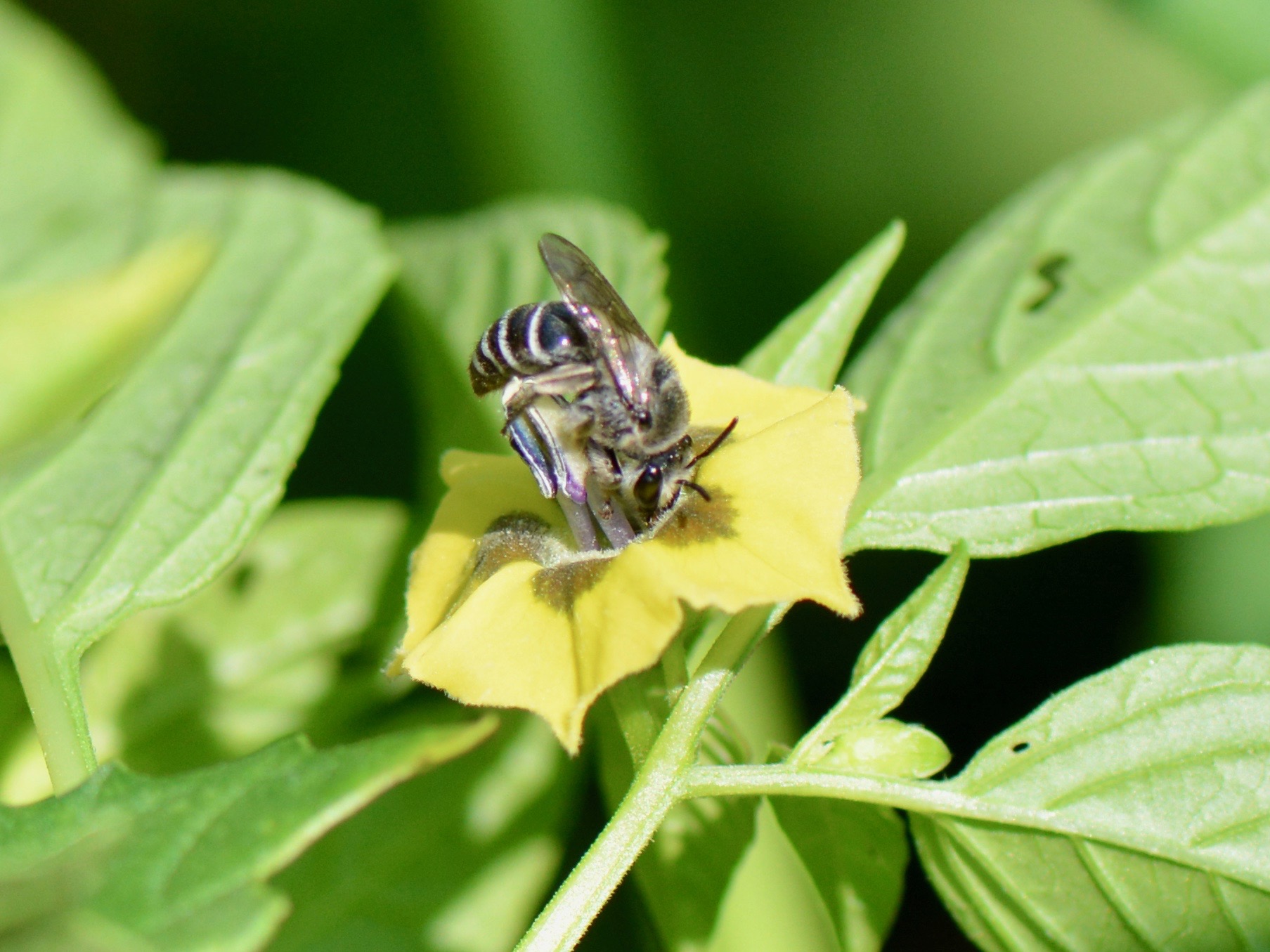
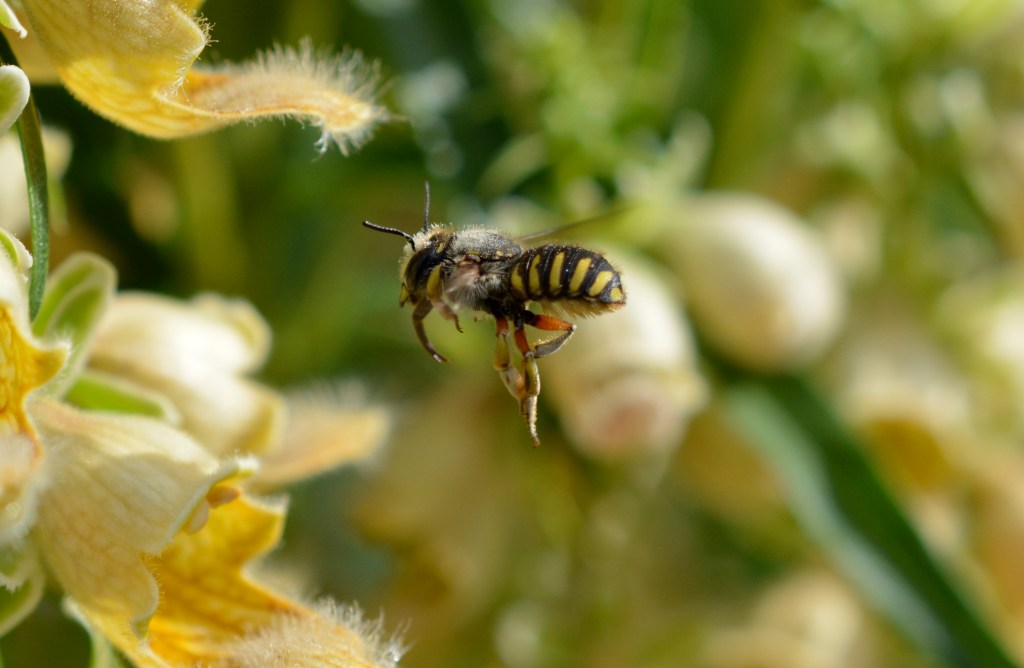
Later in the season, a true specialist makes an appearance: the broad-footed cellophane bee (Colletes latitarsis), which emerges in mid-August. This bee is tightly tied to Physalis species (such as tomatillos and ground cherries), and is what scientists call oligolectic—meaning it gathers pollen from only one plant family. Though these bees prefer Physalis, they have occasionally been spotted supplementing their diet with other flowers blooming nearby.
According to Specialist Bees of the Mid-Atlantic and Northeastern United States by Sam Droege and Jarrod Fowler, at least 13 species of Colletes in this region are known to specialize on certain plant families, including hollies, asters, and others.
From their spring emergence to their natural plastic engineering, Colletes bees are a fascinating—and often overlooked—group of native pollinators. They’re quiet, efficient, and surprisingly innovative. So next time you’re out in early spring and spot a patch of tiny holes in the ground, take a moment. You might just be standing at the threshold of one of nature’s most remarkable little engineers.
Resources:
Wilson, Joseph, S., Messinger Carril, Olivia. The Bees in our Backyard. A Guide to North American Bees. Princeton University Press. 2016. 96-108.
Eveleth, Rose. “Can Bees Make Tupperware, A materials scientist discusses Colletes bees, which line their homes with plastic.” Scientific American. 12/2011. https://www.scientificamerican.com/article/from-pollen-to-polyester/

 Native Beeology