As a passionate advocate for land management that supports native habitats, I’ve long been interested in practices that boost pollinator diversity. In 2021, I decided to embark on a hands-on experiment to see if I could reverse the damage caused by invasive plants and promote the return of native species. The project took place on a half-acre man-made pond near my home, which has been overrun by a variety of non-native plants since at least the 1960s. Many of these plants were introduced with good intentions, promoted for their ability to provide habitat for wildlife, but their long-term impact on the local ecosystem wasn’t fully understood at the time.
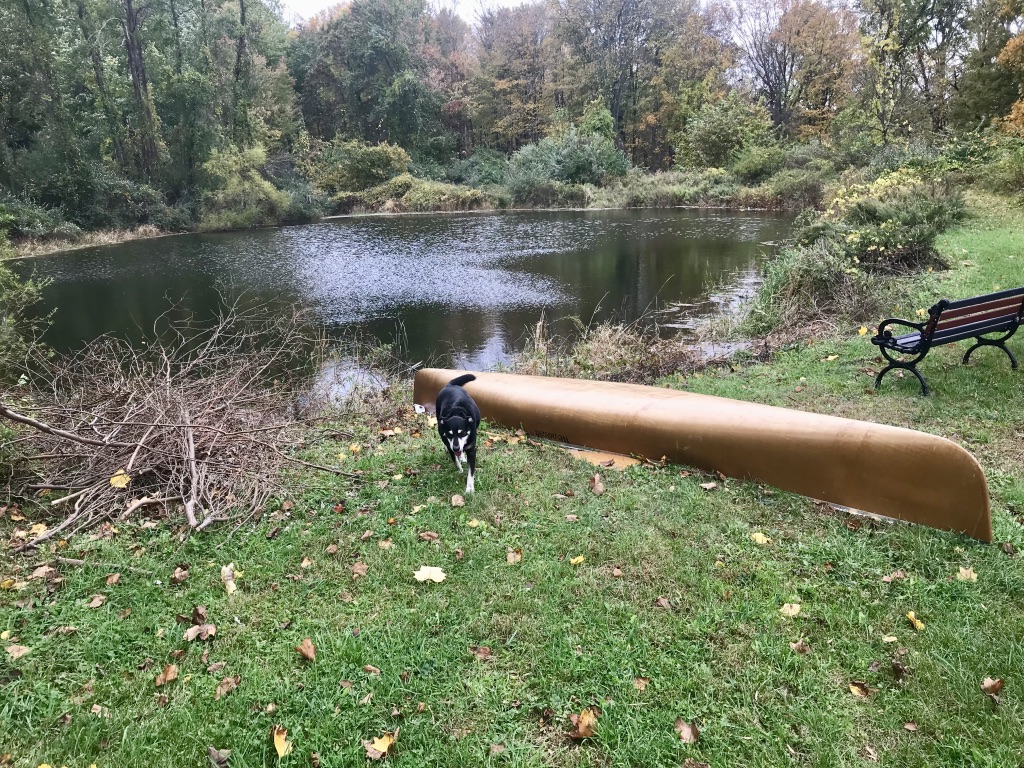
By 2021, the pond was surrounded by a sea of invasive species, including honeysuckle, autumn olive, mugwort, black swallow-wort, Japanese barberry, multiflora rose, and bittersweet. These invaders had nearly choked out any native or naturalized plants, leaving them to struggle in small, isolated pockets. The forest that borders the pond was once home to tulip poplar, sugar maple, black birch, aspen, dogwood, and spicebush. However, the understory had become dominated by Japanese barberry, which thrives in shaded areas, unlike most invasive plants.
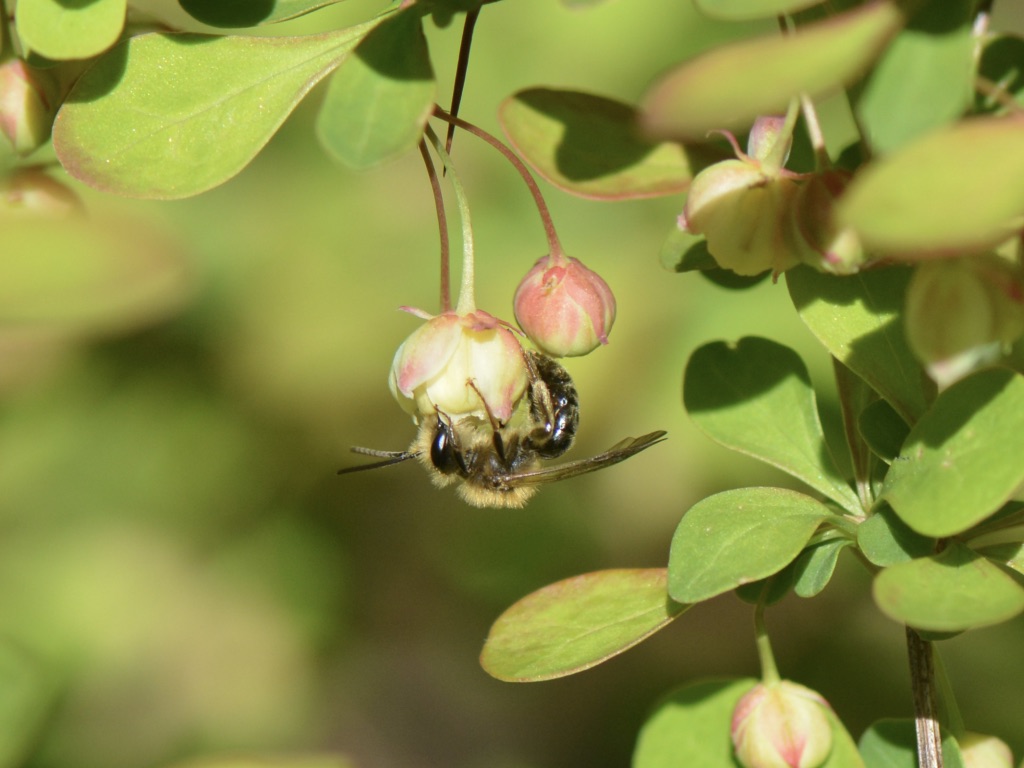
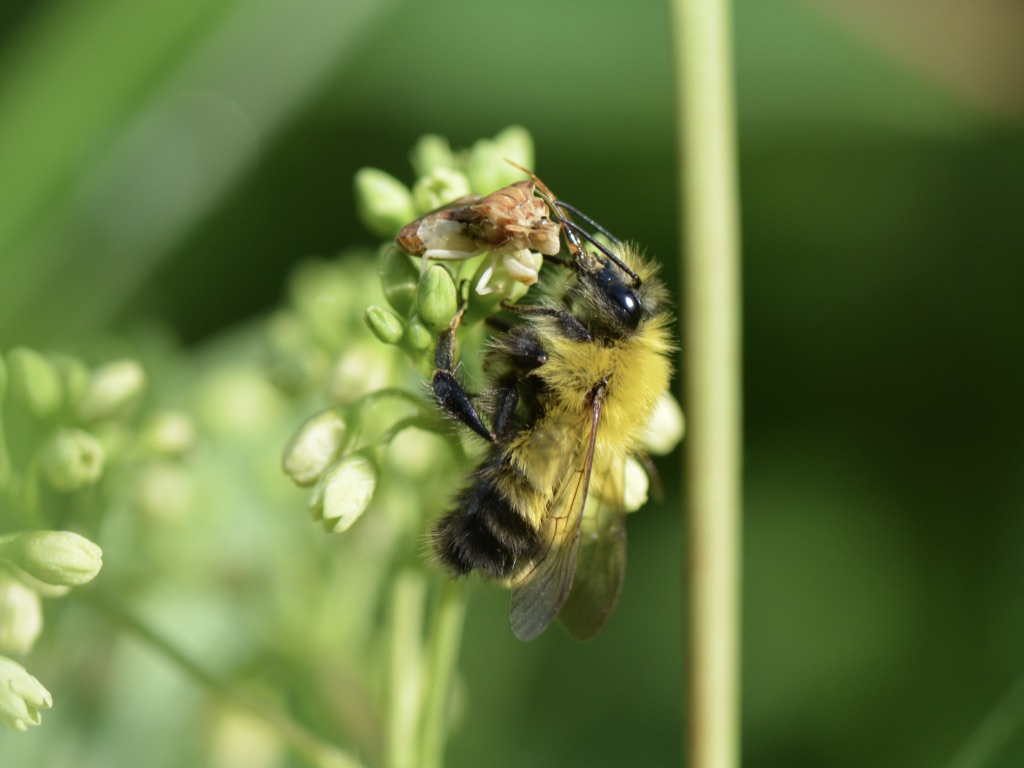
The problem with invasive species is that they create dense monocultures that reduce biodiversity. Native plants simply can’t compete. Monocultures limit the variety of plants, which in turn harms insect and pollinator populations. While some invasive plants, like autumn olive and barberry, do produce pollinator-friendly flowers, they only support a limited number of species. When these plants are out of bloom, the area becomes a “pollinator desert,” lacking the floral diversity that is crucial for sustaining pollinator populations. Many pollinators, particularly those that specialize in certain plants, vanish when their food source disappears.
In 2021, I decided to see if I could reverse this trend by removing the invasive plants and allowing the native species to flourish once again. I focused on systematically removing the invasives, mostly by pulling them up by the roots. The goal was to give the existing native and naturalized vegetation a chance to regain a foothold in the area.
The result has been encouraging. As the invasive plants were removed, a variety of native species began to thrive. Plants like goldenrod, common milkweed, swamp milkweed, dogbane, jewelweed, beggar ticks, blue flag iris, beardtongue, and smartweed returned to the landscape. Naturalized plants that are not invasive, like yarrow, clover, daisies, and yellow toadflax, also began to fill in. Along the shores of the pond, narrow-leaf cattails and willows grew back, reclaiming the space once dominated by invasive species.
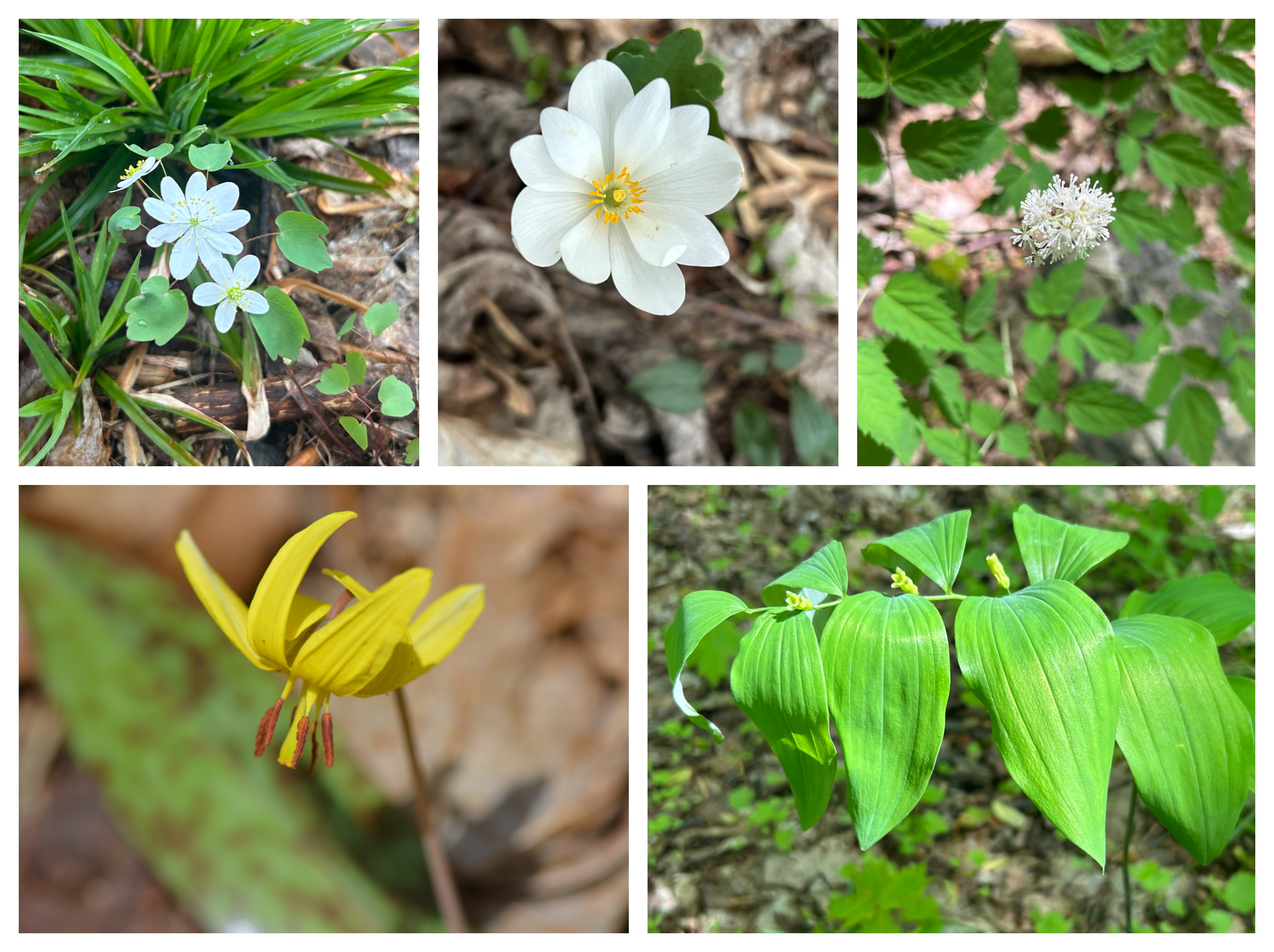
The forest area, once smothered by a thick patch of barberry, was also a focus of my restoration work. The barberry had covered around 6-7 acres of forest that had once been old pasture land, as evidenced by the remnants of stone walls. To date, I’ve removed about 1.5 to 2 acres of barberry, along with multiflora rose and bittersweet.
Where the barberry was cleared, native plants such as cohosh, anemones, wild geranium, Jack-in-the-pulpit, woodland aster, snakeroot, goldenrod, American hog-peanut, moonseed, ferns, and various native grasses have begun to recolonize the forest floor. Shrubs like spicebush, witchhazel, blackhaw, and even a new discovery—American bladdernut—are also starting to thrive. These plants, which once survived only in isolated pockets, are now regaining a strong foothold in the absence of the invasive barberry.
However, this process isn’t without its challenges. Periodic weeding is still necessary to control the regrowth of barberry, honeysuckle, and bittersweet. But overall, the forest is beginning to look more like the oak-hickory forest typical of the Hudson Highlands.
One factor that complicates efforts to combat invasive species is the role of deer. There is a strong correlation between deer populations and the proliferation of invasives. Many of the plants introduced to America were chosen specifically because they are resistant to deer browse. Deer don’t find them appetizing, which allows these invasive species to thrive as the deer feed on more desirable native plants.
In 2015, New York State implemented a regulation (6 NYCRR Part 575) that restricts or regulates the possession, transport, sale, and introduction of certain invasive species. The goal of this regulation is to help control invasives by preventing new infestations and limiting the spread of existing populations. This is a step in the right direction, but it’s also clear that with a little help, native plants can recover when invasives are managed. Native Alternatives
While the battle against invasive species is ongoing, the progress is promising. By removing these plants and allowing native species to thrive, I’ve seen a noticeable increase in biodiversity and a renewed vibrancy in the landscape. Of course, the work isn’t done. Invasive plants like garlic mustard and swallowwort are still making an appearance, but with continued maintenance, the native plants are gaining ground.
The project has shown that with persistence and proper management, it is possible to restore a healthy, diverse ecosystem. Native plants, once given the opportunity, can thrive and support a rich array of pollinators and wildlife. The process is slow, but it’s proof that nature has a remarkable ability to heal when given a chance.

 Native Beeology