Did beavers shape the landscape for bees?
Today, pollinators thrive in gardens, along roadsides, and in the old fields left behind by farming. But before European settlers arrived—when nearly 99% of New York was covered in dense forest—where did wild bees, butterflies, and hummingbirds find the flowers they needed to survive?
In early spring, forest wildflowers and blooming trees offer short bursts of nectar and pollen. But once the canopy closes and shade takes over, floral resources grow scarce. The solution? Beavers.
Long before roads and hayfields, beavers were creating sunny pockets of wilderness—wetlands, ponds, and eventually, wildflower meadows. These open spaces, formed when beavers abandoned their dams, were hotspots of plant and pollinator activity.
Nature’s Engineers
Before the fur trade wiped them out, it’s estimated that North American beavers impounded the equivalent surface area of four Great Lakes. That’s a staggering amount of water and habitat! By the 1640s, beavers were nearly gone from New York. By 1903, only one colony remained in the Adirondacks. Their loss revealed how deeply other species depended on them—from fish and frogs to wood ducks and wildflowers.
Thankfully, beavers have returned and are once again reshaping the land—building wetlands and restoring biodiversity in places we often overlook.
A Hidden Meadow in the Catskills
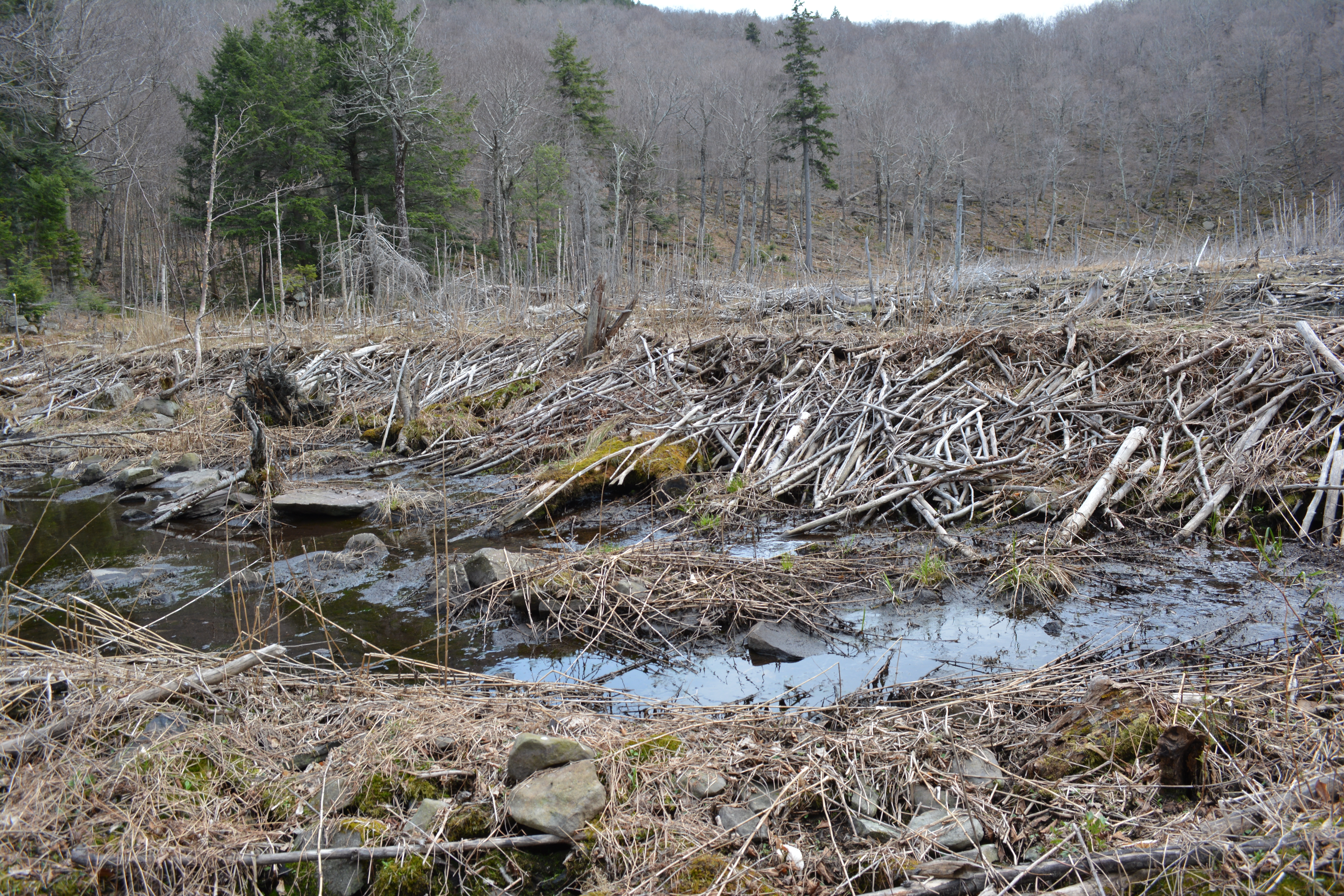
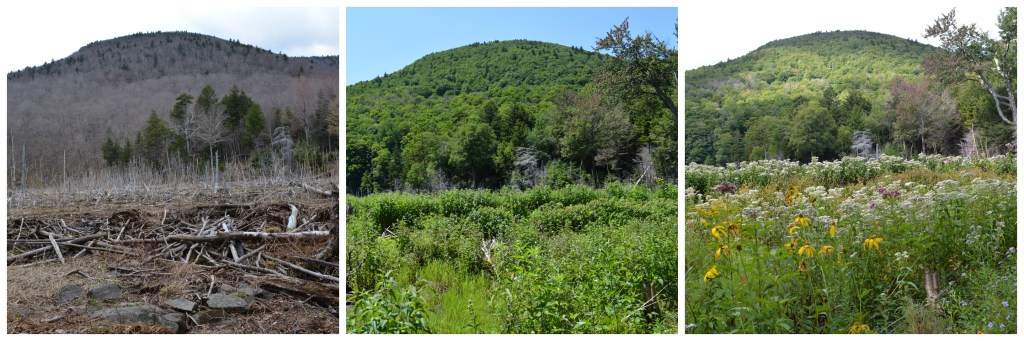
For the past few years, we’ve been keeping watch on one old beaver dam in the Indian Head Wilderness of the Catskills. It’s over a mile from the nearest road—far from lawns, farms, or any other human-made flower patches. This remote meadow offers a rare glimpse into how pollinators once thrived in pre-colonial forests.
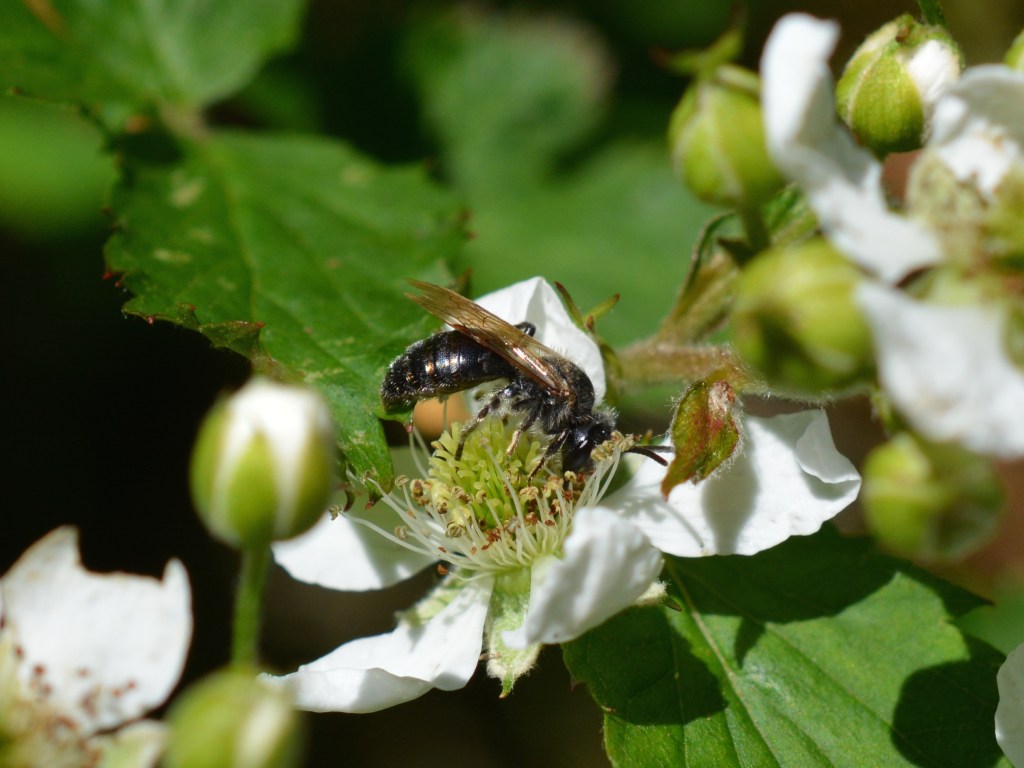
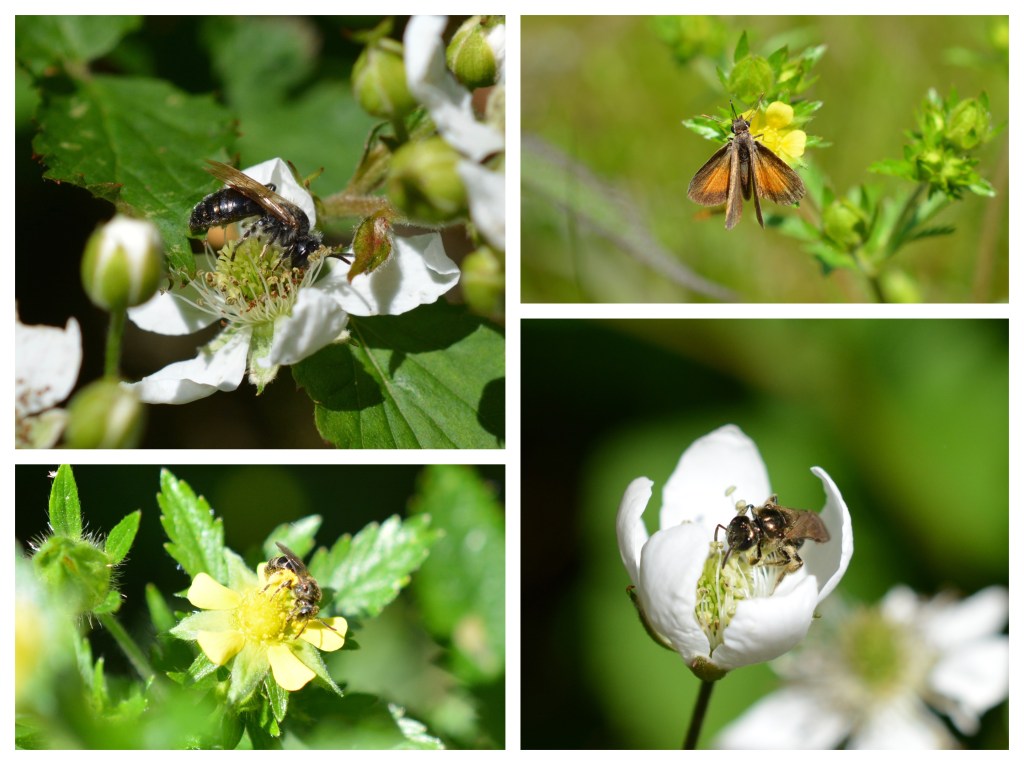
In early May, the scene was quiet, but promising. Queen bumblebees and mining bees buzzed among emerging spring ephemerals. A few short weeks later, in mid-June, the meadow was alive with blackberry blossoms, drawing in sweat bees, potter wasps, and a handful of butterflies, including a yellow swallowtail.
July: Peak Bloom
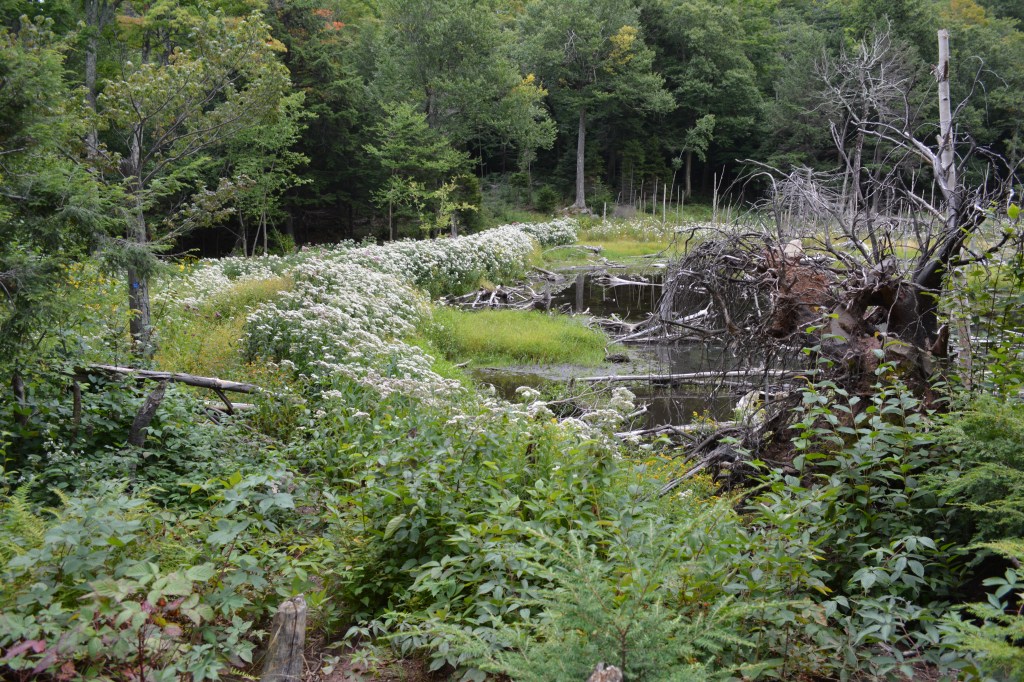
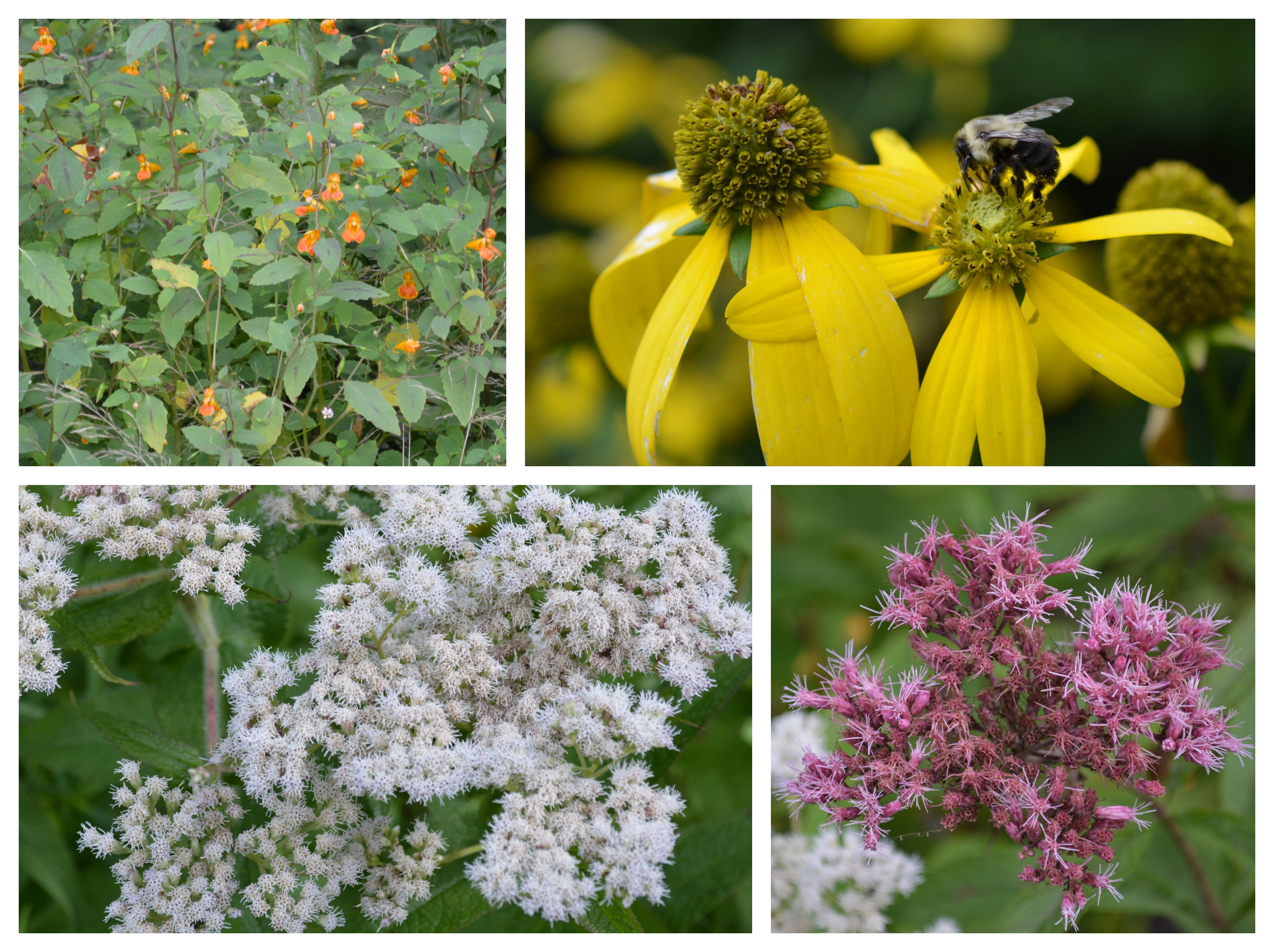
By July 16, the meadow had transformed. Rough cinquefoil was in full bloom, blanketing the clearing and drawing in hoverflies, skipper butterflies, and a host of small solitary bees. Orange jewelweed had just started blooming, a favorite of bees and hummingbirds alike.
Other flowers, including swamp milkweed, false sunflower, and common boneset, were preparing to open. A painted lady butterfly seemed more interested in our camera than the flowers, while dragonflies and damselflies filled the air—hunting on the wing above the buzzing blooms.
August: A Pollinator Paradise
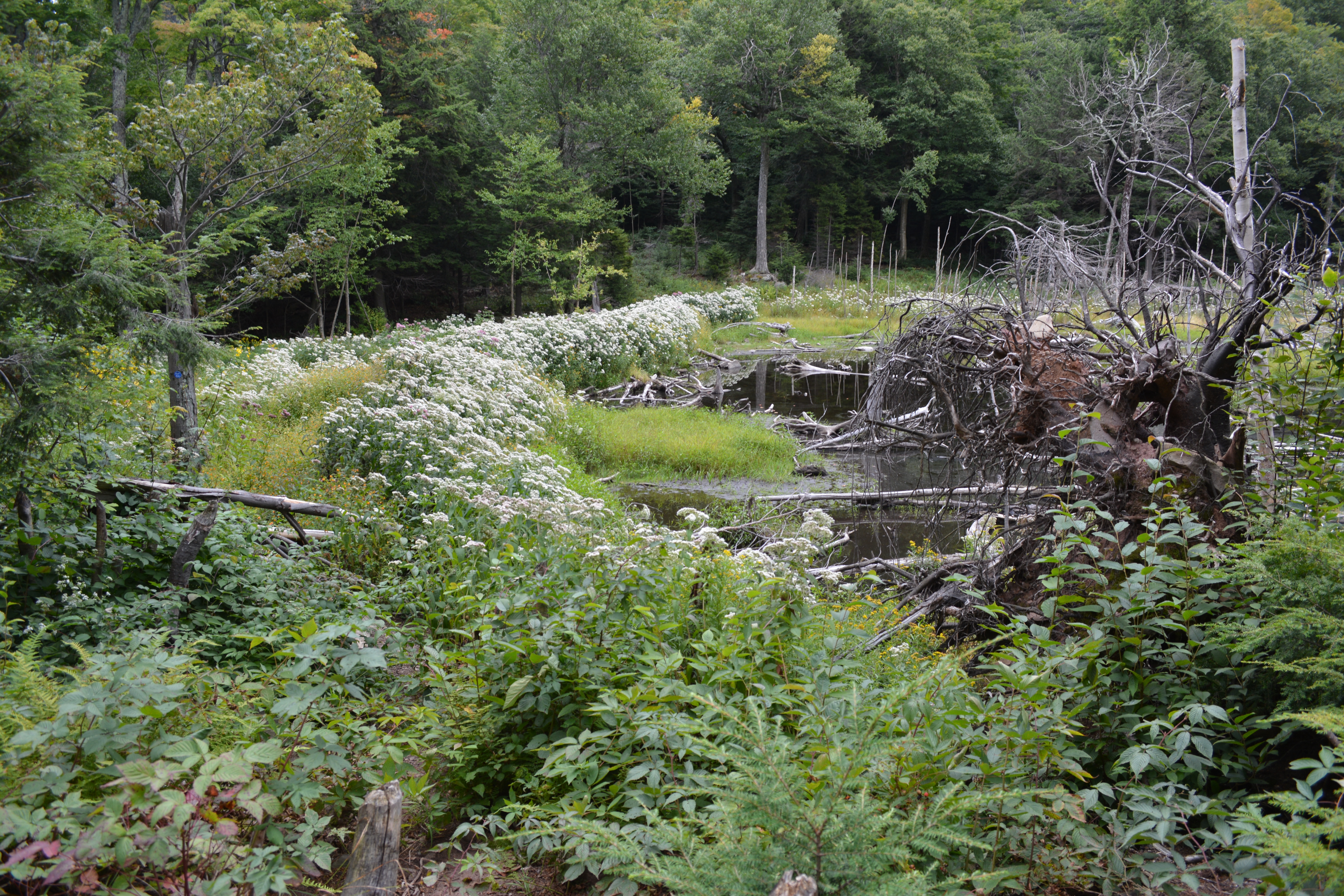
On August 27, the beaver meadow was unrecognizable from spring—bursting with wildflowers from edge to edge. The dam itself was draped in boneset and jewelweed, while the spillway was crowded with ironweed, Joe-Pye weed, goldenrod, and woodland asters that faded into the shade of the forest.
Tiny hummingbirds zipped overhead, chasing each other through the air and pausing at jewelweed flowers to recharge. Yellowjackets—drawn by the sweet nectar—were busy too. Following their activity led us to their nest, cleverly tucked inside the remains of the old dam. At the entrance, they lined up like little planes waiting for takeoff, each one taking its turn.
Despite the cool late-summer temps (low 60s), bumble bees were everywhere, bouncing from bloom to bloom. Thanks to their ability to generate body heat, they’re among the few bees that can forage on chilly days. Surprisingly, we didn’t see any solitary bees or butterflies that day—but the meadow was still very much alive.
Beavers: Builders of Biodiversity
What we’ve seen again and again is how the work of beavers resets the forest clock—flooding low areas with sunlight, creating ideal conditions for wildflowers, and in turn, drawing in a stunning variety of pollinators. As their dams slowly break down, they leave behind moist, fertile soils that support both dry-loving plants like boneset and wetland specieslike jewelweed.
It’s a perfect recipe for biodiversity—and it starts with beavers.
So the next time you stumble upon an old beaver dam or flooded patch of woods, take a moment to look closer. You might just be standing in one of the oldest pollinator gardens in North America—crafted not by humans, but by paws, teeth, and tail.

 Native Beeology